
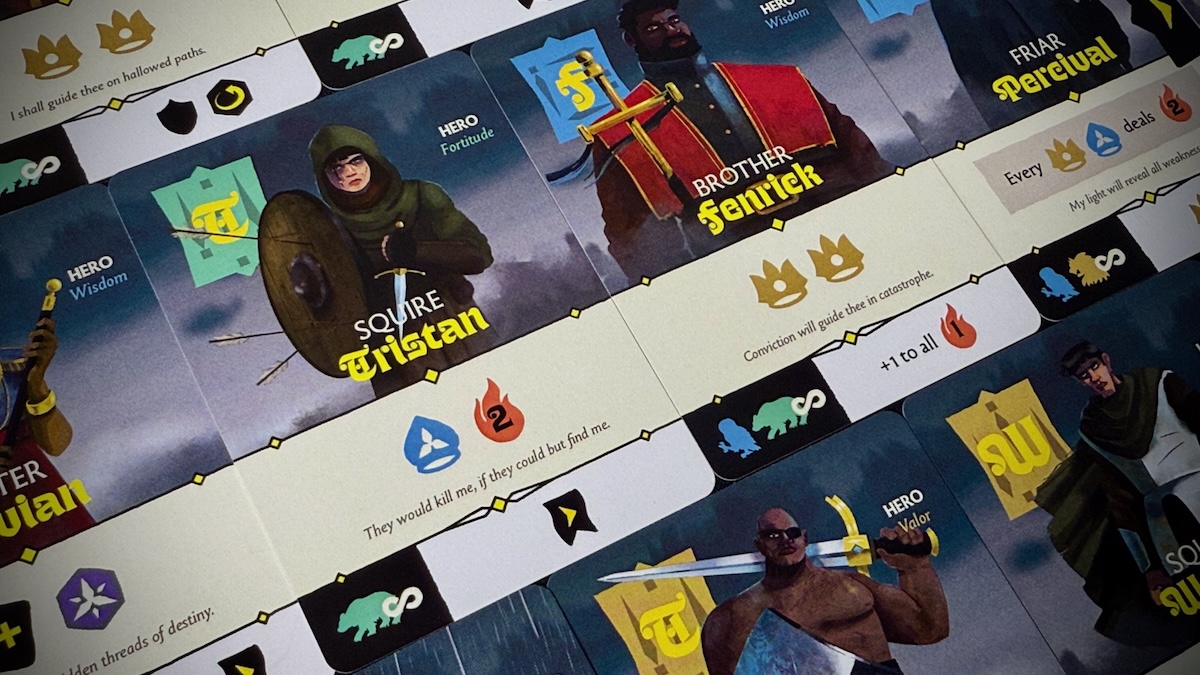

Honor’s End is set in a shadowy medieval world where dark powers loom while the bonds of honor are tested. To progress in this narrative campaign, players must take down the forces of evil through clever deck-building. With the help of heroes, specialized tools, and a bit of luck, you might just become a legend.
The game can be played in two ways. The recommended way to begin the adventure is in Story Mode – a narrative journey spanning eight chapters that reveal new cards, dice, and mechanics as the tale deepens. Those who complete the story, or who prefer to play without a narrative, can choose Adventure Mode, mixing and matching heroes, enemies, and equipment to forge their own randomized quests.
I was fortunate to preview a prototype copy of Honor’s End. I only have access to a small sample of the narrative campaign but that was enough to give me an idea of what the designers are shooting for in the final product. Read on to learn if this is a game you might find worth backing.
Game at a Glance
- IV Studio
- 2-4 (solo mode also available)
- 90-120 minutes
- Ages 14+
- Available on Kickstarter, October 2025
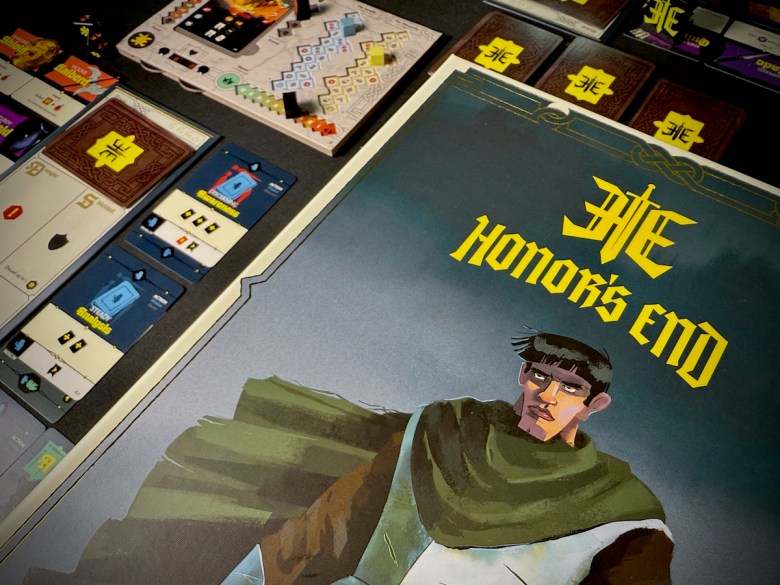
The game shown in this preview is a prototype; components and gameplay in the final version are subject to change
Skip to Gameplay, Skip to Final Thoughts
Game Overview
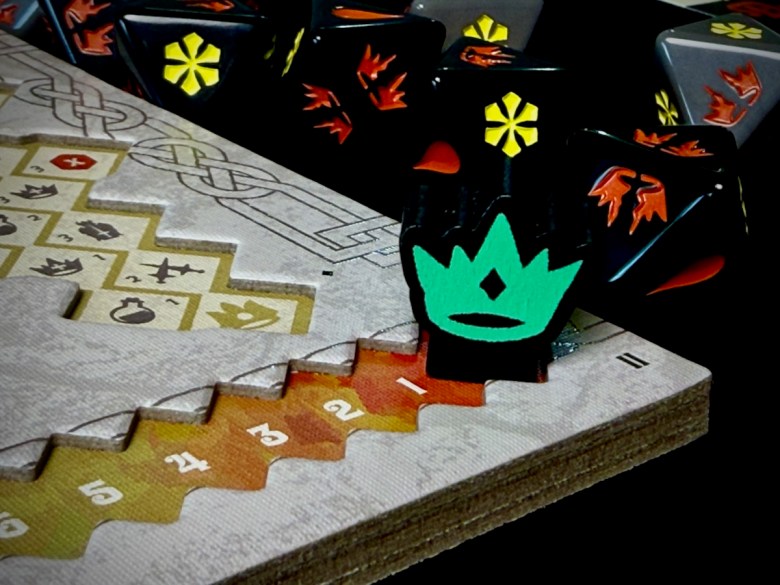
The goal is simple: defeat three enemies before your team loses all Honor. Getting there will take teamwork, clever card play, and a bit of luck.
Turns are divided into four main phases: the Enemy Phase, the Assign & Roll Phase, the Planning Phase, and the Action Phase (followed by a quick Cleanup Phase). The first three are largely upkeep phases where dice are assigned, bonuses are chosen, and enemy effects are resolved. While important for strategy, they’re procedural and make the most sense during gameplay.
The heart of the game happens during the Action Phase, where turns are taken simultaneously. Each player starts with a single card play, but some cards can chain into others or even start a whole new action sequence. For seasoned deck-builders, the card play loop will feel familiar: draw five cards, play, discard, and draw back up to five. Honor’s End adds a few new twists, including discarding cards and/or card-tucking for stronger effects, and obstacles that force tough choices.
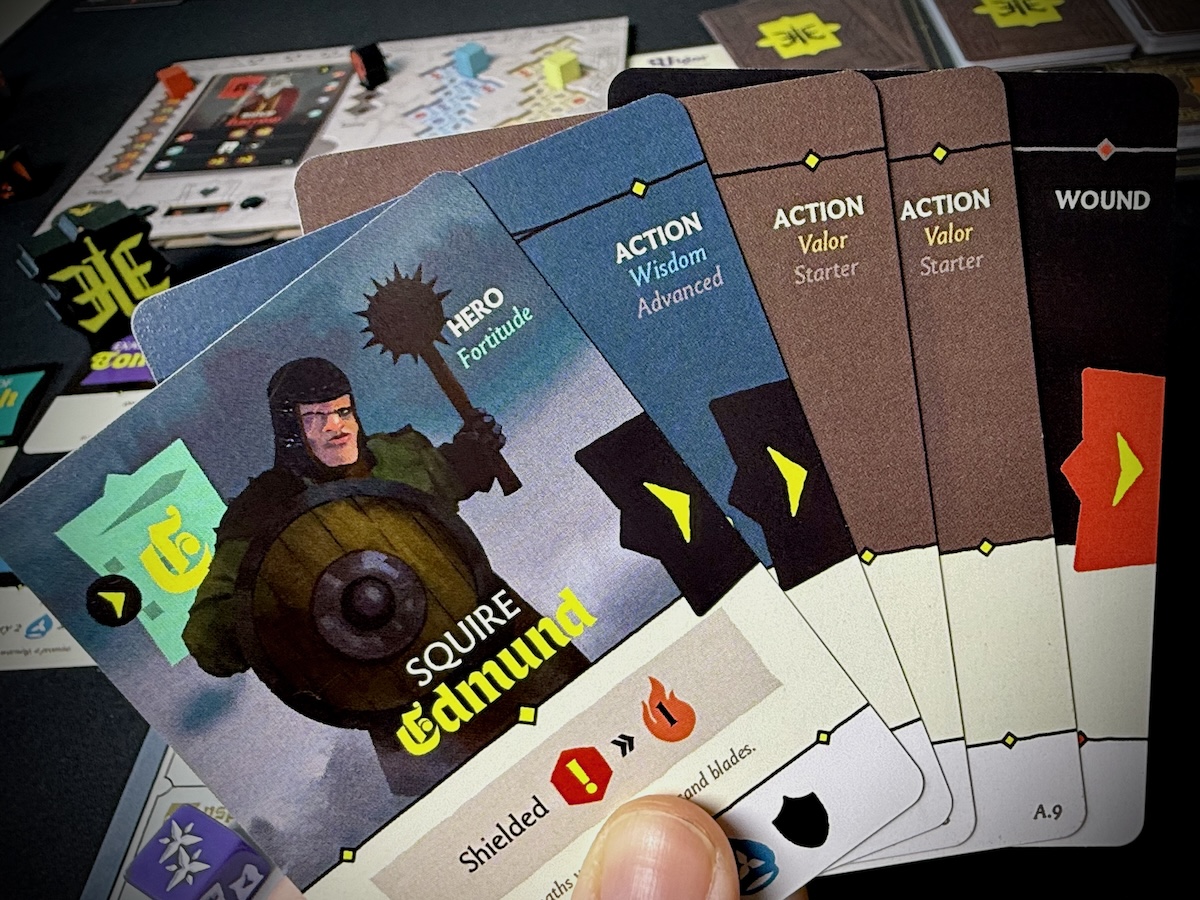
Your deck is built from Action, Hero, and Wound cards:
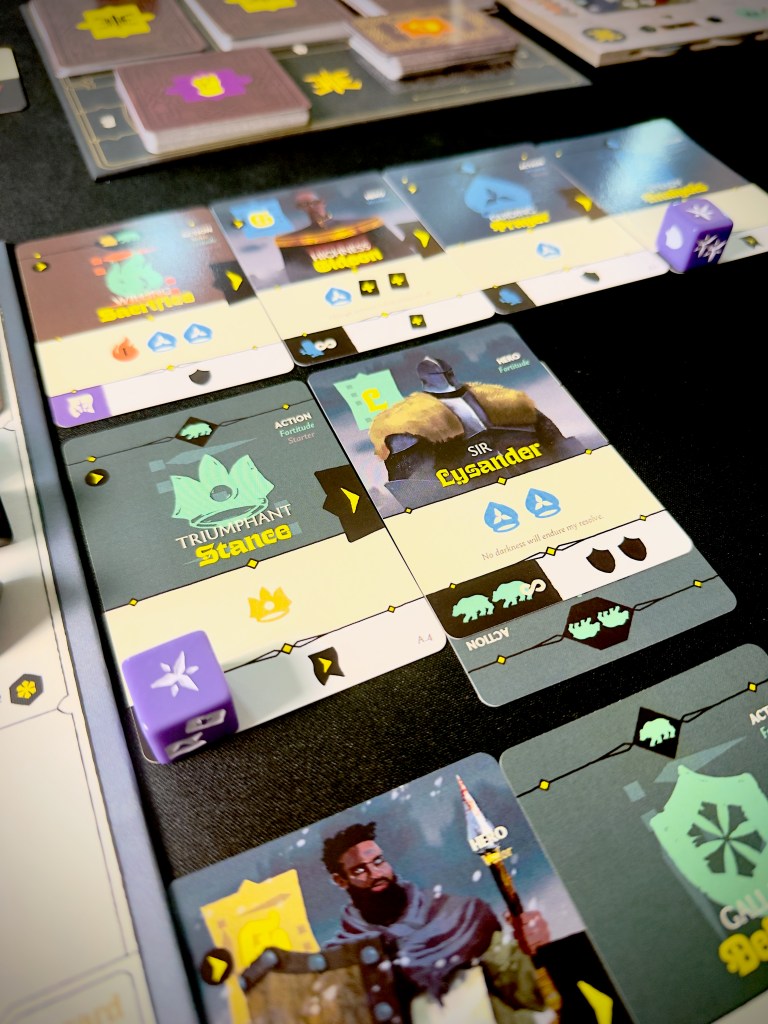
- Action Cards are the multi-use cards that make up the core of your deck. They are aligned to three elements: Wisdom, Valor, and Fortitude. They may be played for their main effects or tucked under other played cards to activate a tucking bonus. Some may also be discarded before the action phase to give Ally Bonuses to your teammates.
- Hero Cards are similar to Actions but often grant stronger effects and allow for powerful tucked bonuses. Another great thing about Heroes is that there is no limit to how much can be tucked underneath, giving them the potential to create very strong moves.
- Wound Cards are deck-cloggers added through enemy abilities or Danger Dice. Fortunately, they can be removed by meeting their tucking requirements. The wound pool is finite – if you ever need to take one and can’t, your team loses Honor. It’s wise to clear them from your deck when possible so they can return to the pool.
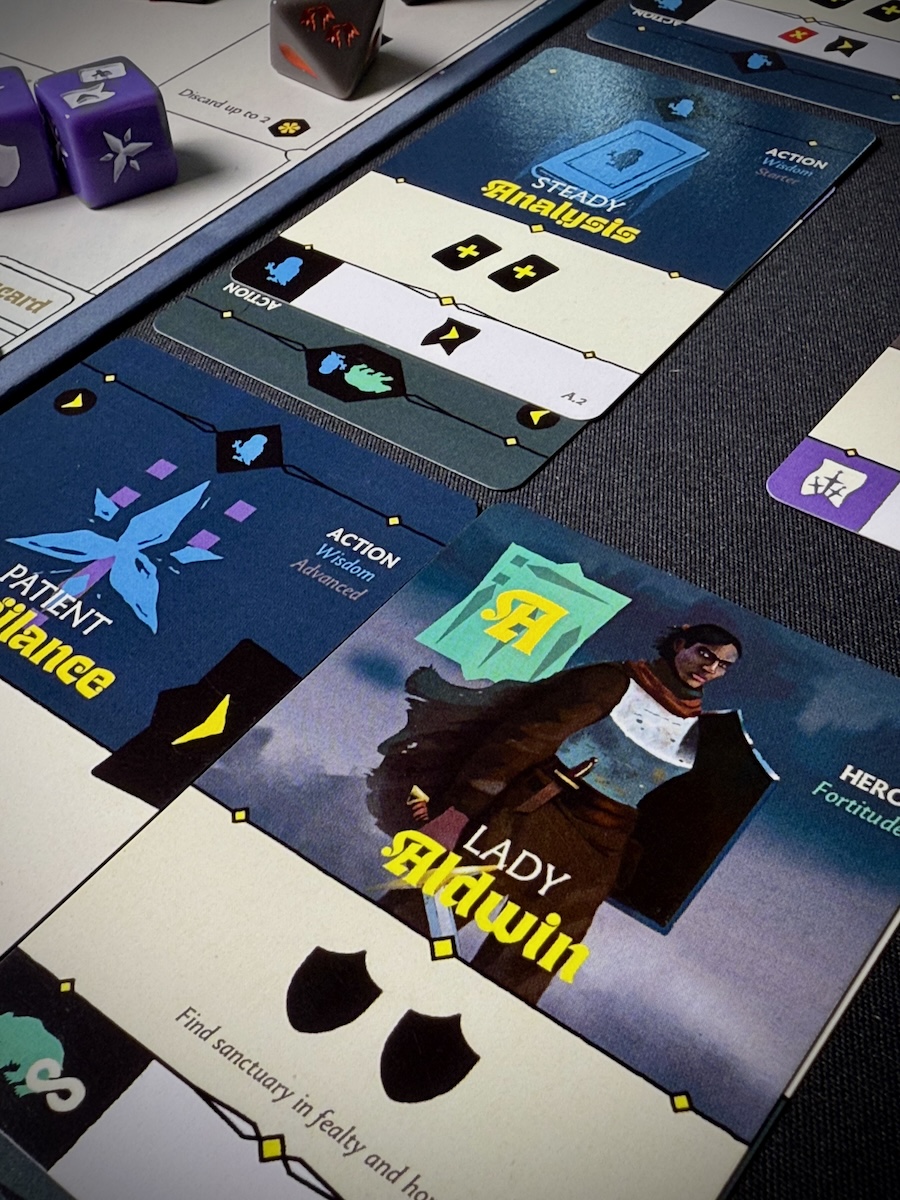
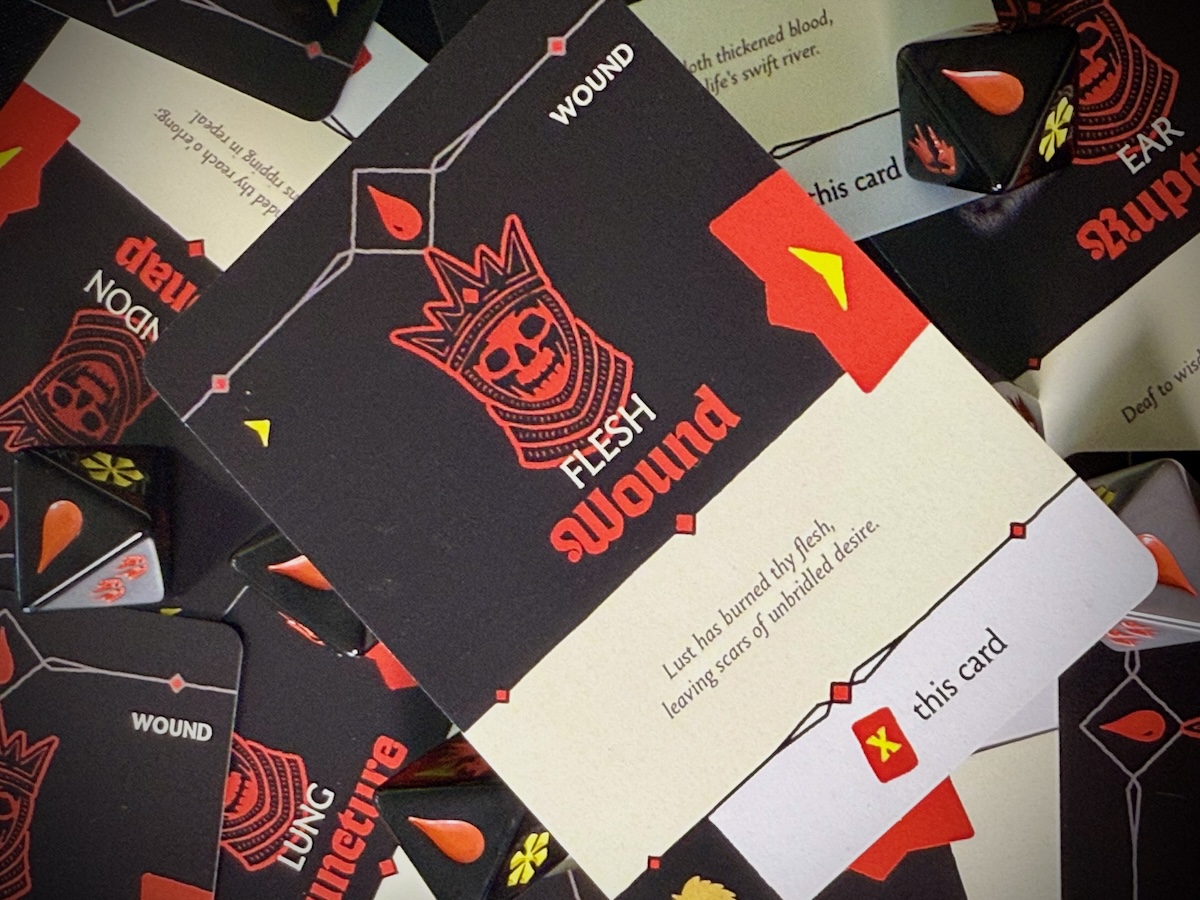
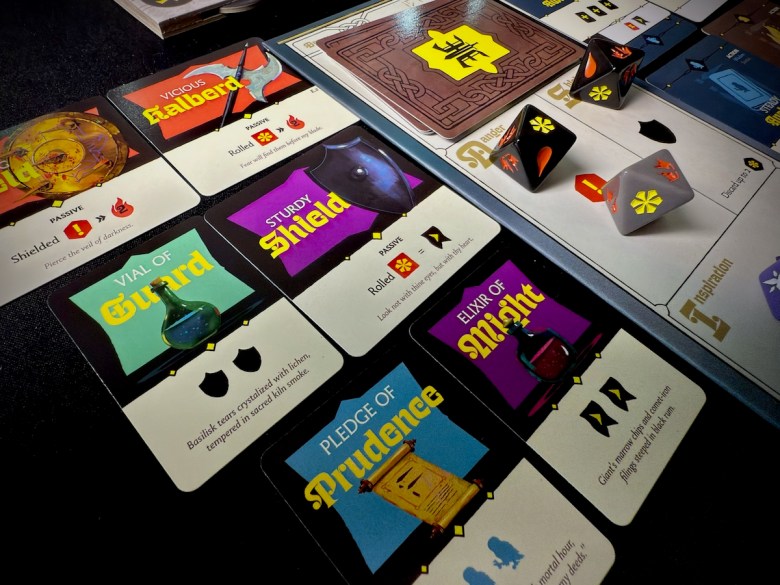
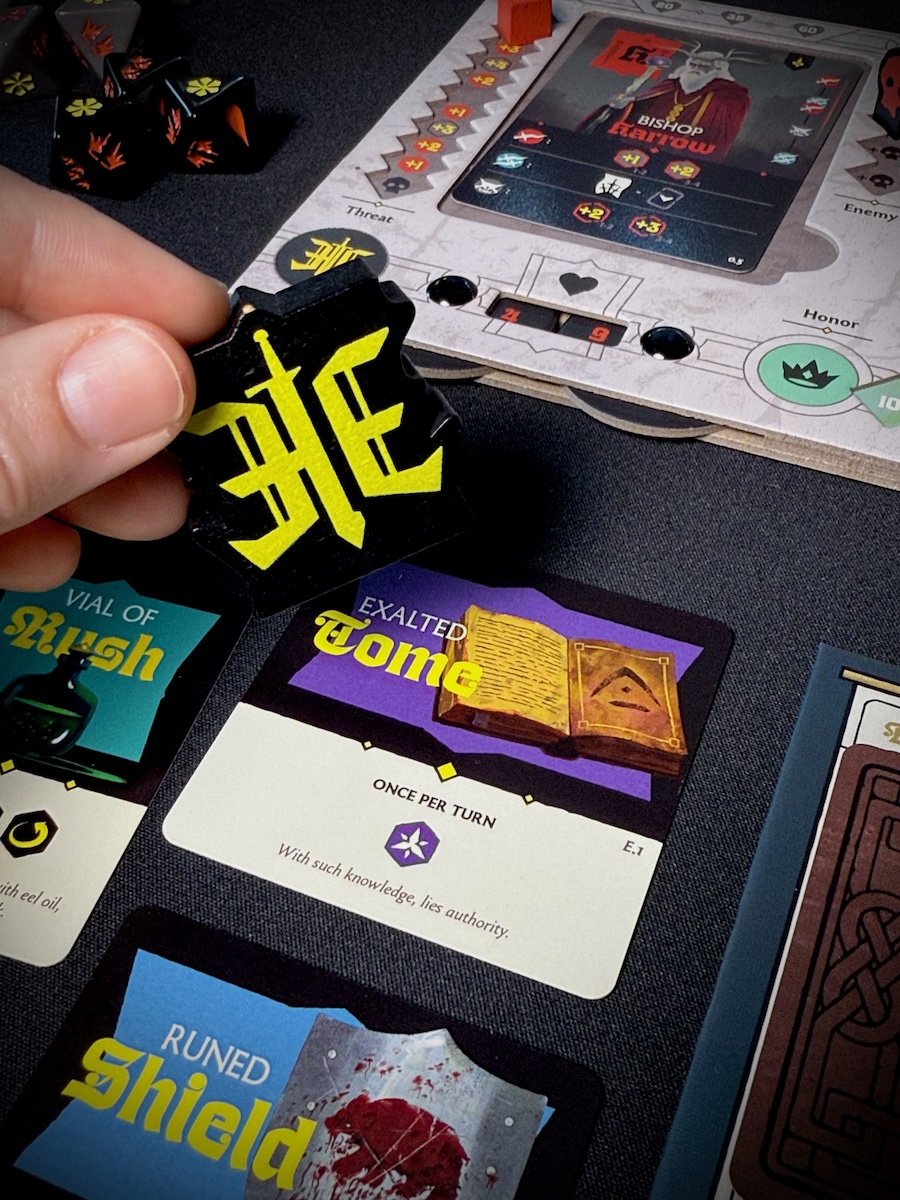
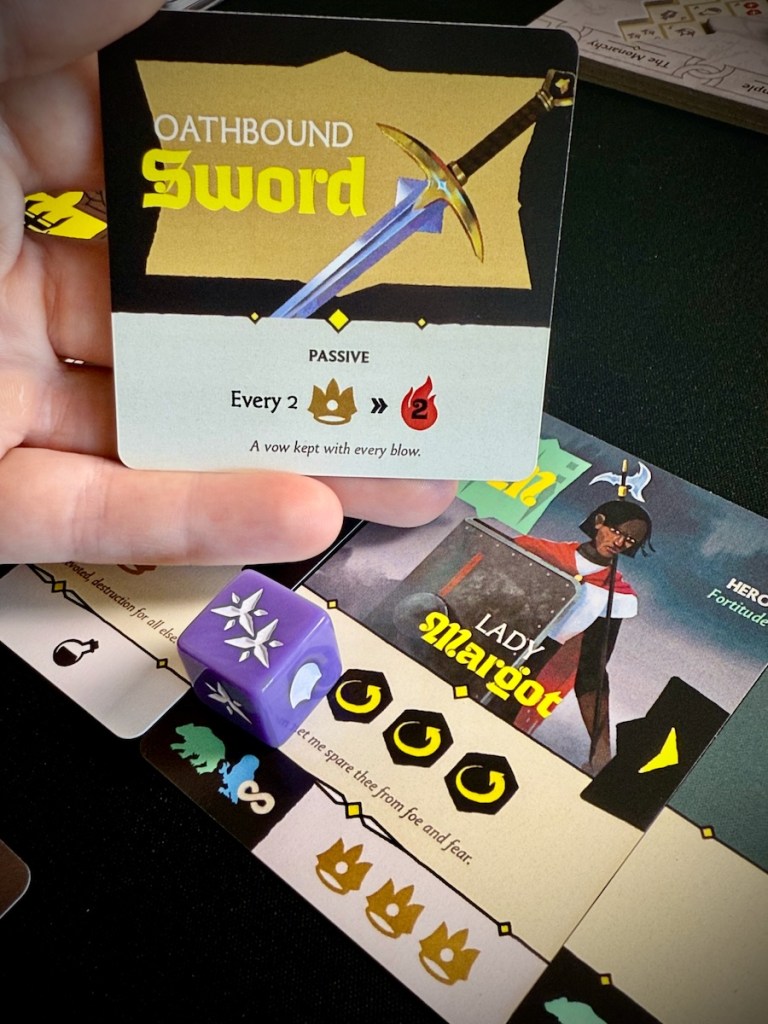
Beyond those, you’ll also collect Equipment and Consumables. Equipment provides steady, ongoing bonuses or powerful once-per-turn effects, while Consumables offer single-use boosts.
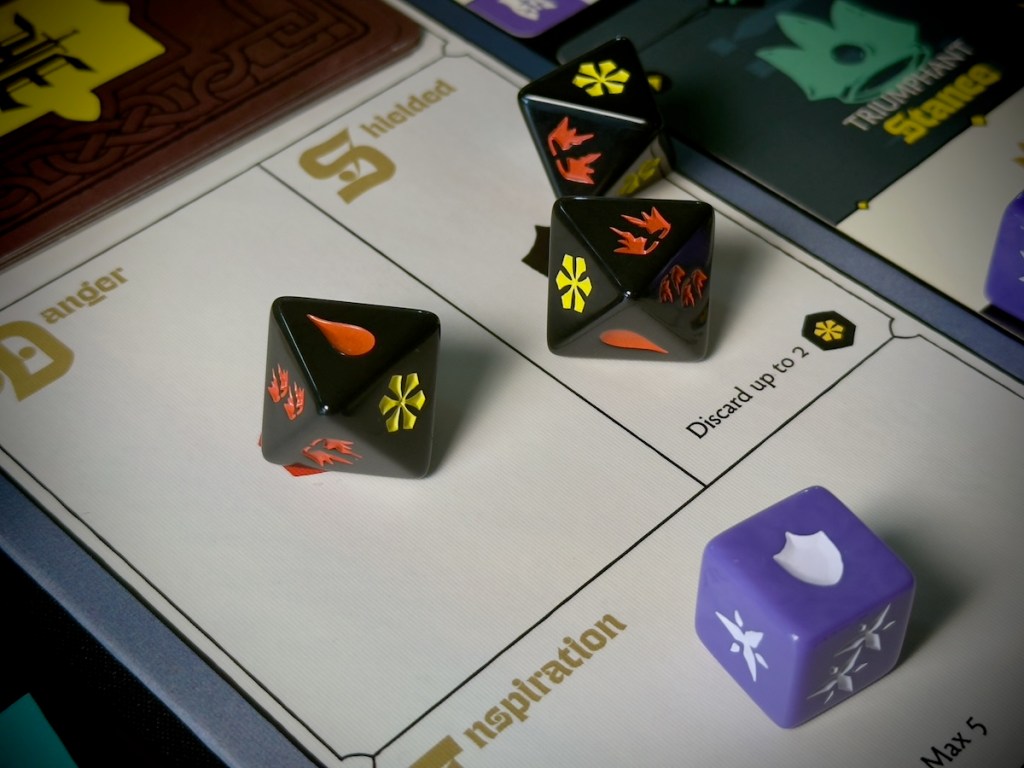
Each round brings danger in the form of dice rolls, which introduce the risk of taking Wounds or losing Honor. The impact can be reduced-or even avoided-through careful card play or smart use of gear.
Card play serves many purposes beyond mitigating danger. Actions may allow you to draw new cards, start a new action chain, gain Inspiration Dice, or deal direct damage to enemies (the ultimate goal of the game).
Because Honor loss is shared across the team, coordination is key. A bad round for one player can hurt everyone, so timing and teamwork are crucial to success.
Strategy and Gameplay Impressions
Once you’ve settled into the rhythm of Honor’s End, the game reveals itself as a series of tactical puzzles, cooperative decisions, and exciting moments of luck that keep each round feeling fresh and engaging.
Tactical Decision-Making
Each round brings new tactical decisions to the forefront. Your choices will depend greatly on what is rolled, what you draw, and what your partners need. There are many ways to mitigate poor draws and dice rolls, and that’s where cooperation shines.
Because the cards have multiple uses, sometimes as many as three, determining how to fit them into your group’s needs becomes a puzzle with no single correct answer. Will you toss a card to the discard pile to give your partner a shield? Or will it better serve you tucked underneath a hero, boosting its damage output enough to take out the enemy? There’s also the main card action to consider – it might just get your team’s buying power the boost you need to get a sweet group bonus. There’s a lot to think about when determining your path forward. What is “best” is ever-changing, and you will need to consider the challenges before choosing your path.
Get Lucky
The game does have randomness. That’s inherent in card games, but the addition of dice adds another layer of luck by introducing hazards to overcome. Fortunately, this element of bad luck is balanced by the Inspiration Dice, which can provide helpful benefits in the form of extra card draws or plays, defense bonuses, and symbol boosts that attach to played cards.
The Bad Guys
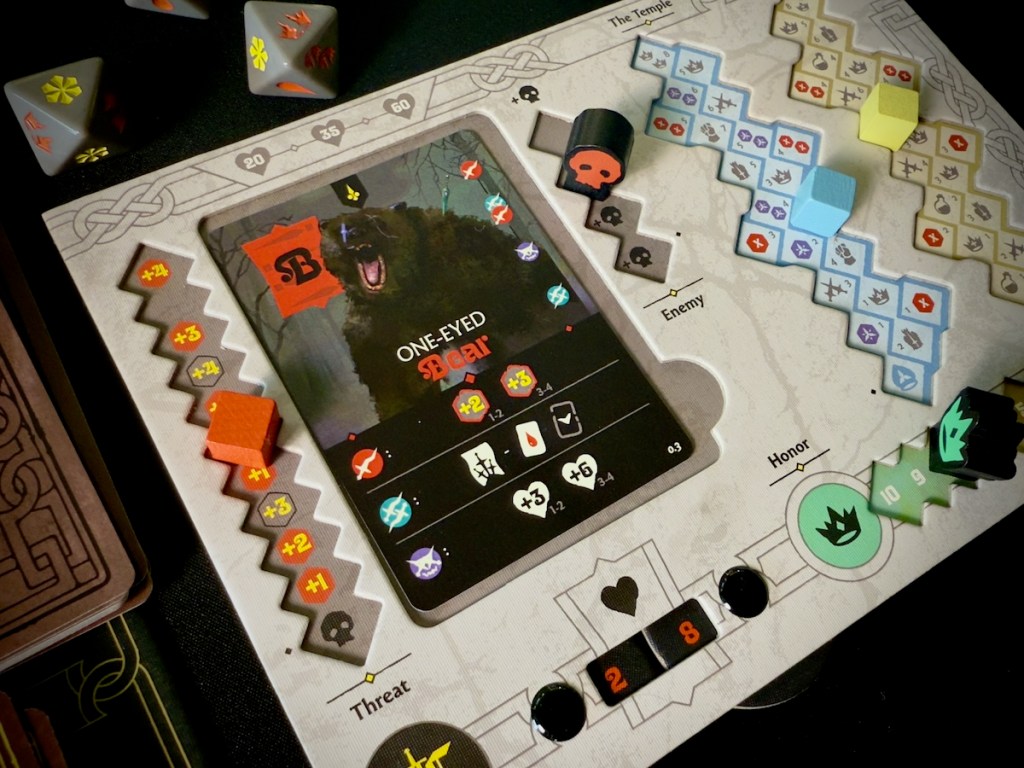
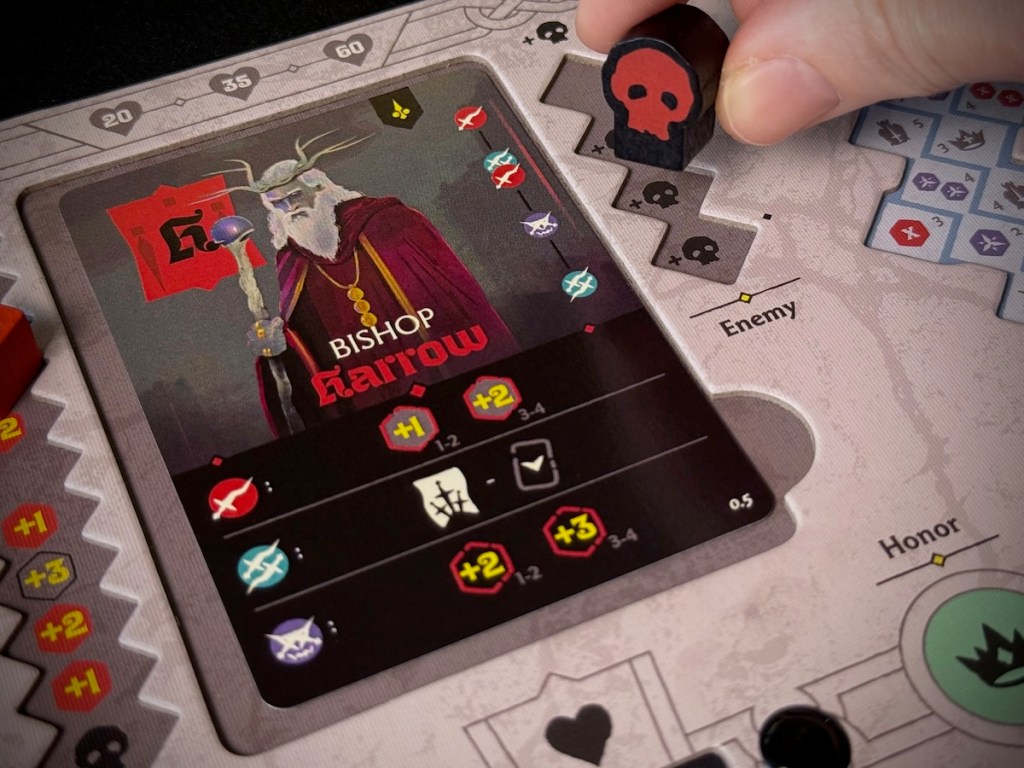
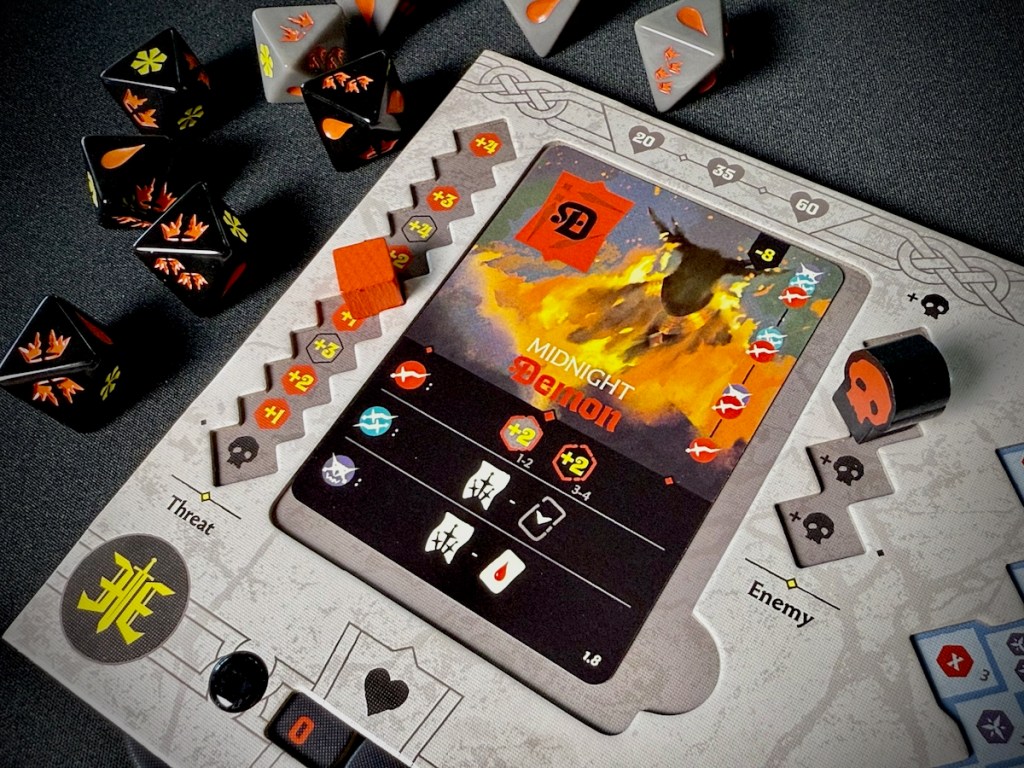
Your team battles three unique foes per game. The Enemy Track simulates the bad guy/gal slipping in and out of different battle phases. Each foe has patterns that force players to react differently from round to round. Some examples of the shenanigans that enemies might pull include adding danger dice rolls, forcing players to discard from their hand, health regeneration, and more. This system adds a small touch of personality to the battles.
Build that Deck
Honor’s End creates opportunities for interesting strategies, especially in the deck construction department. Several times throughout a game, players have the chance to choose a new piece of equipment, a consumable, or a card to add to their deck. And if you play your cards right, powerful synergies can be exploited.
Understanding your deck and what might synergize well with it is key. The game shines when you can create opportunities for strong combinations. I have been able to construct a deck that dealt massive amounts of damage whenever I shielded myself from danger, and another that allowed me to draw and play out practically my entire deck occasionally, helping us to rake in Temple bonuses. Both play styles felt completely different yet extremely satisfying.
Building Complexity
The game is fairly straightforward and easy to pick up, especially for those with experience in deck building. The complexity comes from the decision-making that occurs during the action phase rather than the rules overhead.
The game’s complexity gradually opens as the story progresses and new cards and ideas are introduced. This allows players to slowly immerse themselves in additional mechanics and intricacies without feeling overwhelmed.
Replayability
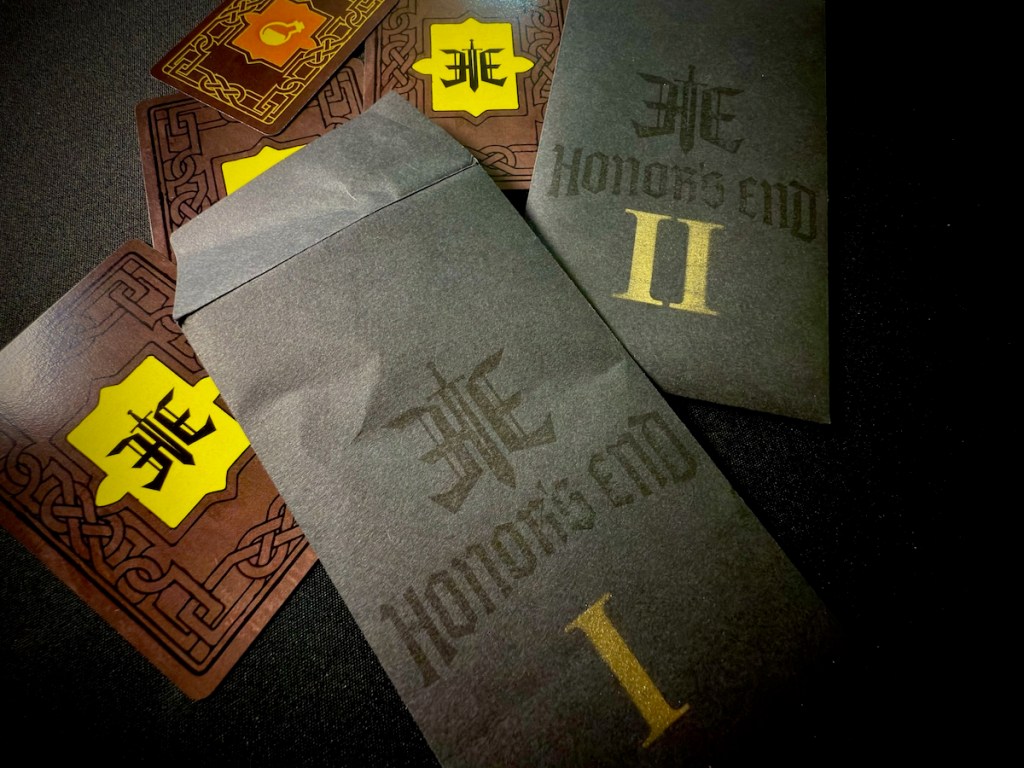
There’s solid replayability built in. For those who enjoy narrative-based games, this one has the potential to be especially rewarding. The excitement of opening new envelopes and boxes should keep players engaged as they learn more about the world they are exploring. I appreciate that the design allows players to return for Adventure Mode even after completing the story, or to completely forgo the tale altogether and create their own adventure.
Play Nice Together
Perhaps one of the best aspects of this cooperative experience is that it doesn’t lend itself to “quarterbacking” from a dominant player. Each player manages their own hand of cards, making it impractical for an alpha gamer to dictate others’ moves.
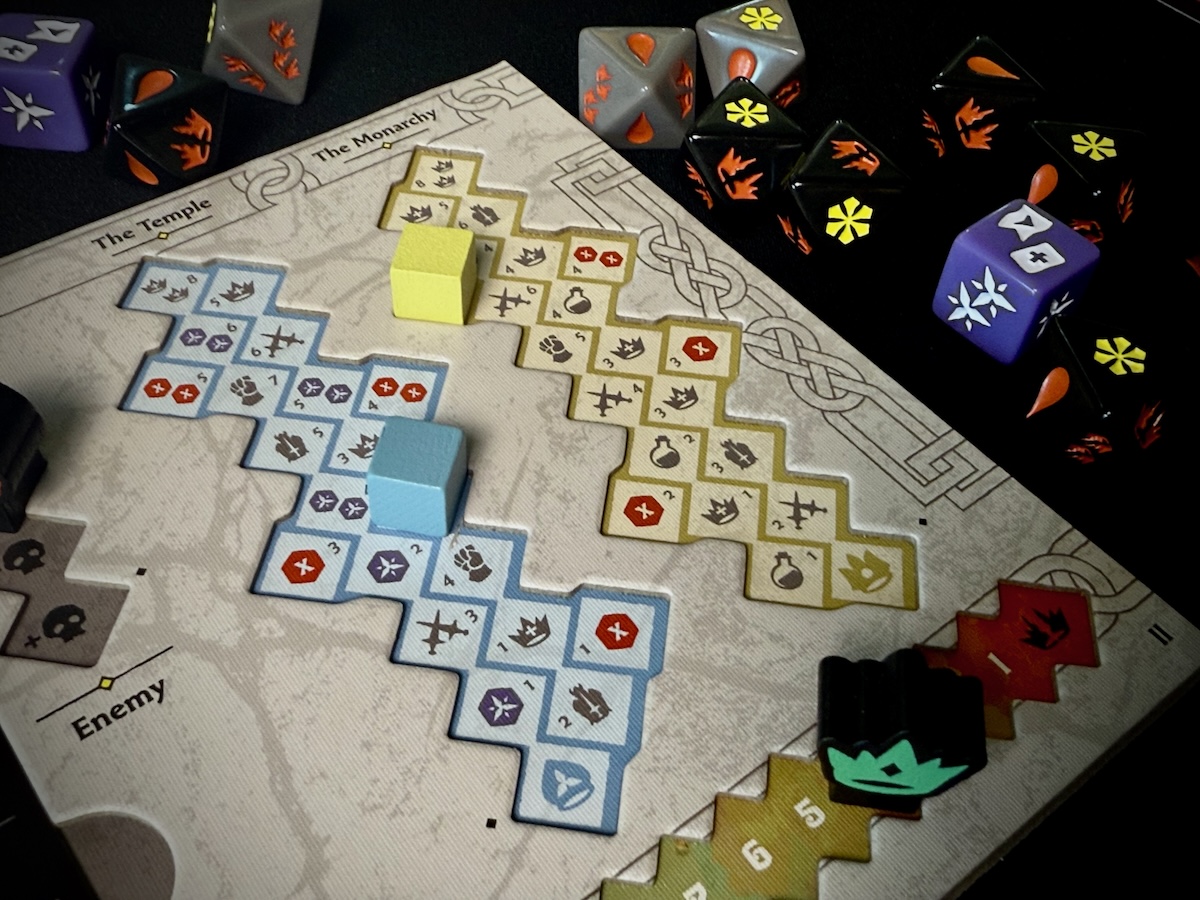
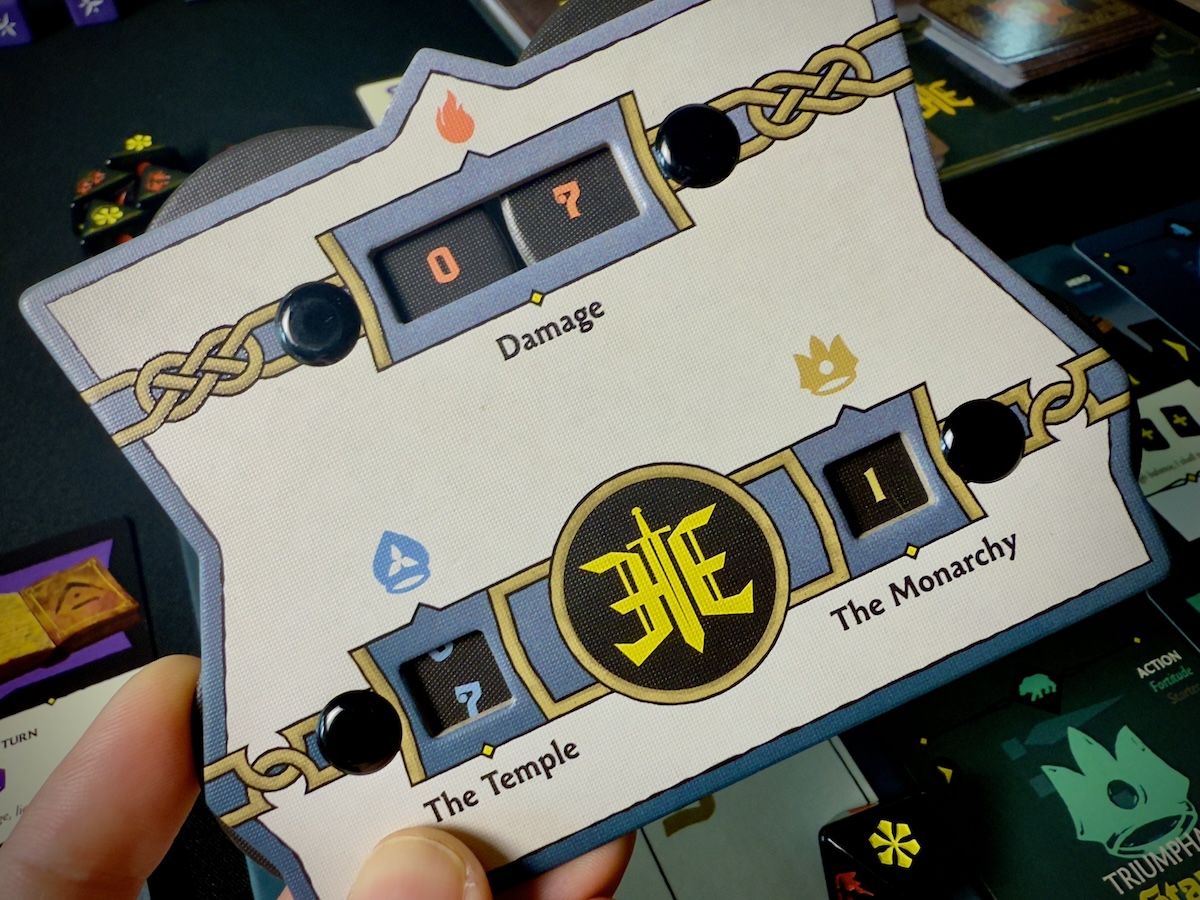
This is partly because there’s no absolute right or wrong way to play your cards. Sure, there are suboptimal plays, and the group can step in to guide a struggling player, but a table of competent deck-builders can collaborate naturally – asking for help with defense or card draws, or working together to purchase bonuses through the Temple or Monarchy Tracks. Although players are working out their own puzzles, they must work towards achievements together and, in turn, are rewarded with shared bonuses.
It was common for my husband and me to talk through our options, discussing a few different ways to play our hands and how each might affect the other’s turn without overwhelming each other with minutia. That kind of shared strategy without one player taking over made the experience feel genuinely cooperative while allowing our decisions to remain our own.
Final Thoughts
Overall, Honor’s End strikes a satisfying balance between tactical depth and accessibility. The mix of deck-building strategy, cooperative problem-solving, and just the right touch of randomness keeps every round engaging. It’s the kind of game that rewards thoughtful play and teamwork, offering plenty of room to experiment without punishing mistakes too harshly. Whether you’re strategizing over the perfect combo or scrambling to survive a rough roll, every turn feels meaningful.
If you’re interested in learning more, visit the Kickstarter Campaign here:
https://www.kickstarter.com/projects/ivstudios/honors-end
 Tabletop Mom