
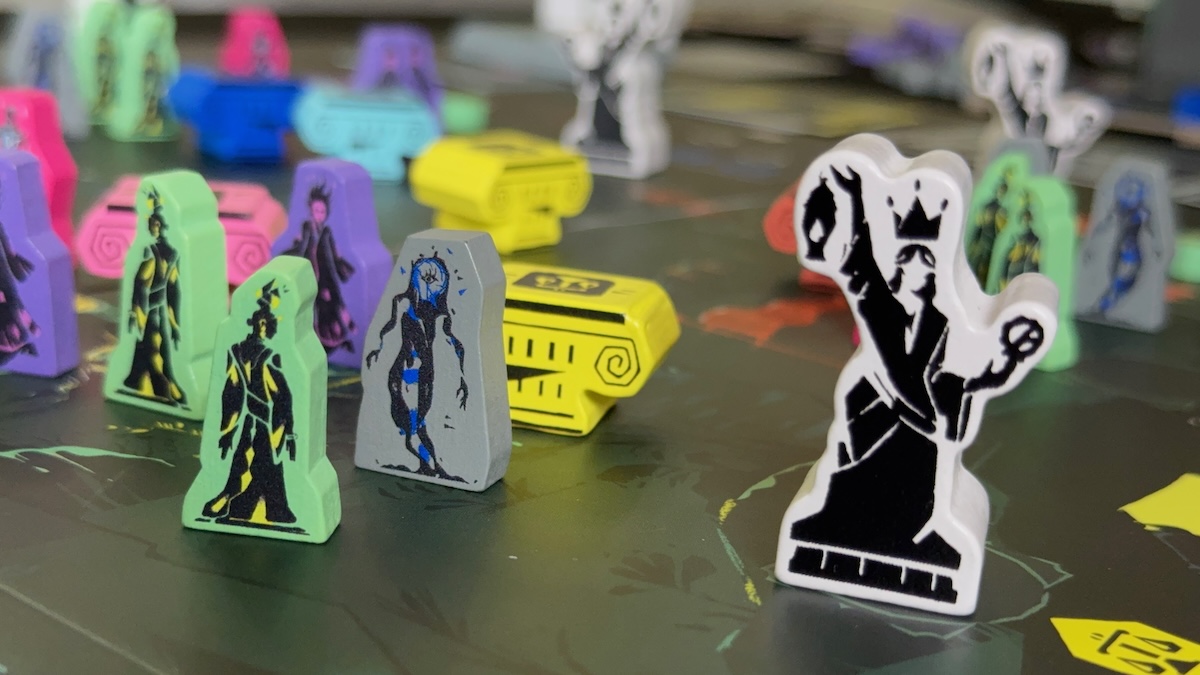

Realm of Reckoning is set in a bleak kingdom ravaged by civil war, where the land and inhabitants cry out for balance. The only hope lies in restoring harmony among the five elemental forces. As a player, you will shape the fate of this fractured realm using your wealth, loyal acolytes, and growing influence. Will you emerge victorious through a series of decisive reckonings? Those who triumph will have the power to rebuild the kingdom in their own image.
This strategic game blends area control, card drafting, bidding, and a dynamic board state to create a constantly evolving challenge that keeps every player on edge.
Game at a Glance
- IV Studio
- Players: 2-5
- Ages: 14+
- Length: 90 minutes
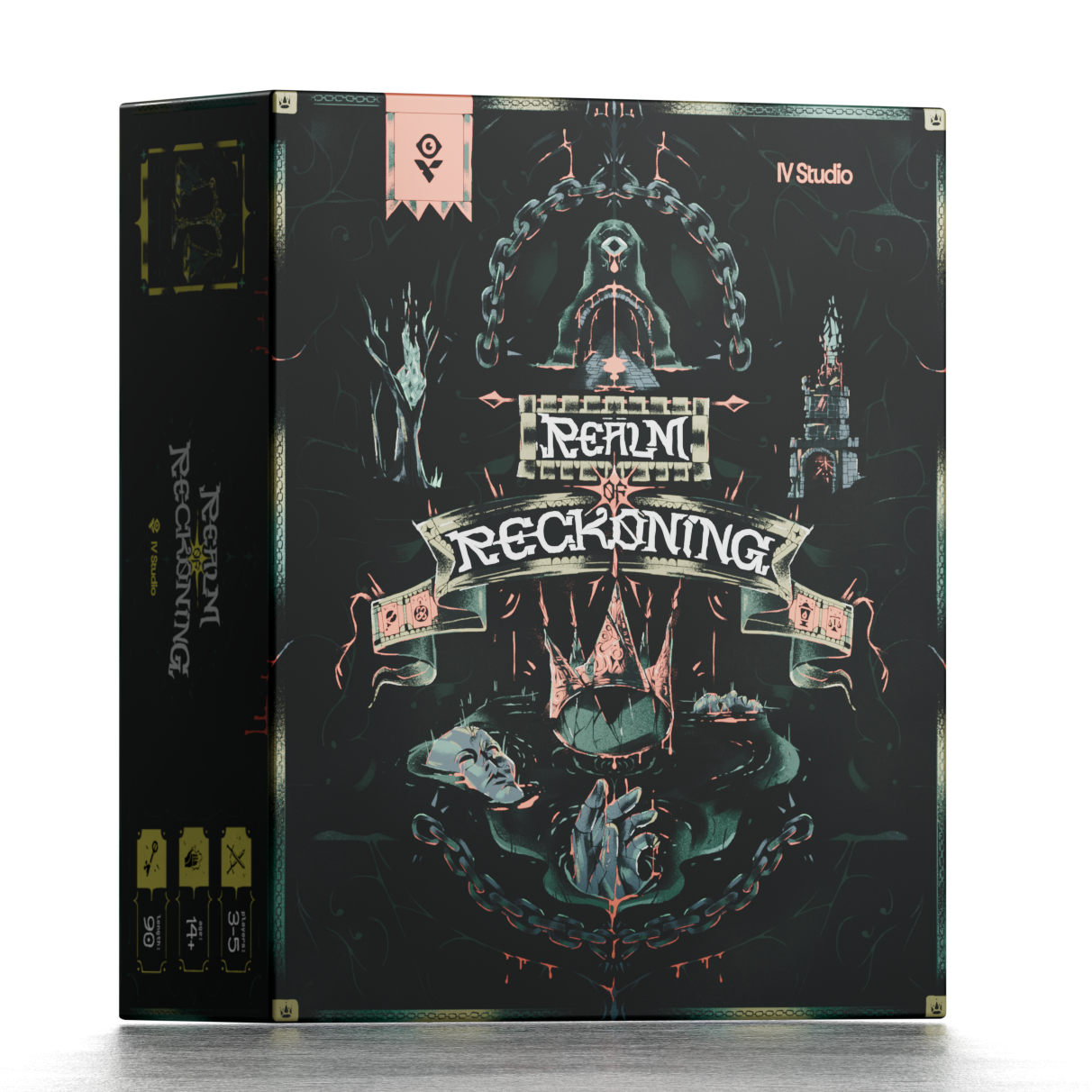
The game shown in this preview is a prototype; components and gameplay in the final version are subject to change
Skip to Gameplay, Skip to Impressions
Rules Overview
Setup: Each player selects a faction and takes the corresponding player board, bidding dial, and acolytes. Place the faction’s score and influence markers on the board. Unless otherwise stated on the player board, players begin with zero influence in all regions. Each faction starts with different resources (e.g., coins, regional influence), which are allocated immediately. Set up the three round-specific action decks according to player count.
Game Structure: Realm of Reckoning is played over three rounds (or “ages”), each containing three Reckoning events. On each turn, players draft and play an action card. The center of the card allows a basic action, such as:
- Placing acolytes in a region
- Gaining coins
- Drawing mercenary cards
- Recruiting wardens
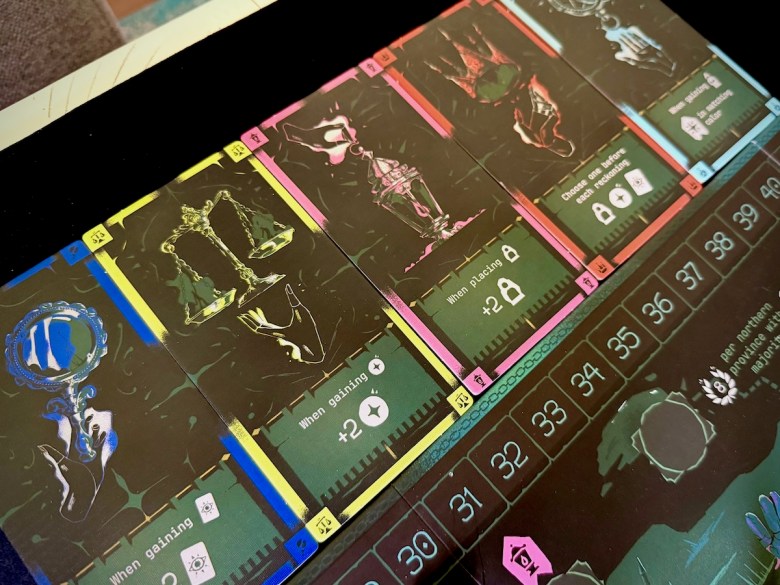
After resolving the action, the card is tucked under the player board into one of the five elements (based on the icon shown). Each card has two sides, and players choose which side to tuck, influencing their potential scoring benefits and immediately boosting regional influence, if applicable.
Each round includes two reckoning cards shuffled into the action deck. These may be played at any time as a player’s action to trigger a reckoning. The third reckoning is revealed at the start of the round, giving players early insight into one of the contested regions.
Reckonings: Reckonings are region-based bidding conflicts. When a reckoning is triggered:
- The initiating player selects a reward card and moves a colored claim token from another region to the current one. If it is the 3rd reckoning of a round, the player with the lowest score moves the claim token.
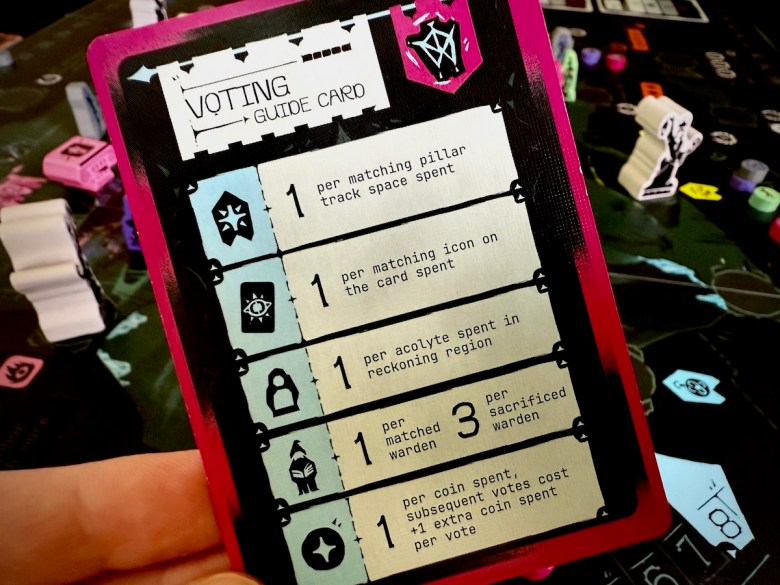
- All players secretly set a bid on their dial – they must be able to pay the bid with their resources – coins, acolytes in the region, influence tied to regional pillars, etc.
- Bids are revealed simultaneously. The highest bidder chooses a reward first, the second highest picks next, and so on. The loser receives the negative “reward” but does not pay their bid.
Winning a reckoning grants the chance to build a monument, which contributes to end-of-round scoring.
Scoring: At the end of each round, monuments are scored. Monuments built in earlier rounds score more frequently (e.g., a monument built in Round 1 scores in all three rounds). The player with the most victory points at the end of the game wins.
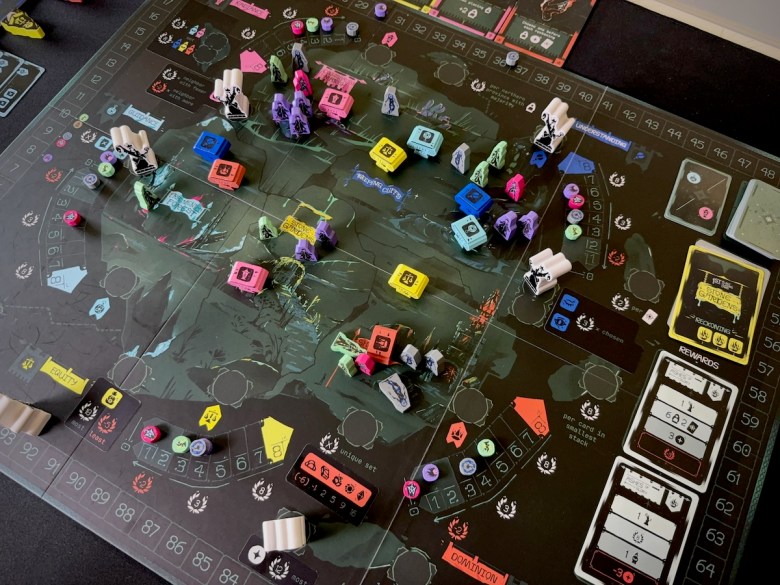
Gameplay
The Choose-Your-Own Adventure Element
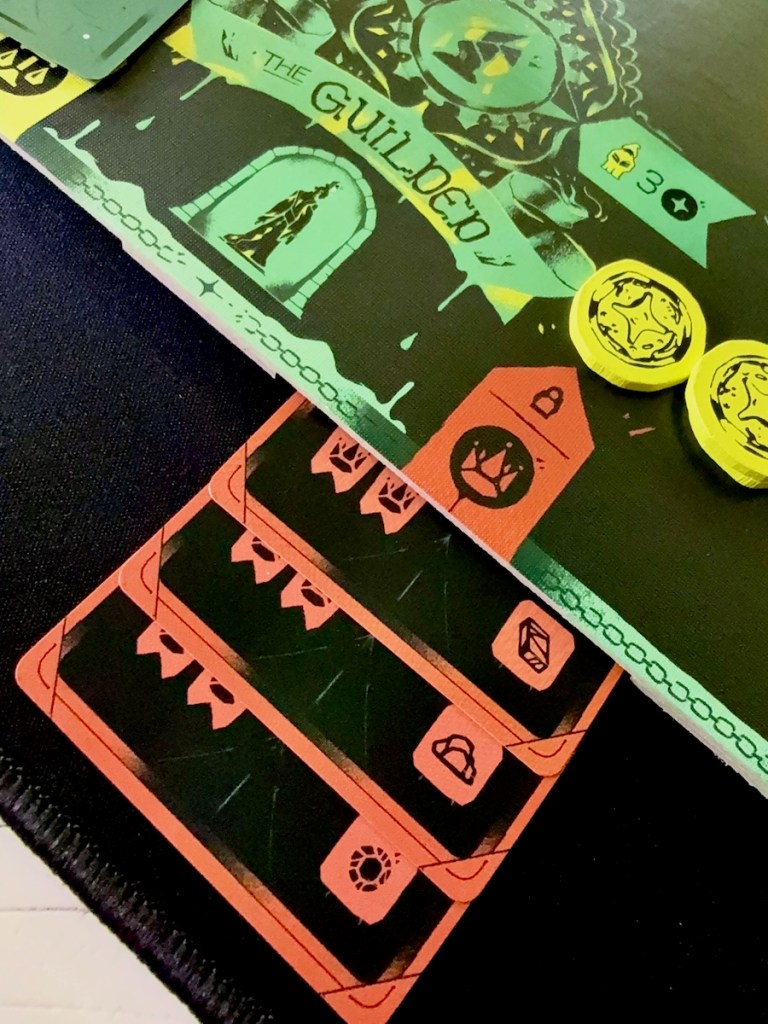
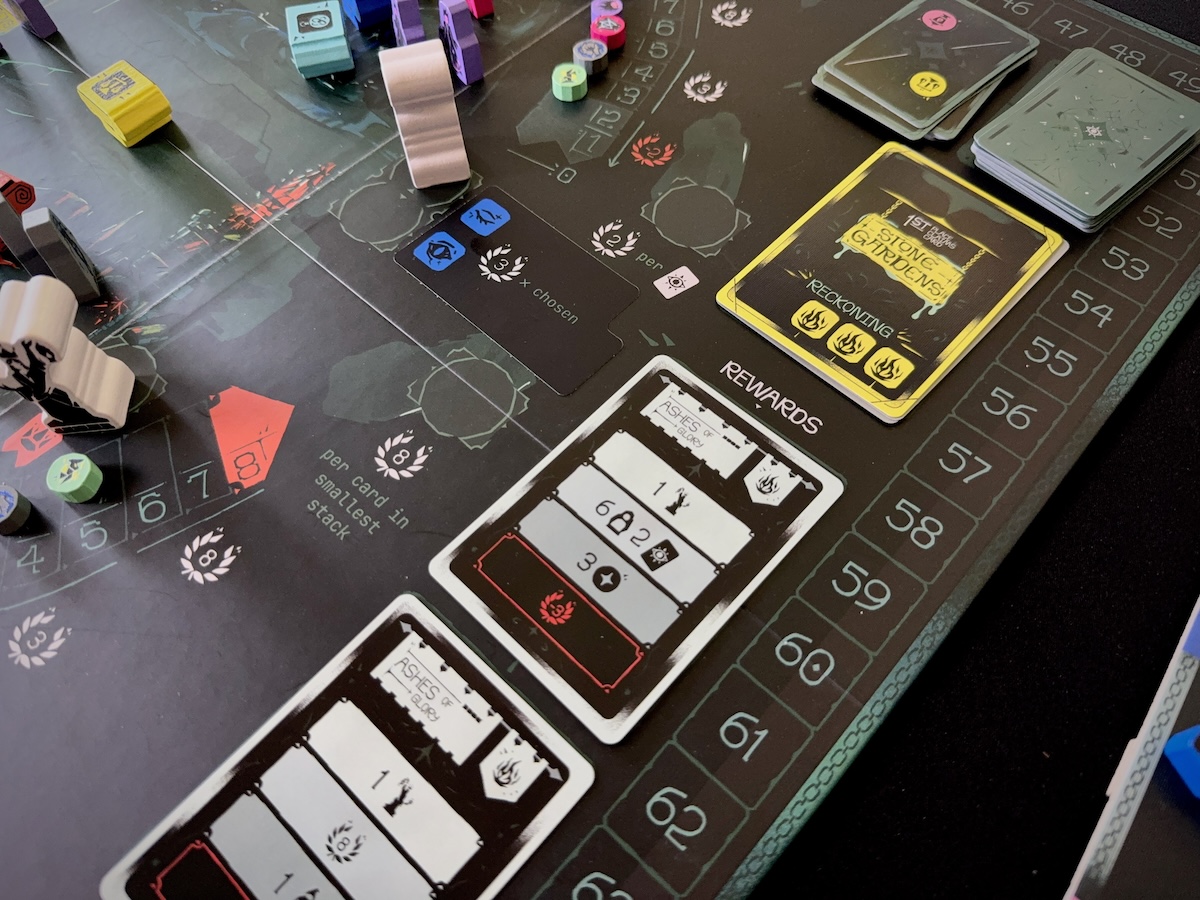
One of the most compelling features of Realm of Reckoning is its “choose your own adventure” approach to scoring. Throughout the game, players collectively select 9 scoring monuments from a pool of nearly 20. The monuments chosen, combined with the timing of their activation, dramatically shape how the game unfolds. This variability gives the game excellent replayability.
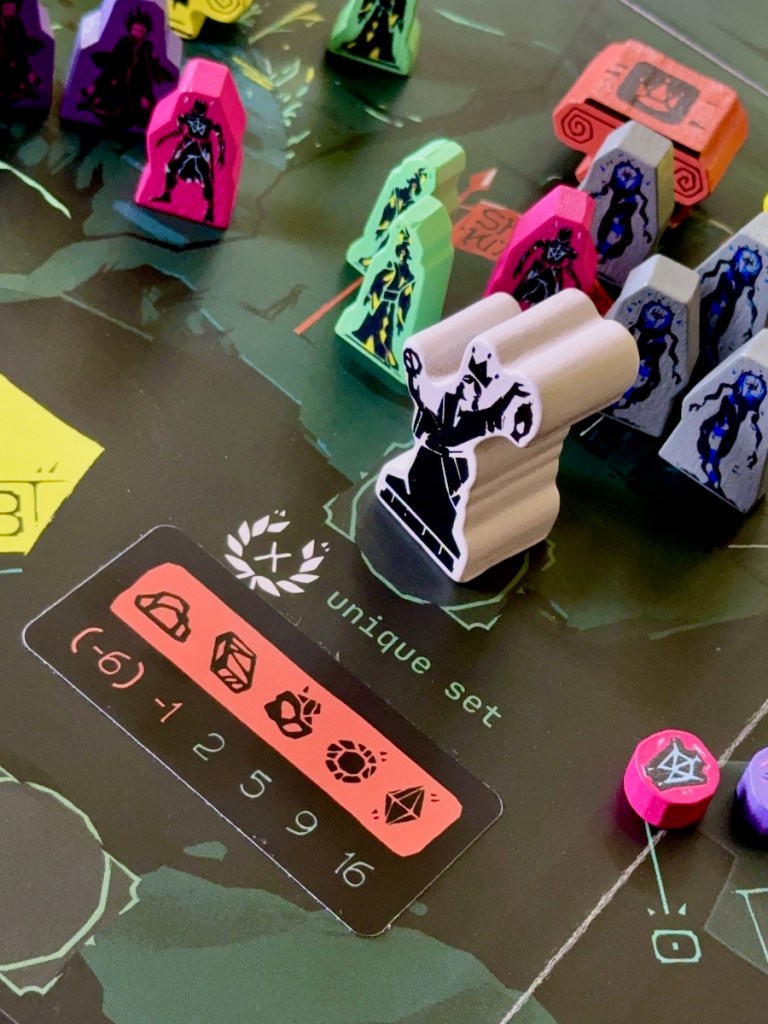
Each monument introduces its own mini-game. Some reward you for dominating regional influence tracks; others focus on set collection from icons on your cards or wardens. Some involve area majority, resource thresholds, or even provide powerful catch-up points to the player currently in last place. There’s always something new to pursue.
A Game of Reading the Table
The game invites both tactical and strategic thinking. While you have some agency in shaping scoring conditions, so does everyone else, so you must monitor both the main board and your opponents’ collection of goods and icons. Focusing on a few early monuments can pay off (since they score multiple times), but knowing when to pivot is key. Sometimes shifting your focus to a more attainable scoring parameter and letting the others squabble over a pre-existing one is the better long-term strategy.
Drafting is full of subtle information. Observing the card flow can give you a sense of what reckonings or plays may be coming next. This kind of table awareness can help you predict your opponents’ plans and make choices accordingly.
The Reckoning Phase: Tension, Drama, and Tough Decisions
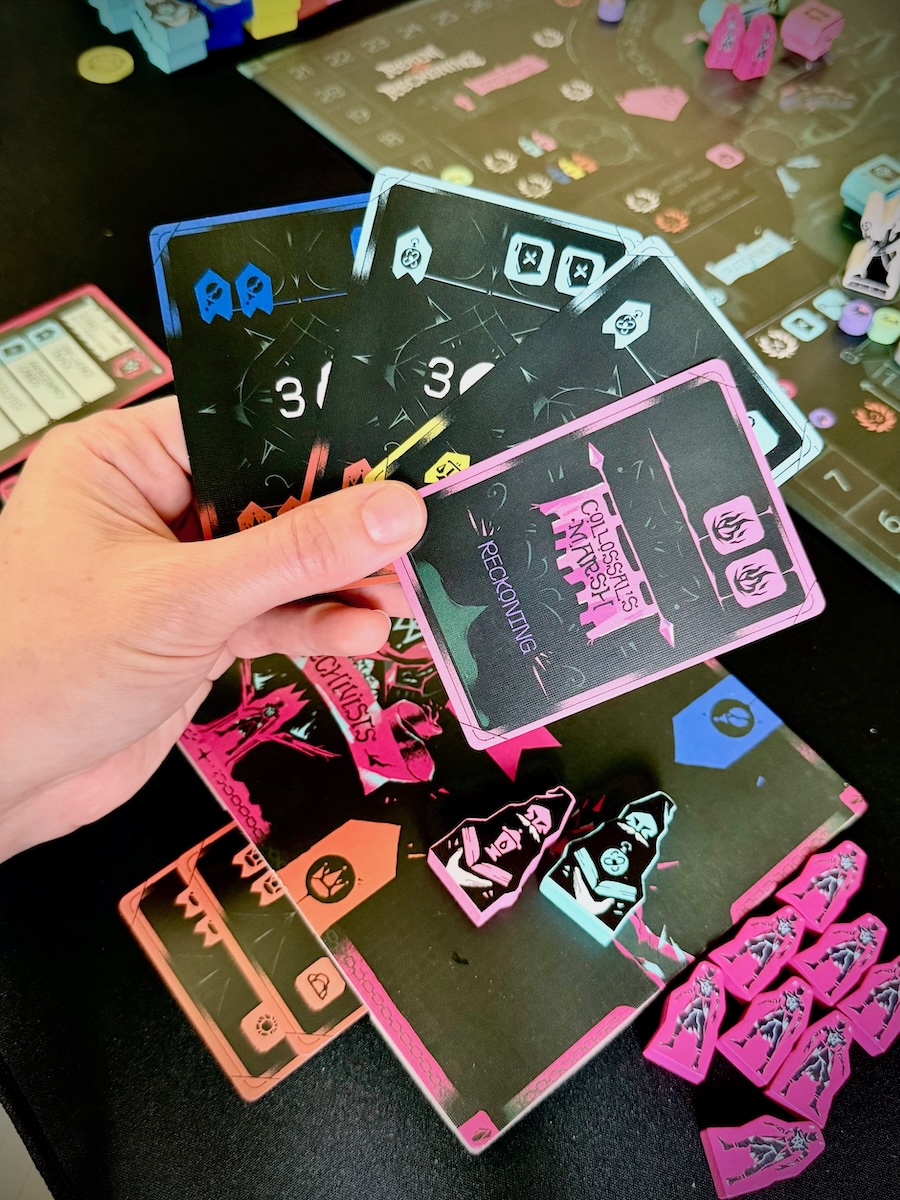
The reckoning cards shuffled into the action deck add interesting decisions and pressure. There are benefits to those that initiate reckonings, but often at the cost of taking a more immediately useful action. Sometimes it makes more sense to wait and gather resources to win the reckoning you know will be coming up soon. Scanning other players’ resources is very helpful when determining whether or not to pull the trigger.
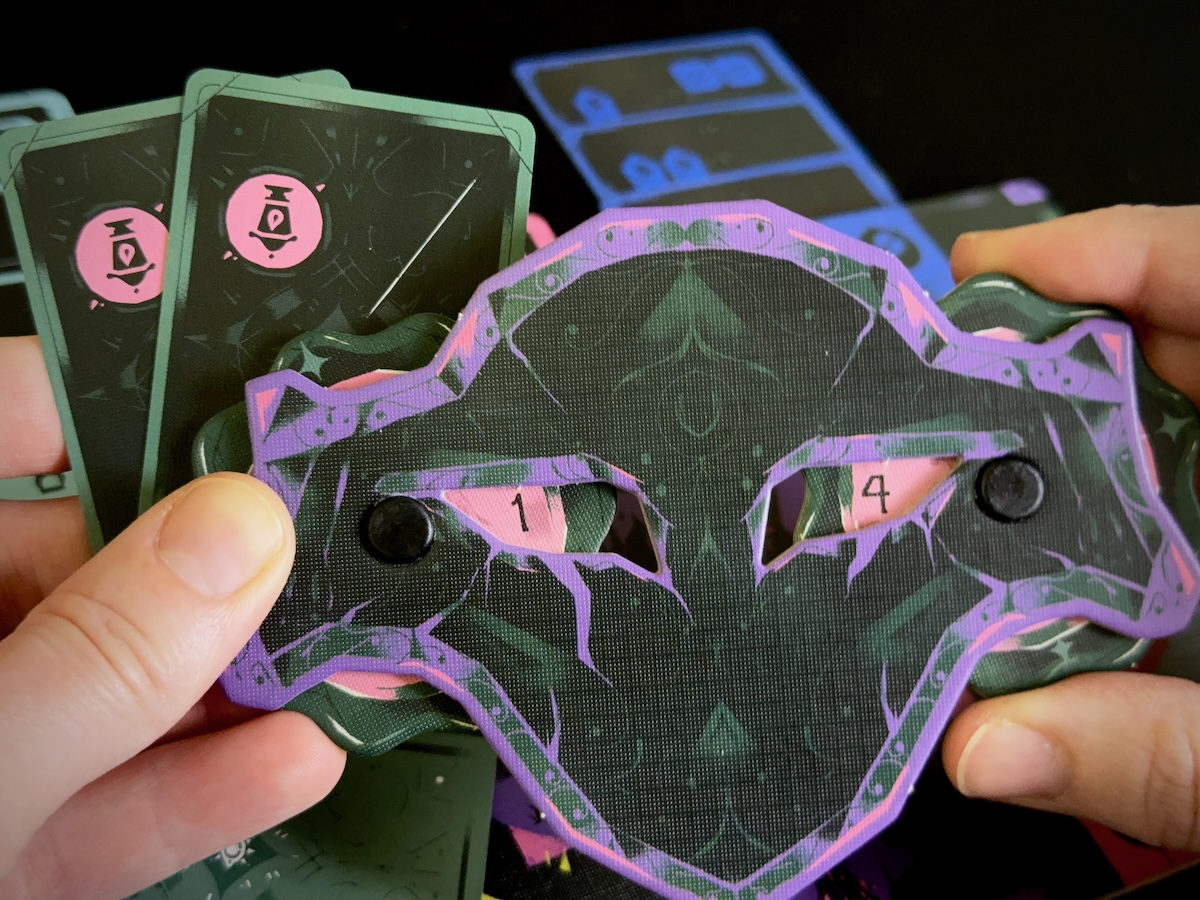
The reckoning phase is the heart of the game. Secret bidding with incomplete information creates dramatic, and sometimes hilarious, moments. Watching someone massively overbid and tank their future economy or underbid on purpose to gain a strategic advantage adds weight to every choice. I’ve purposefully lost a reckoning to stay in last place because it better aligned with my scoring plan. Moments like these can bring a lot of laughter to the table.
Accessibility and Pacing
I found the game relatively easy to learn. The only early hurdles were understanding how different resources convert into bid power and wrapping my head around the various scoring mechanisms. Thankfully, the player aid helped, and it all clicked into place very quickly. It’s not overly-complex, but there’s enough nuance to keep things interesting.
With three players, the game moved quickly. Simultaneous card selection and fast action resolution helped keep downtime to a minimum. While adding players may stretch the time a bit, the overall pace remains brisk. For a game with this much depth, the short runtime was a welcome surprise.
Interaction Without Aggression
Although there’s no direct combat, Realm of Reckoning offers plenty of indirect interaction. You’re always weighing how your choices might benefit others and trying to avoid giving away easy points. Area influence matters, but unlike many area control games, conflict here is subtle. It’s more about outmaneuvering than confrontation.
We also enjoyed the amount of table talk the game encouraged. From joking about bad bids to making mock-threats over stealing away artifacts, the social element was strong and added a lot to the experience.
Artifacts, Claim Tokens, and the Bidding Puzzle
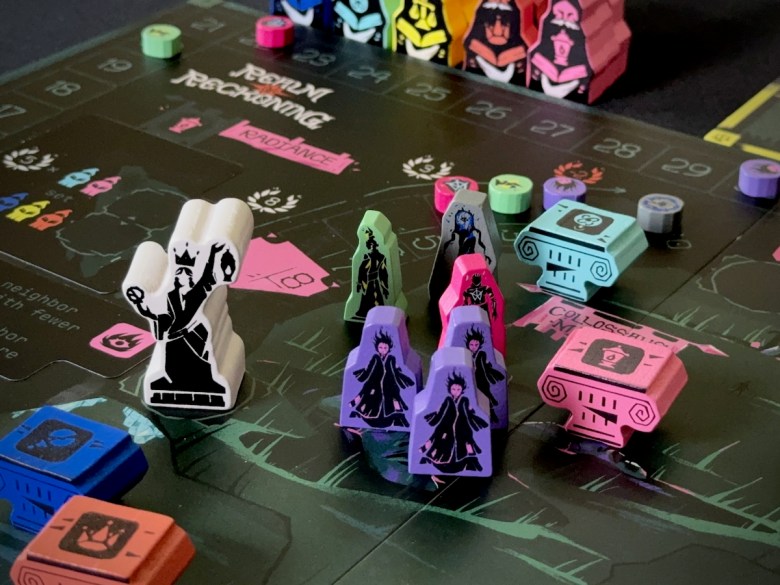
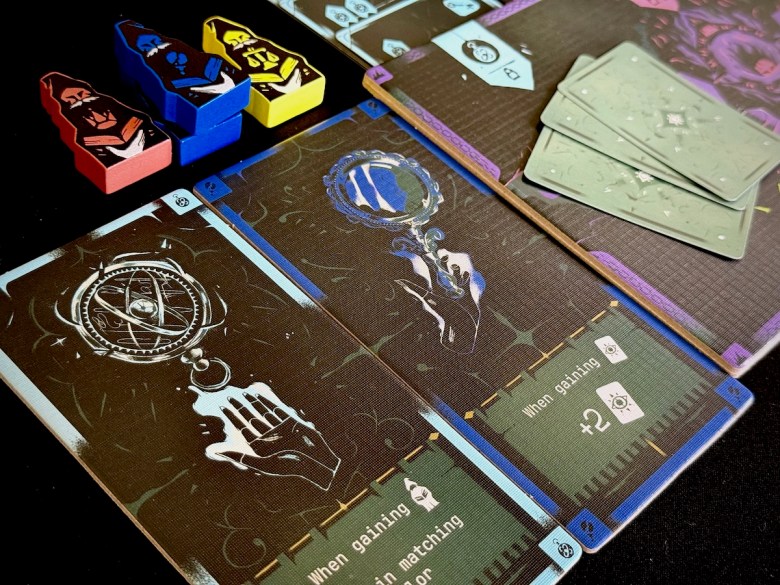
Artifacts add a strategic layer by granting passive bonuses when a player surpasses a threshold of influence in a given color-coded region. These benefits can be game-changing, especially during reckonings. As a result, artifacts are hotly contested and often shift hands.
Claim token movement is another standout mechanic. Each region begins with its own claim tokens, but these shift throughout the game, sometimes leaving regions completely stripped of their original markers. When combined with hidden mercenary cards and public influence and wardens, an unpredictable bidding puzzle emerges.
Comebacks Are Possible
Realm of Reckoning does an excellent job of keeping players engaged, even when there’s a scoring gap. Even if you’re behind, comebacks are possible. There’s always another monument to pursue or a way to shape the endgame in your favor. Losing a reckoning means keeping your resources, which can give you the edge in future rounds. One of the monuments even offers a substantial bonus to the player in last place. These mechanisms are built in to help prevent runaway leaders.
Aesthetics and Components
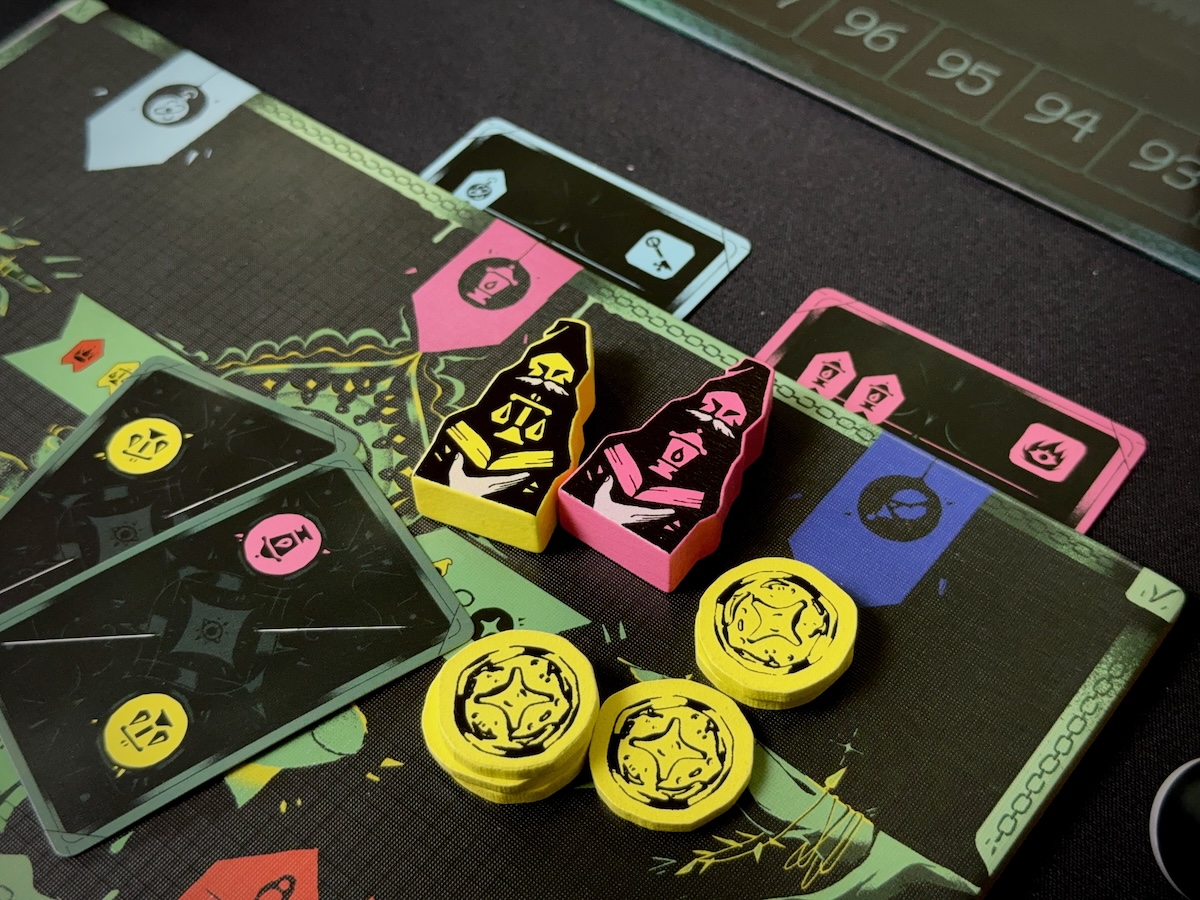
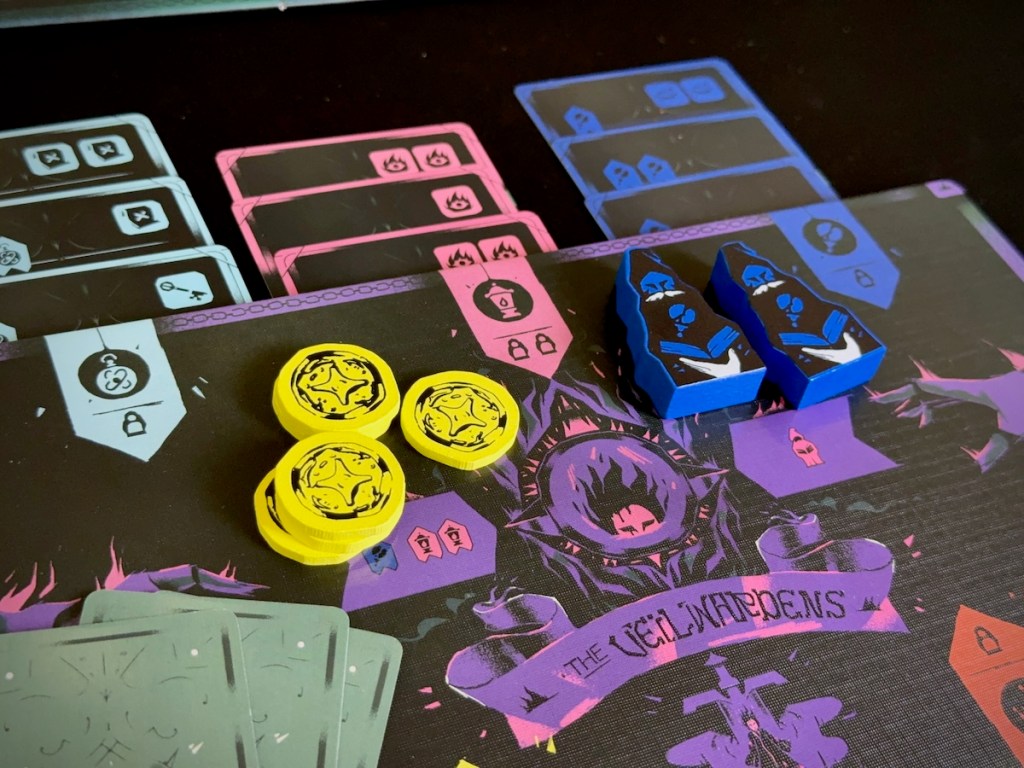
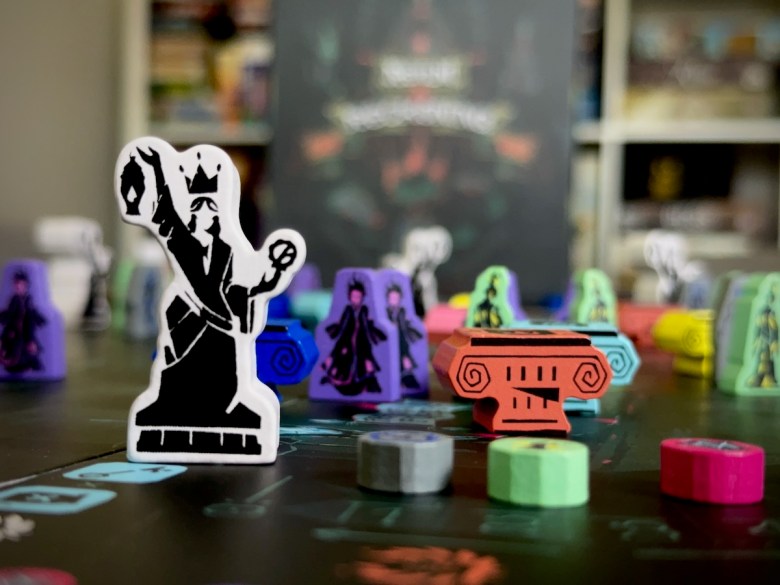
Unsurprisingly, IV Studio has delivered on visuals. Even in prototype form, the artwork and component quality are impressive. The wooden acolytes are screen-printed with distinct, spooky faction icons, and the board is dripping with eerie, wasteland atmosphere.
That said, we did experience some visibility issues. The board was a bit too dark in places, and two of the acolyte colors (brown and gray) were visually similar at a quick glance on the board. These are relatively minor issues, and I know the board is getting a visibility upgrade in the final version. Despite that, the game was still visually striking and fully playable.
Impressions
Realm of Reckoning left a strong first impression – it felt like something special right from the start. I’ve enjoyed nearly every game I’ve played from IV Studio, but so far none have dethroned Moonrakers as my personal favorite. I’m not ready to say Realm of Reckoning will take that top spot, but it just might give Moonrakers a run for its money.
I’ll admit, I was a bit apprehensive about the idea of shifting scoring parameters. I tend to hyper-focus on a few objectives at a time and don’t always adapt well to change. But the game handles it smartly. Instead of constantly moving the goalposts, it adds new ones. And as a player, you are part of an ensemble architectural team that gets to determine those goalposts. This gives players the chance to plan long-term strategies while trying to determine when it makes sense to pivot towards an unexpected goal.
One of the things I really appreciate is how the game keeps everyone at the table engaged. The bidding process is genuinely fun and has created some laugh-out-loud moments, both when someone overbids dramatically or sneaks in with a clever lowball. The shifting claim tokens and varied resource-to-bid conversions add layers of strategy that keep things unpredictable. You can usually guess how strong another player’s bid might be, but there’s enough hidden information and unknown intent to throw those assumptions off. I love that dynamic.
So far, this game has brought me a lot of joy, and I’m really looking forward to seeing it in its final form. If you’re a fan of interactive games – especially ones with clever bidding mechanics and an evolving game state – Realm of Reckoning is worth checking out.
If you’re interested in Realm of Reckoning, check out their Kickstarter campaign starting June 24th!
 Tabletop Mom