
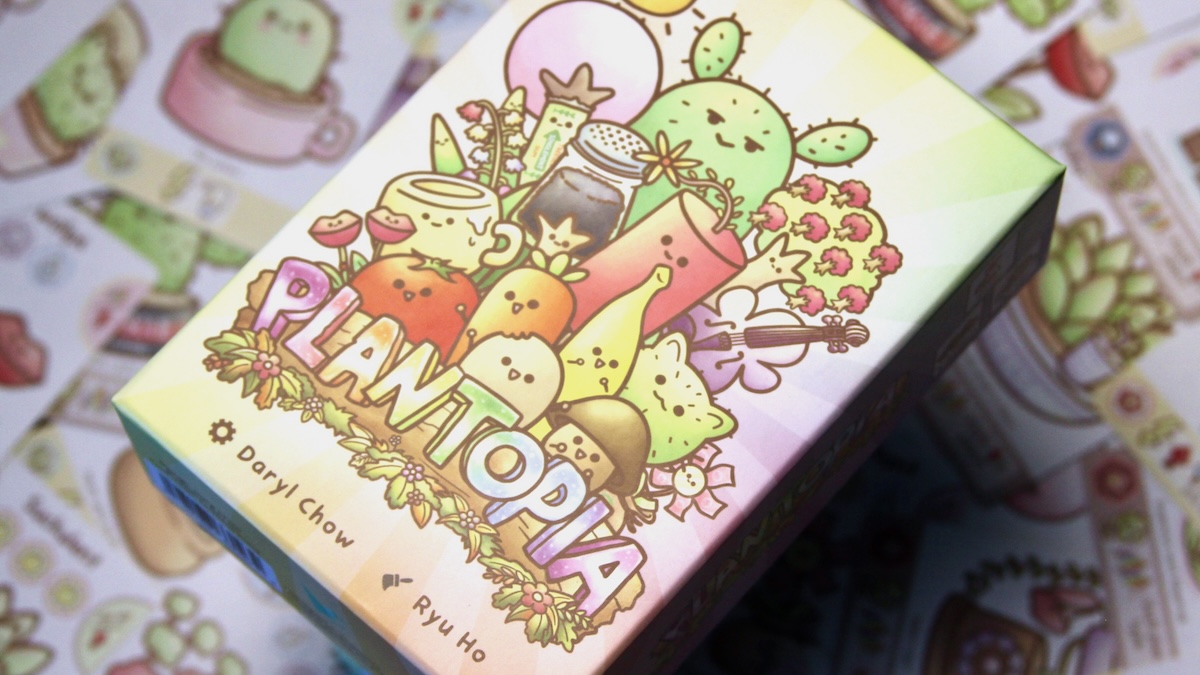

A veritable cornucopia of earthly vegetables has traveled to a planet inhabited by strange and punny plants. They have made it their mission to help the residents of Plantopia grow and maximize their potential. May the craziest garden win!
Game at a Glance
- Barrel Aged Games
- Times: 30 min
- Players: 2-5
- Ages: 10+
- A review copy of this game was provided by the publisher; however, my opinions are my own
Skip to Review; Skip to Final Thoughts
Overview
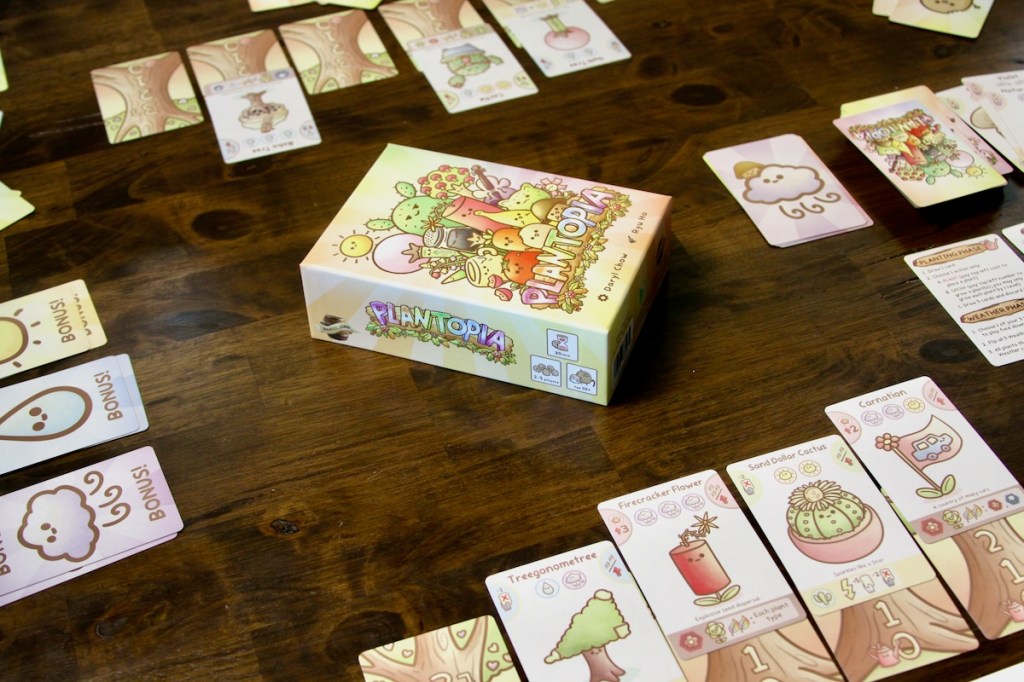
This is a light card game with hand management, set collection, and meteorologic speculation. The game comes with 102 plant cards divided into categories – baby and adult versions of various trees, cacti, and flowers. Each player will have five planter cards that can house and grow plants. Turns consist of two phases of simultaneous play: the planting phase, and the weather phase.
The planting phase begins with each player drawing a card and taking a single action: playing (or “planting”) a card, leveling up multiple planted cards, or drawing new cards. Cards can be discarded as fertilizer to plant and grow cards. To create an adult plant, a planted baby must be sacrificed to “treevolve” it into its adult form.
In the weather phase players contribute one of their weather cards, face-down, to the forecast to be revealed simultaneously. If the weather is favorable, your planted cards will grow.
The game continues until somebody has planted four adult plants. Scores are tallied based on plants and bonus-scoring given by the adult plants.
Review
Plantopia is a card game where players must decide how best to use their drawn cards. That’s not to say it’s a purely tactical game – there is a decent amount of strategy thanks to a clever hand management system that forces tough decisions surrounding what to toss into the fertilizer bin and what to plant. It can also be tricky deciding when to replace a baby plant with an adult versus growing it to Level 3 and keeping it for scoring purposes. Adult plants are responsible for bonus scoring, and since you will likely only have four by the end of the game it is imperitivate that players choose their adults wisely. It’s always a good idea to search for a few adults with complementary scoring parameters.
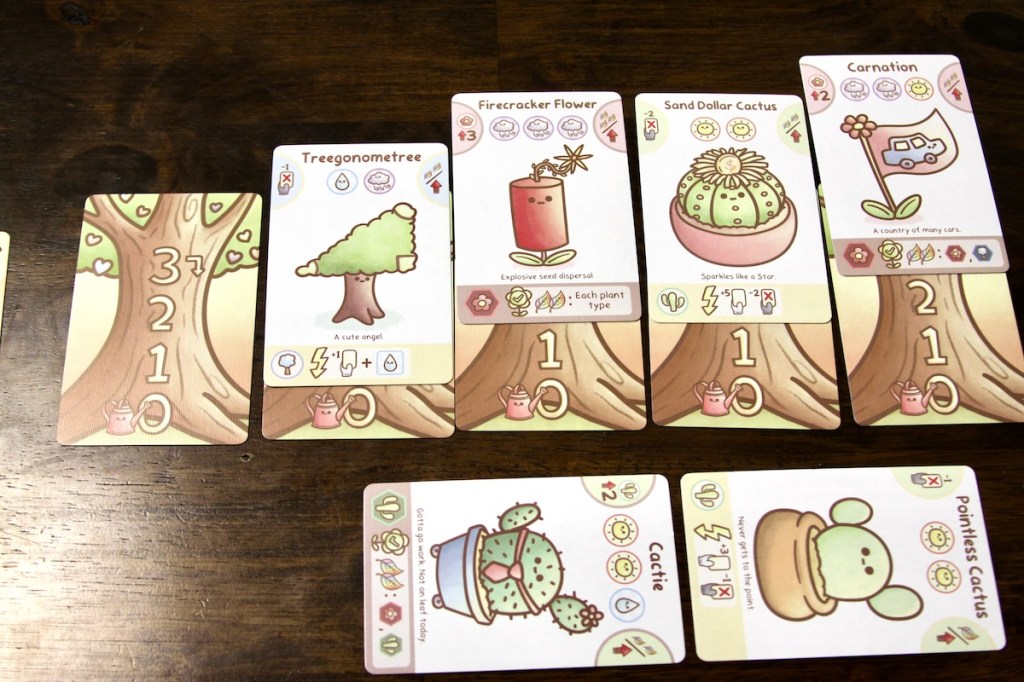
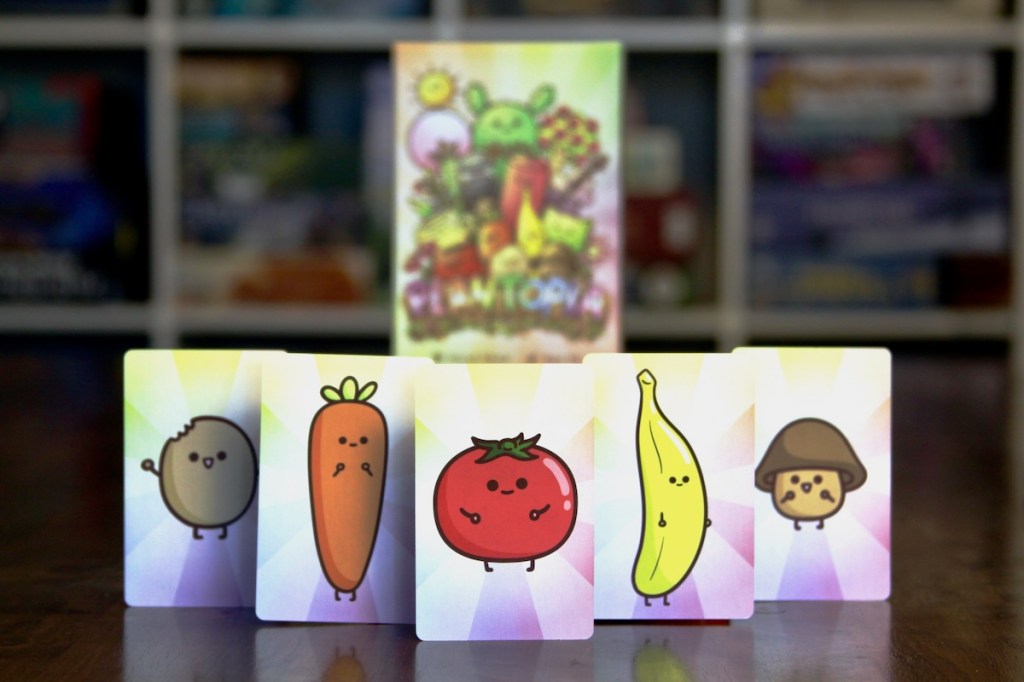
The cards are full of simple, punny, anthropomorphic plants. The cards are easy on the eyes, thanks in part to the soothing pastel color palette and adorable illustrations. The card layout is pretty clean with planting/growth requirements on the top right, card points on the top right, and info on the plants’ abilities on the bottom. The cards are color-coded based on category (cacti, tree, and flower) and whether the plant is a baby or an adult is indicated by a yellow or brown bar on the bottom, respectively.
As the cute illustrations and silly puns indicate, this is a family-weight game, but I’d put it on the meatier side of that category simply because of the heavy use of symbology and the tableau-building. Learning how to play to the scoring parameters might be tough for younger kids, and the symbology can be tricky for newbies to grasp. Fortunately, there are reference cards that explain the symbols, and a glossary of cards and their effects in the rulebook to clear up any confusion. There should be enough hefty hand-management decisions to keep adults at the table entertained for family game night or as a quick filler.
Plantopia is not heavily interactive during the planting phase. Your plants are inconsequential to your competition – that is, until the weather phase rolls around. Plants require several weather conditions to grow so players are often reliant on each others’ weather card plays to get movement in their garden. Snooping on competitors’ gardens can give hints as to which cards they might play, and you can choose your card accordingly. Educated guesses sometimes backfire in hilarious ways. It was clever to include this semi-collaborative phase – it adds a touch of interaction and almost forces players to check in on their neighbors in a game that would otherwise be “multiplayer solitaire.”
Replayability is boosted by the optional asymmetric player powers. There are a lot of repetitive cards, however. It’s not unusual to see the same card in your hand several times in a single game – especially the baby plants. It would have been nice to have 102 unique plant cards. The abilities for each category of plants tended to follow a similar theme – cacti give card draws, trees allow weather manipulation, and flowers help with growth. I didn’t mind that the abilities were similar, because it helps with strategy formation and keeps the game from getting too complex for its intended audience.
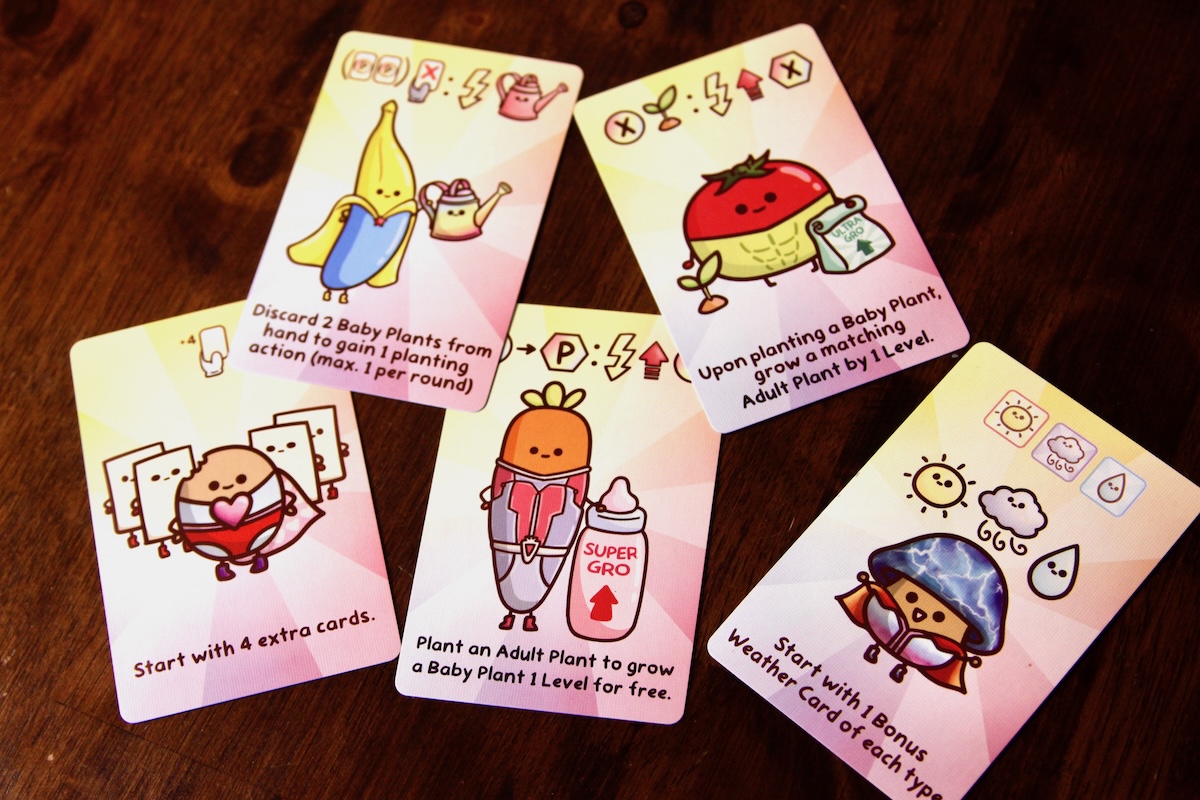
Optional player powers 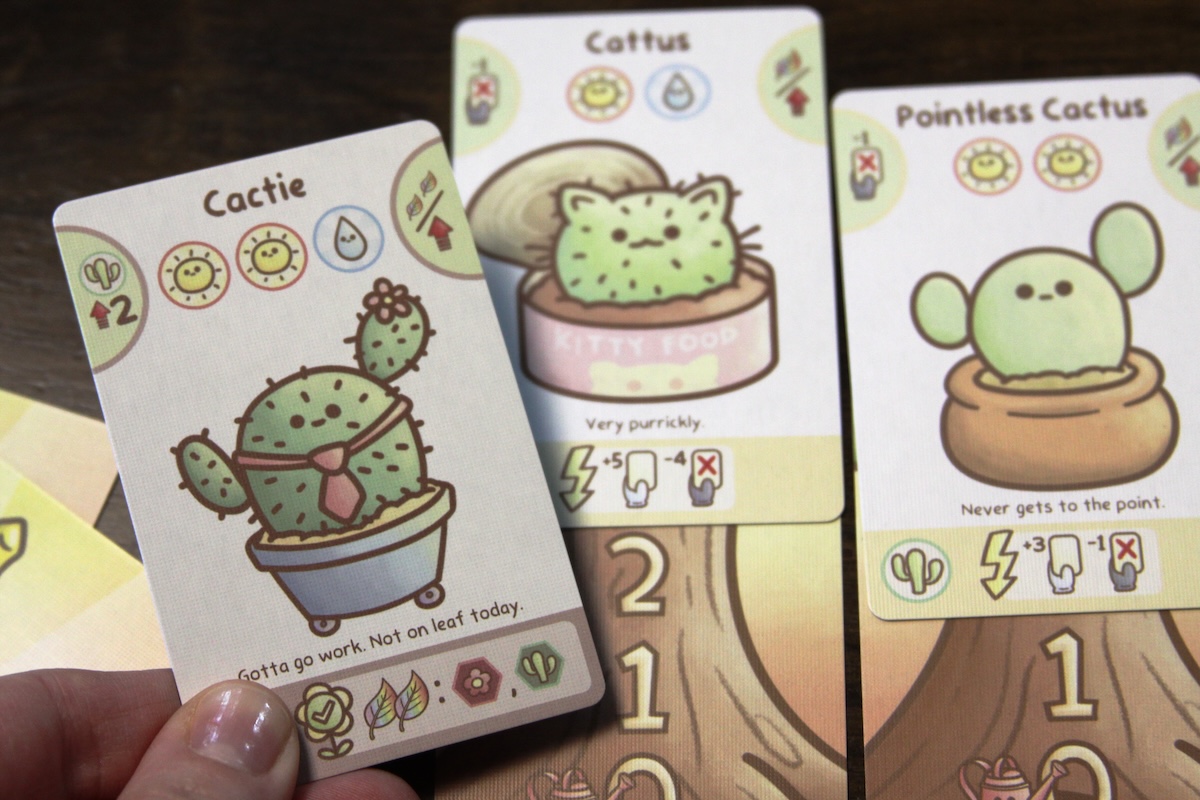
To plant the adult Cactie, a planted baby Lvl 2 Cactus must be discarded… 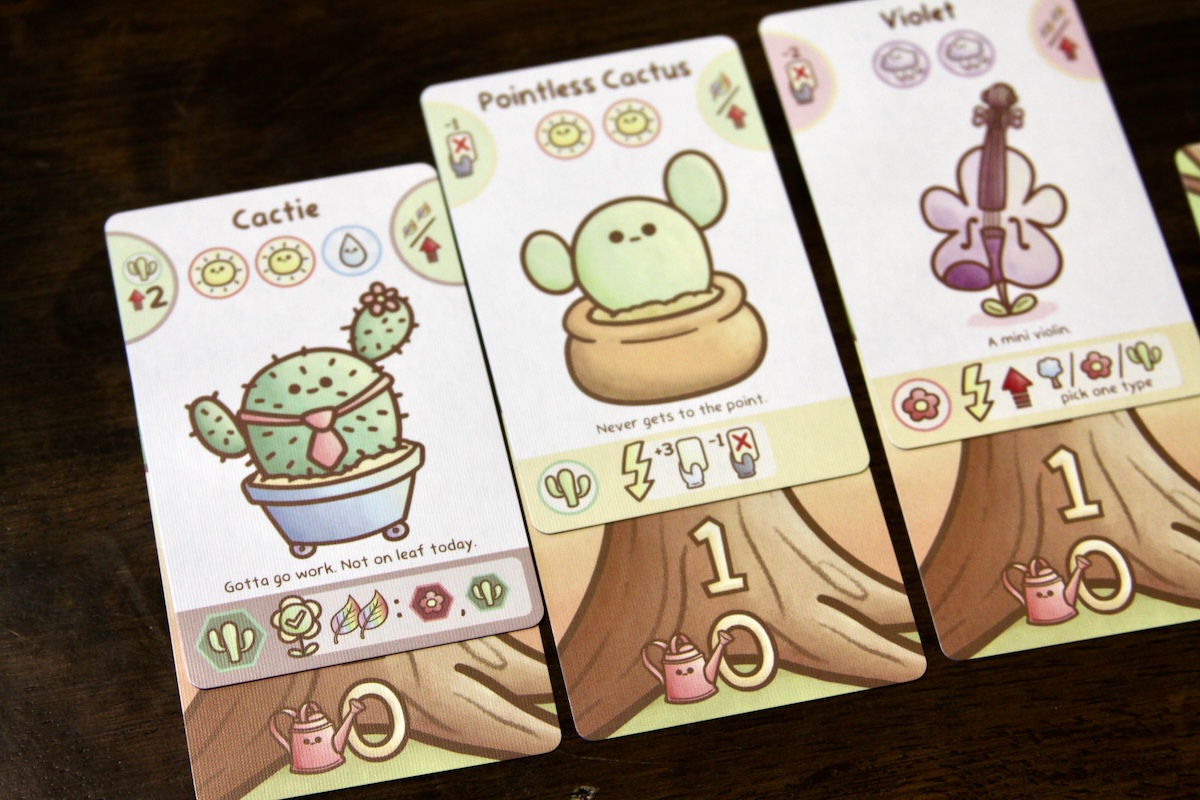
…like so 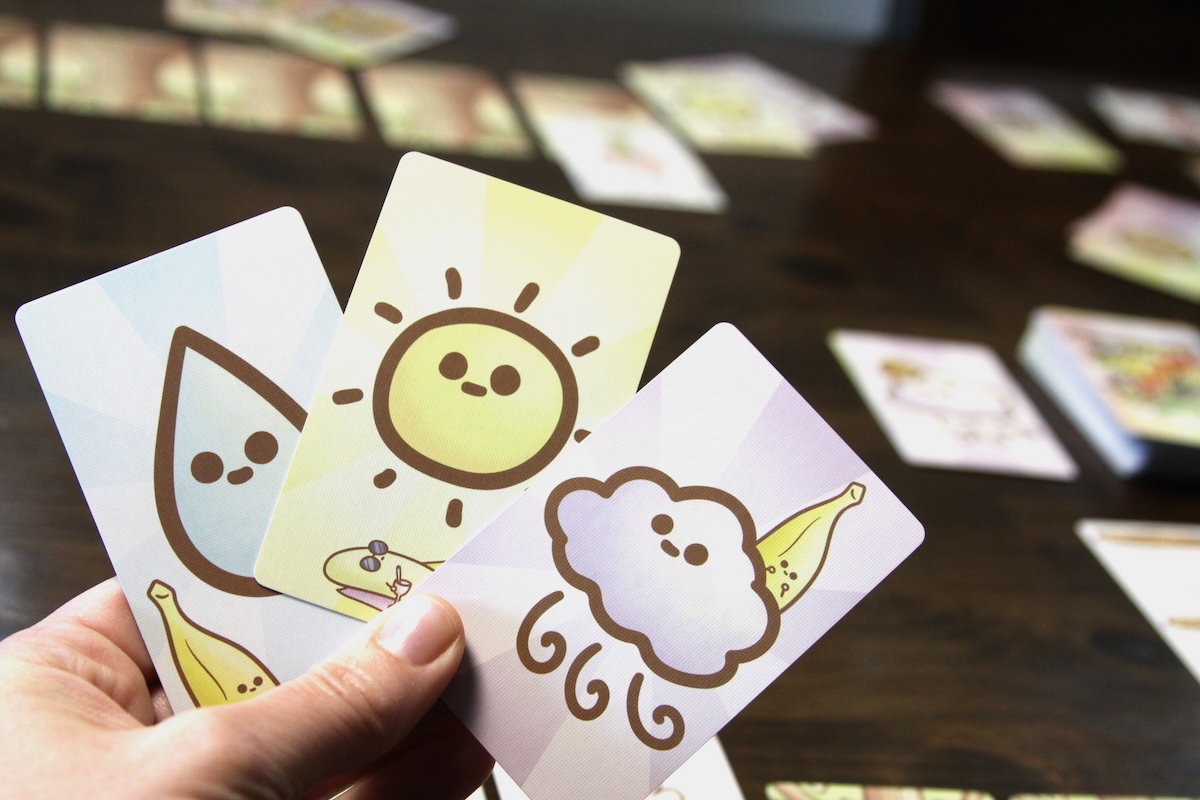
Each player has 3 weather cards to choose from each round 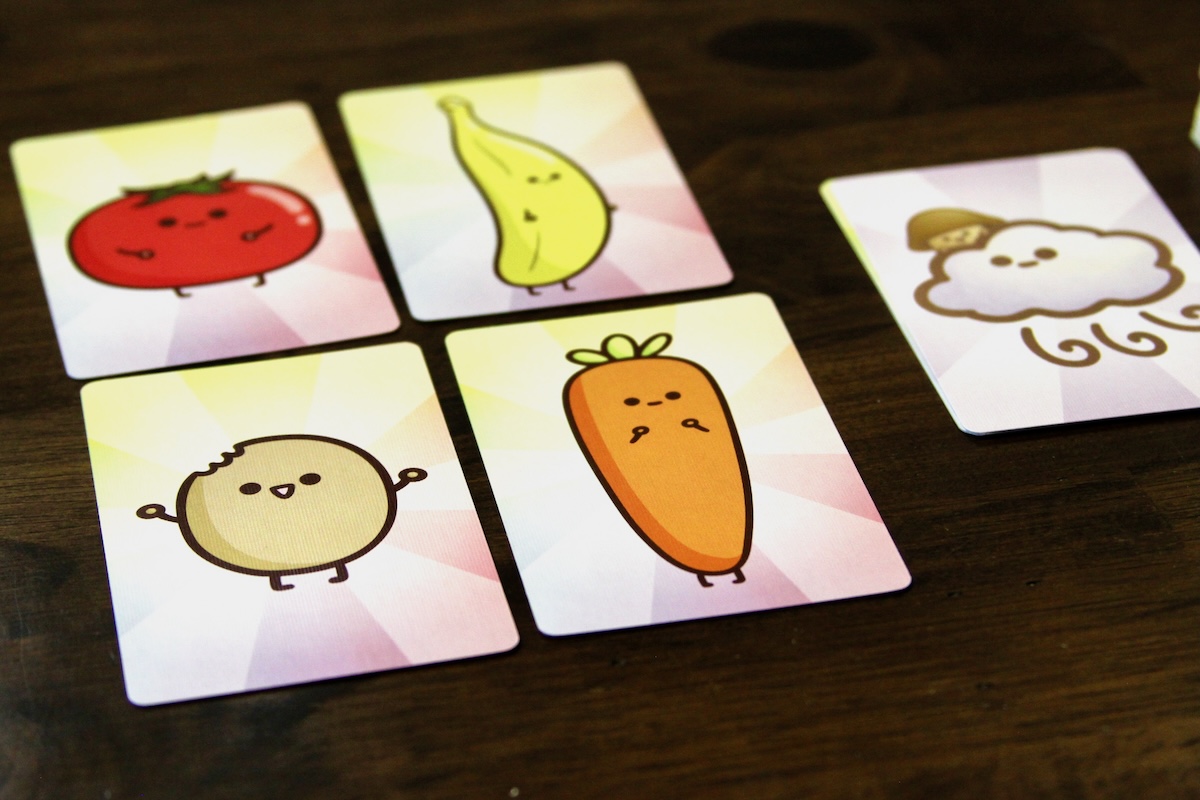
All players contribute 1 card to the weather phase… 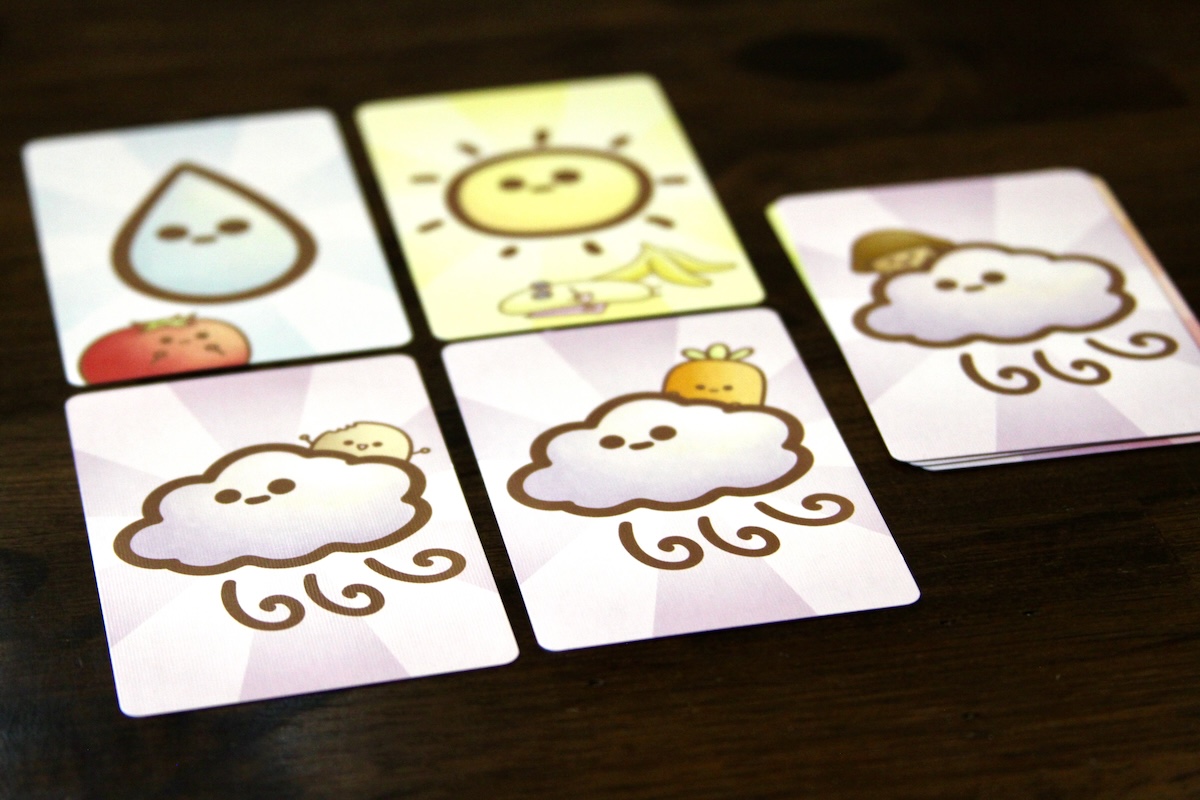
…and they are revealed simultaneously 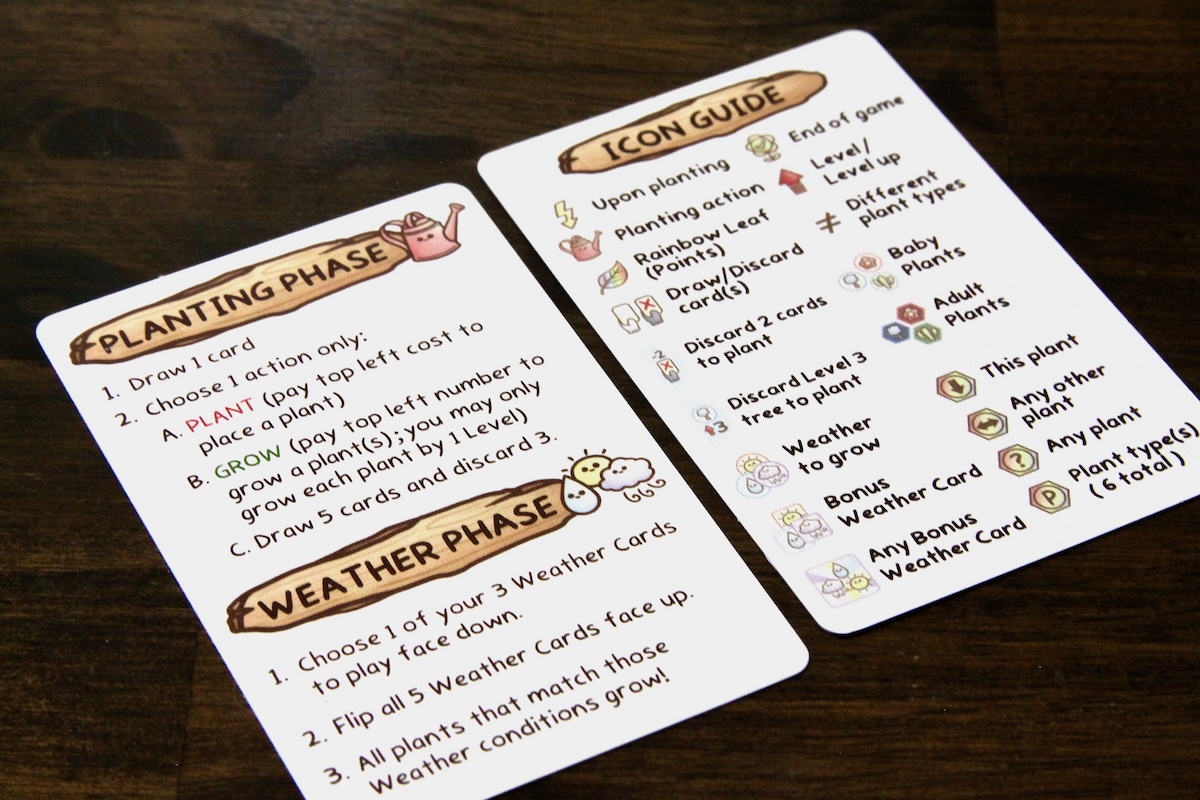
The Icon Guide is helpful to understand all the symbols 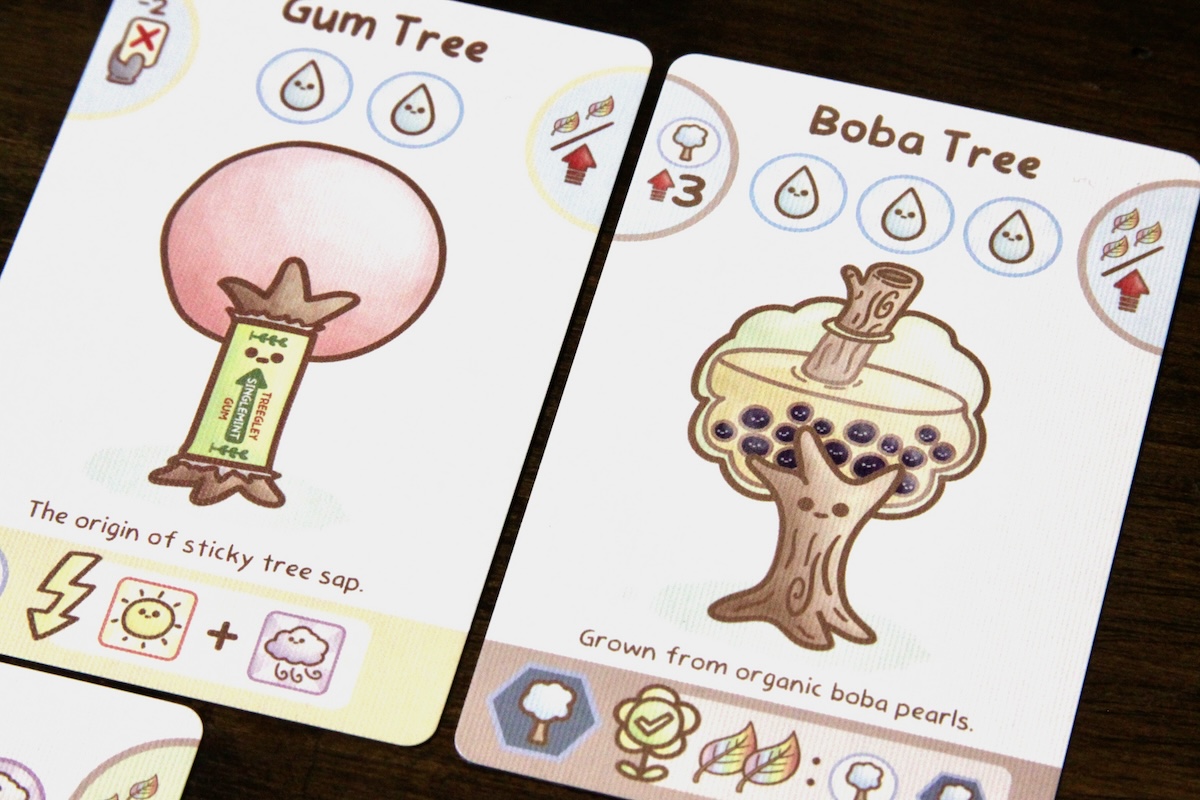
The artwork is cute and each plant comes with it’s own goofy pun
Final Thoughts
The hand management in this game was enjoyable but the highlight was the weather phase that transforms a table full of introverted gardeners into boisterous meteorologists. I had a lot of fun sussing out which cards might be revealed before choosing my weather card entry. It’s interactive, easy to understand, and has the potential to lead to fun table moments. And when somebody has gotten two or three adult plants out, the tension builds as players race to get as many points planted before the end game triggers.
Plantopia was a surprise. Based on looks I was expecting an exceptionally light family card game but there was more depth than I was ready to give it credit for. This would be a good option for newer gamers and older children, but there’s enough to chew on for seasoned gamers looking for a fast-paced filler. There might be a few hiccups during the first game as players familiarize themselves with the symbology, but it doesn’t take too long to learn the game’s language.
Plantopia blends a bizarre theme with adorable artwork and familiar, but fun, mechanics. It’s a pleasant family card game that is easy to recommend.
 Tabletop Mom
One of my favorites from Daryl Chow.
LikeLike