

In the third expansion to Wingpsan, the vibrant birds of Asia are invited to enhance our wildlife habitats.
Wingspan Asia is a standalone expansion for one to two players – the base game is not a pre-requisite for play at those counts. Additionally, this expansion can be combined with the base game to add card variety. The new flock mode can accommodate up to seven players.
This review will focus heavily on the duet mode, which has quickly become a preferred way to play Wingspan. I have played the duet mode with the standalone expansion and with the new cards mixed into the base game.
Game at a Glance
- Stonemaier Games
- 1-2 Players (standalone), increases Wingspan up to as many as 7 players
- Ages 14+
- 40-70 minutes
- A review copy of this game was provided by the publisher; however, my opinions are my own
Skip to Review; Skip to Final Thoughts
Overview
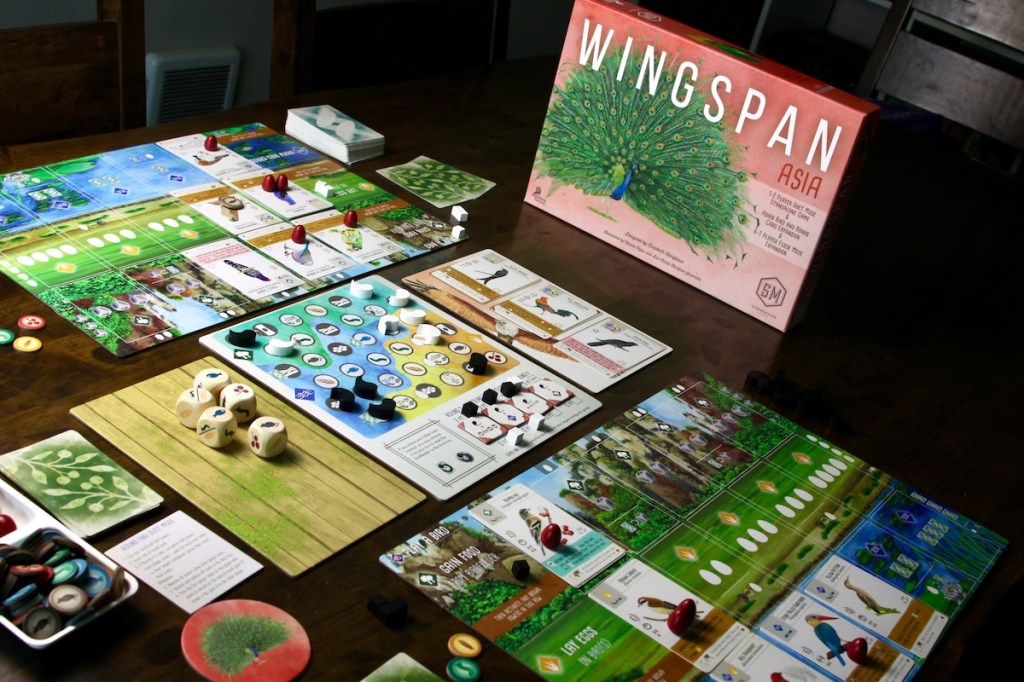
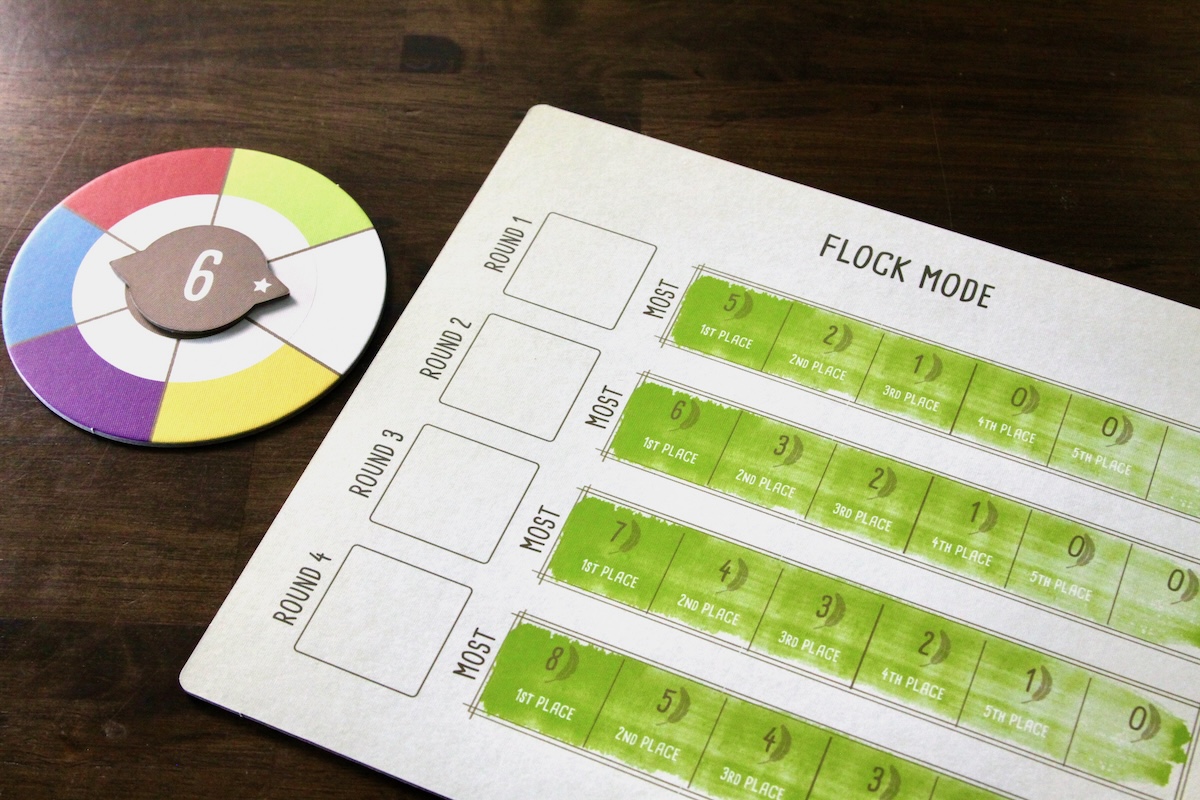
Wingspan Asia adds 90 new bird cards plus 14 bonus cards that may be mixed with the base game. For those who prefer to play Wingspan with its base rules, Asia will add card variety. And if you have always wished for the ability to play with more people, the added Flock Mode allows for up to seven players at once. Adding more players to a turn-based game such as this often backfires by increasing downtime, but this pitfall has been addressed by having two players take their turns simultaneously assisted by a turn order dial. We did not have the opportunity to try Flock Mode and I cannot verify that this runs smoothly (but reading through the rules it seems like it would). Duet Mode and Solo Mode can run without the original Wingspan, although you will miss out on some premium components like the bird feeder dice tower.
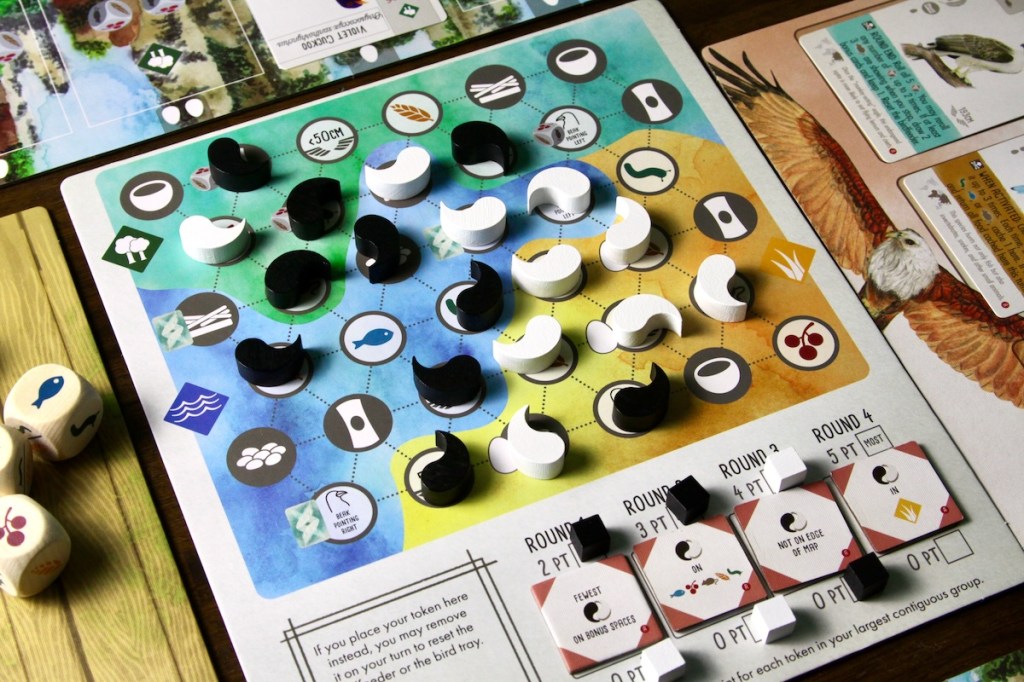
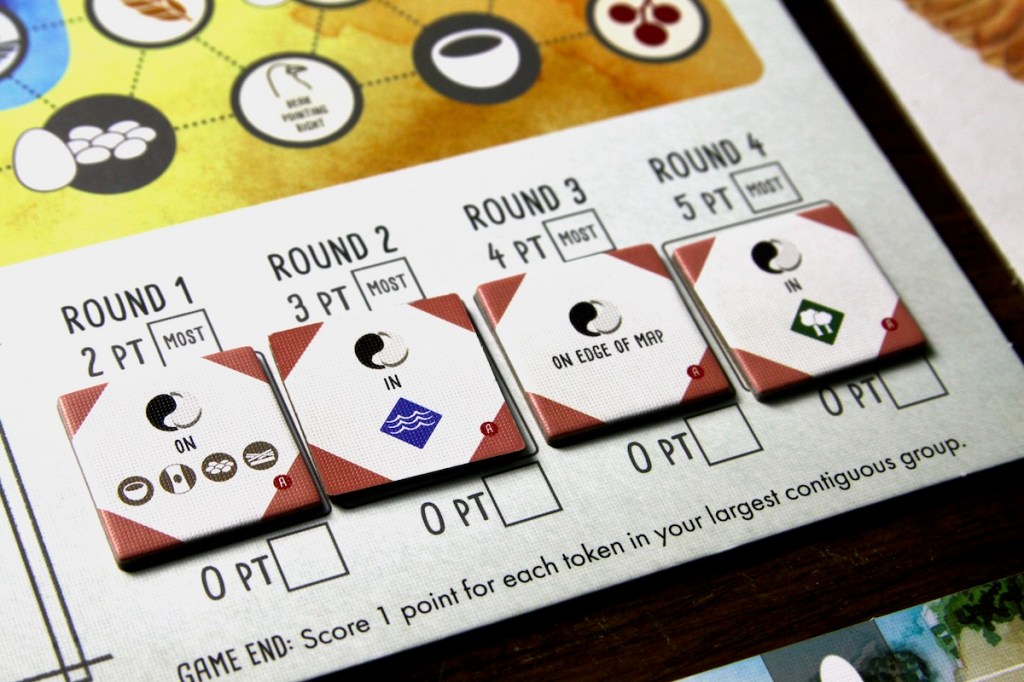
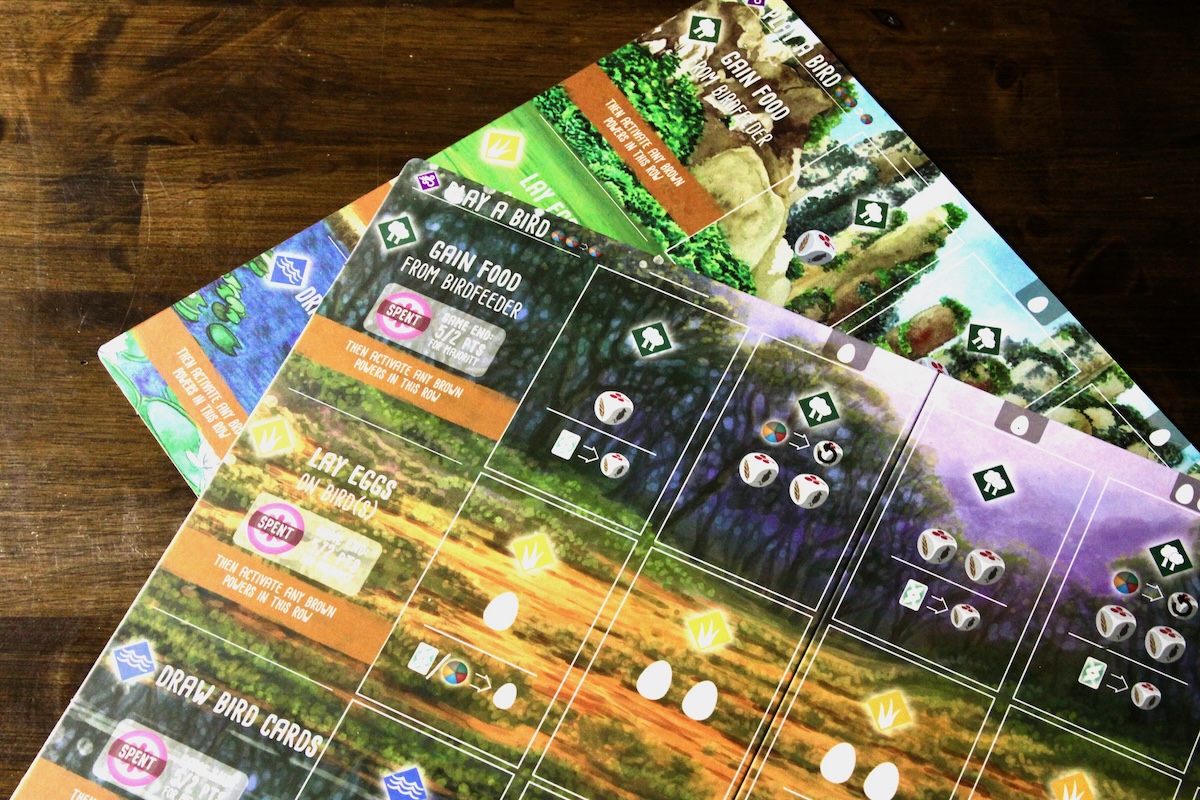
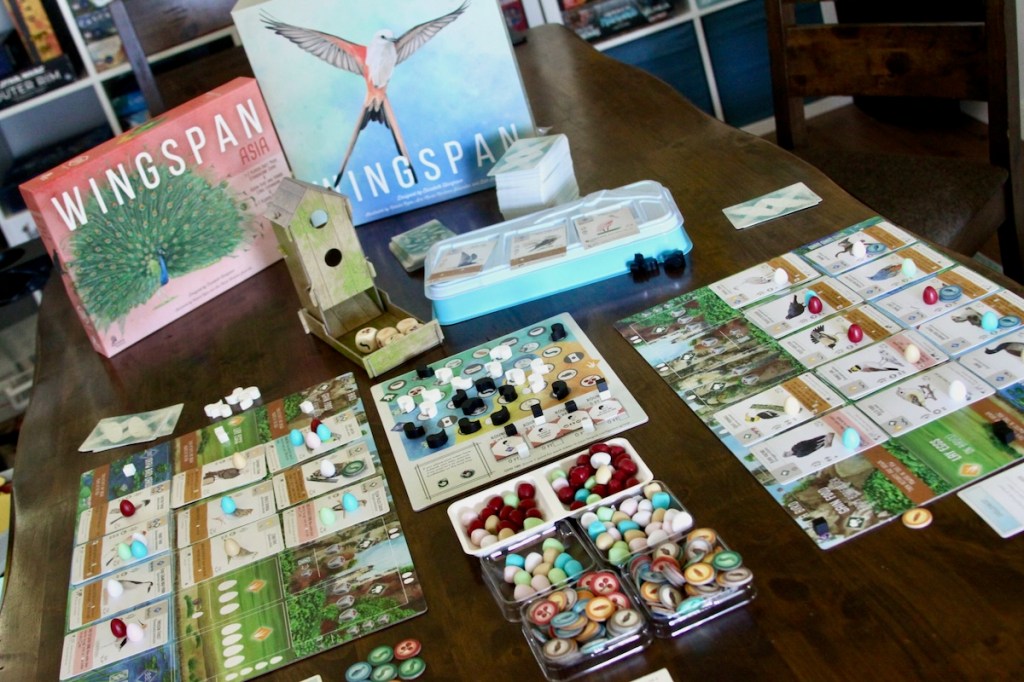
Duet mode runs very similarly to the base game. The most significant change is the addition of the Duet Board which adjusts round and end-game scoring. The original round goal mat is replaced with the Duet Mat and a set of end-of-round tiles specifically for the mat. As birds are placed in habitats, players have the opportunity to put one of their duet tokens in an unoccupied space on the mat. The token can be placed anywhere, assuming the bird placed is in a matching habitat and has the quality listed on the space (nest type, food preference, beak position, etc). The tiles are randomized and placed on the mat as round goals, and the player who has met the most requirements secures the victory points for that round. At the end of the game, each player scores for their largest cluster of contiguous tokens on the mat (along with the other scoring parameters, such as round goals, eggs, tucked cards, etc.).
Review
As a person who primarily plays games at the two-player count, Asia is my new favorite way to play Wingspan. The Duet Board makes the two-player experience more rewarding and interactive. Despite the “duet” title, this is a competitive game, and the new scoring board puts this version in the category of a “duel” more than a “duet”. The battle for space on the board is engaging and has had a direct effect on my strategy. It’s not uncommon for me to weigh a bird’s value as a tool to control a vital area on the Duet Mat versus its engine-building potential – sometimes it makes sense to place a bird to ensure my Duet Tokens can connect (or to prevent my opponent doing so) or to gain the instant benefit of a bonus space. The battle for strategic spaces on the Duet Board adds more interactivity to a fairly solo-style game.
Additionally, I found it easier to visualize how I was stacking up on the round goals. Rather than referencing my opponent’s habitat to determine who’s winning, it’s simpler for me to look at the shared board as all the round goals are directly related to the spaces here. The board is also rewarding, giving several opportunities to accumulate bonuses. I found my husband and I tend to fill more habitat spaces in this version – partially due to the small engine boosts offered on the Duet Board.
There are six double-sided end-of-round goal tiles. This may not seem like a lot, but that never felt stale in my playthroughs. The setup of the goal board encouraged me to take different strategic pathways in every play. After several games of Asia on its own, the 14 bonus cards and 90 bird cards did start to feel repetitive. After mixing the decks into the base game that problem was alleviated.

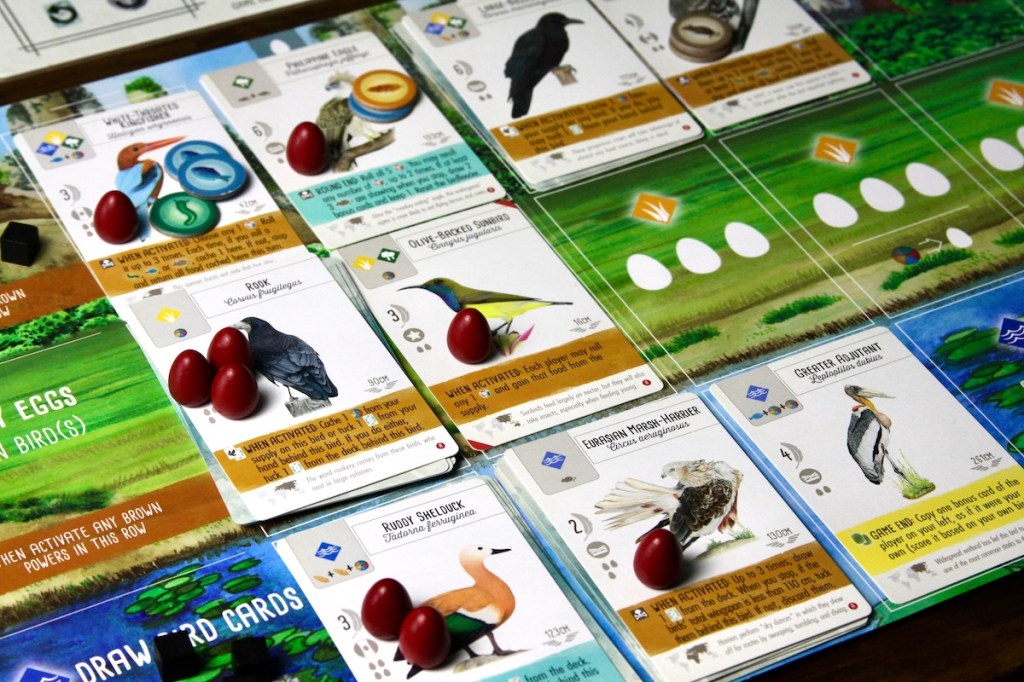
Despite having only 90 birds in the standalone version of the game, the new bird types and powers have done a lot to increase replayability by making non-egg-laying strategies viable. In our Duet Mode games using the standalone expansion, we had several games where caching food or tucking cards outscored eggs. This was refreshing in a game where the final round usually turns into a predictable egg-laying fest.
Although the brown “when activated” cards are still the most plentiful, the new card types added to the game are interesting. The teal “round end” cards can be incredibly powerful, and although they are quite rare, the yellow “game end” cards might give players the final point push needed to secure a victory.
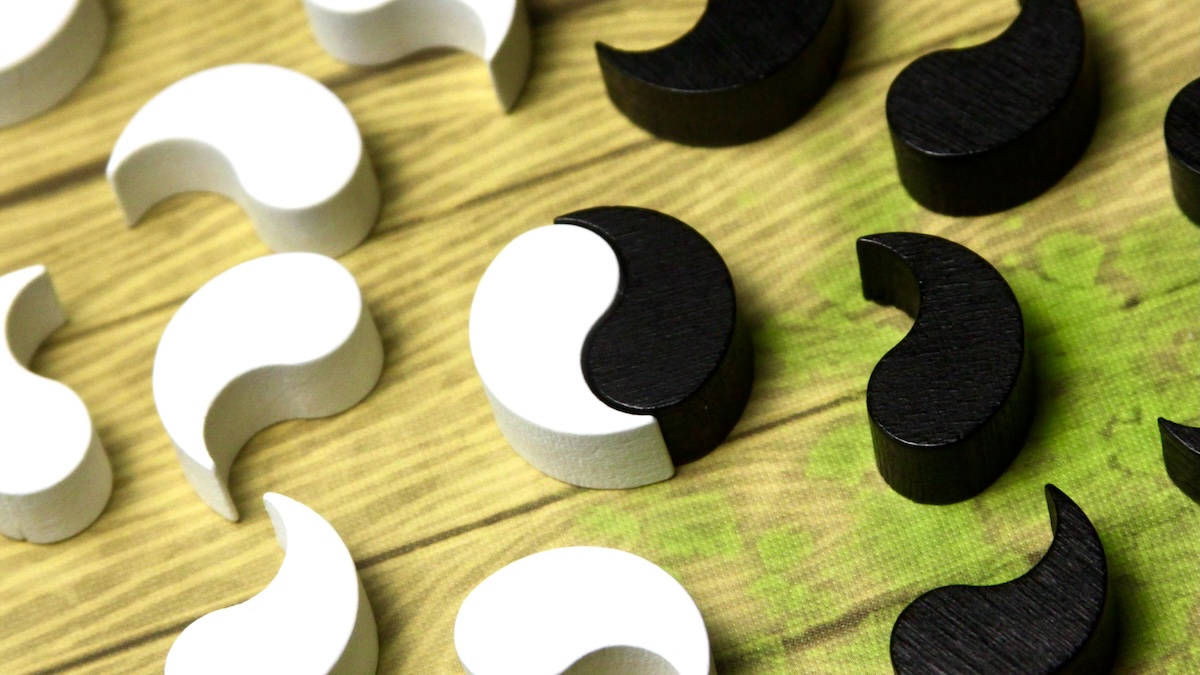
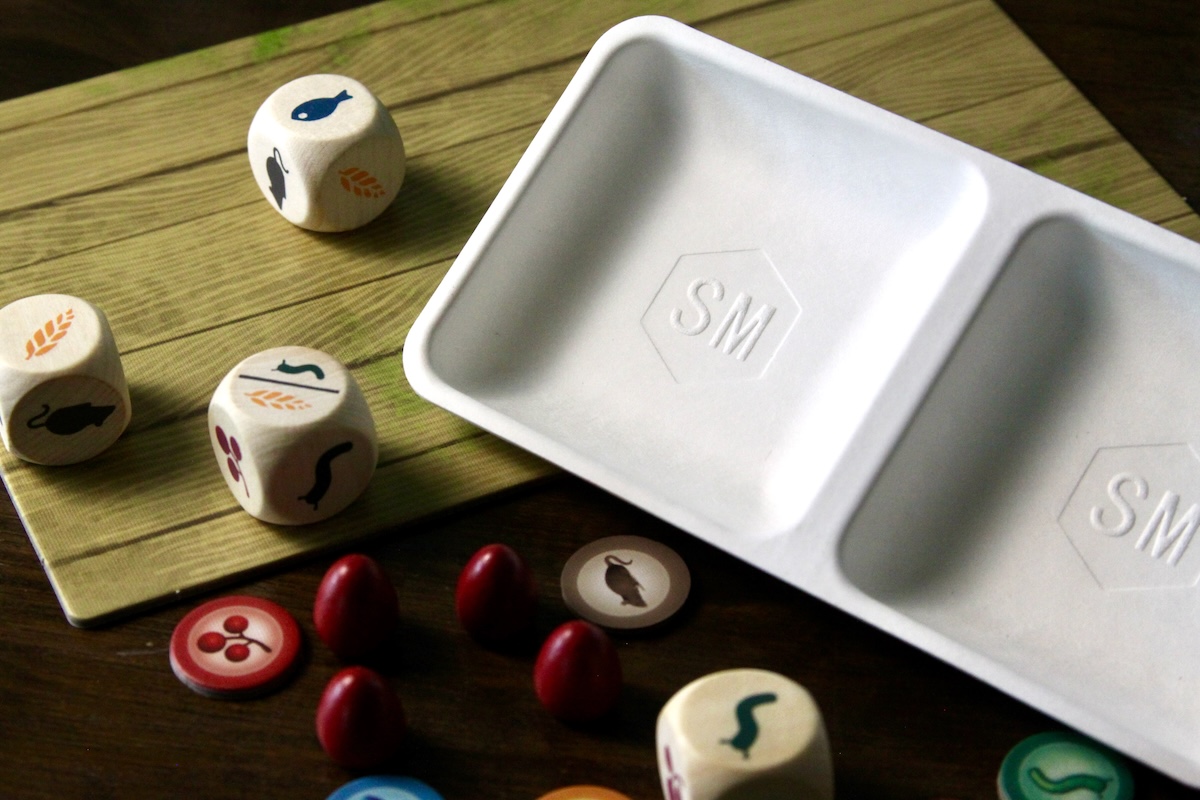
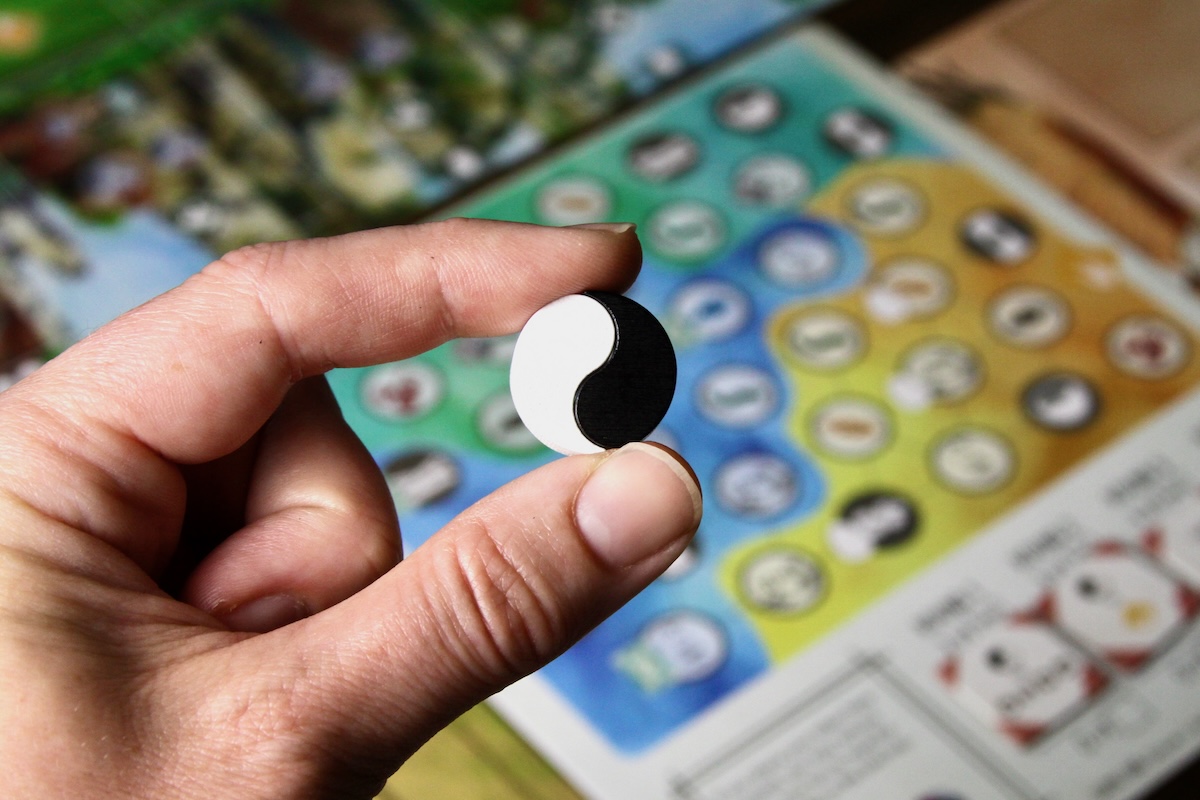
As far as components go, Stonemaier continues to produce games of excellent quality. The bird feeder board and environmentally-friendly tray are not as functional nor attractive as the base game’s bird feeder dice tower and GameTrayz, but since many people are adding this to their Wingspan collection it would be redundant and excessive to include them in this expansion. The duet tokens evoke the yin and yang symbol but surprisingly are not ever combined in that way throughout the game. This is a little confusing as at no point during the game do these tokens share a space. Additionally, clear tokens might have been a better choice to increase the visibility of the spaces for scoring purposes. It was pointed out to me that the font size on the Asia bird cards is slightly larger than the cards in the base game. I did not notice it until it was pointed out, and even then it’s not a jarring difference and I am not bothered by it but it’s worth noting. Minor issues aside, the game is a beautiful production, with an art style and component quality that fits practically seamlessly into the base game.
Final Thoughts
Asia is a brilliant enhancement to the smash hit Wingspan. It’s not often an expansion that serves modular content to its base game also stands on its own as a complete work. This addition does a lot to broaden the spectrum of play. Wingspan was always open to head-to-head play, but the duet board makes it a much more appealing choice for a couple’s weeknight game in my house, and I find myself reaching for the game more often. Additionally, the game has devised a clever solution to increase the player count to seven – adding simultaneous play to cut out downtime.
Although the standalone version of the game may become stale to players who play it a lot, I assume most people interested in Asia are looking to add it to the base game and potentially other expansions. From personal experience I can say that the Duet Mode holds up when combined with base Wingspan and the new cards add enough variety and mechanics to renew my interest in the game. We have combined our decks and components and are unlikely to separate them.
Overall I’m very pleased with Wingspan Asia and can enthusiastically recommend it to fans of Wingspan, especially those who are interested in the two-player experience. The Duet Mode and additional card powers have added interesting twists to the game while preserving the essence of what Wingspan is: a beautiful card engine builder that is easy to get to the table.
 Tabletop Mom