
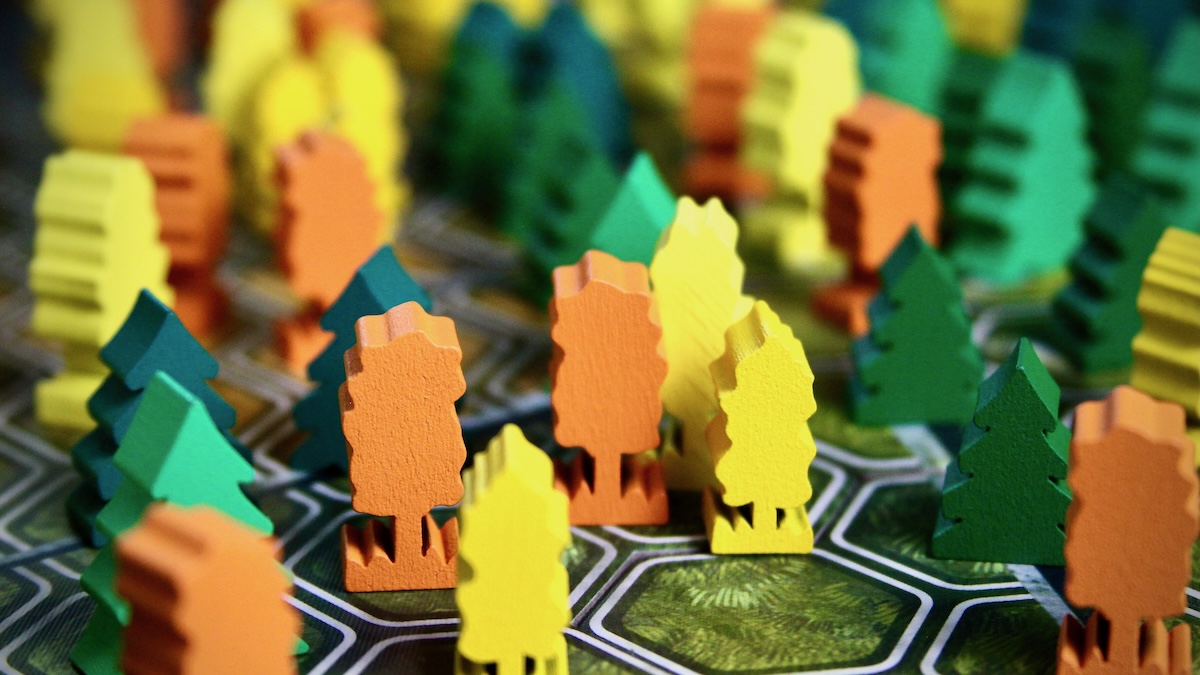

A new forest is emerging and a tense battle for territory is on the horizon. Both aspens and evergreens face off to grow upwards and outwards in a race to dominate the woods. The trees must grow tall to utilize the sun’s energy but need also rely on the wind to carry their seeds to new lands. Will the new forest be a deciduous dynasty or an evergreen empire? Whoever can harness the sun and wind most effectively will decide.
Game at a Glance
- Ludivore Games
- 2 players
- 10+
- 20-45 mins
- Coming to Kickstarter September 2024
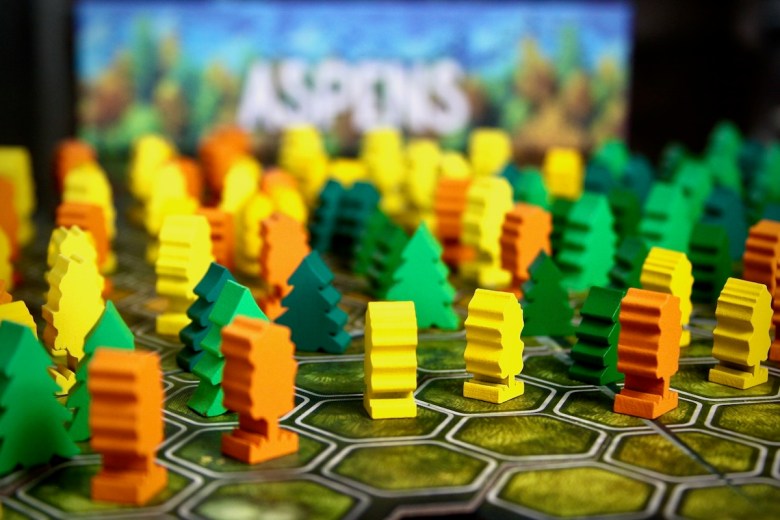
The game shown in this preview is a prototype; components and gameplay in the final version are subject to change.
Rules Overview
The goal in Aspens is to control the most hexes with your trees. This is achieved by rolling two dice representing the wind and the sun and strategically placing new trees in the forest.
The setup in Aspens consists of assembling a puzzle board filled with hexes and overlaid with a compass. Players choose which tree team they will represent – the yellow and orange-hued aspens, or the aptly-named evergreens. Players each place a tree near each of the three water tiles, claiming three hexes as their starting spaces. Additional starting trees are then placed on these hexes, growing the “height” of those hexes and allowing them to capture sunlight more easily.
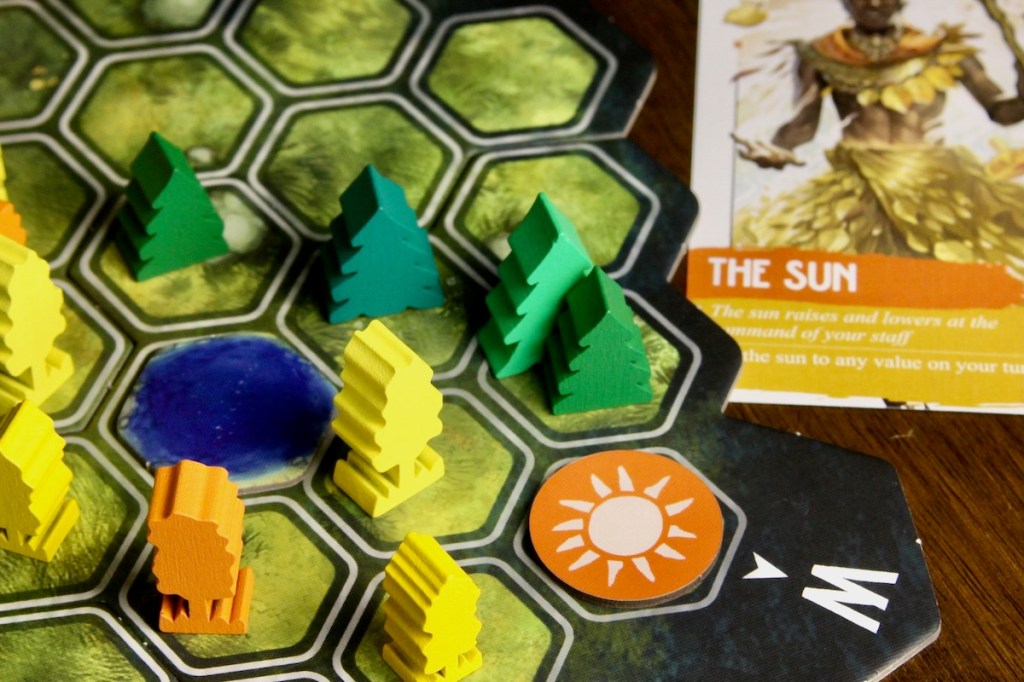
Players will take turns rolling two D6 dice: one representing the wind and the other the sun. The wind die has cardinal directions and the sun die is numbered 2-7. The sun die is responsible for generating trees for both players. The height of the trees is represented by how many trees are on the hexes. For example, if a player has two hexes with three trees, they will generate two trees each time the sun die comes up ≤3 (one for each space containing three trees). The active player always gets +1 tree added after their die result is tabulated.
The active player plants trees gained on both their own and the opponent’s sun die results. A player may add their trees to pre-seeded hexes, increasing their chances of generating trees in the future. Alternatively, they may plant them in the direction revealed on the wind die to claim territory or perform any combination of the two. If at any point a player cuts off a section of the board ensuring no way for the other player to get to the enclosed tiles, those tiles belong to the player who closed the area off. That player immediately fills each hex with a tree.
Turns continue until all spaces are claimed. The player who controls the most spaces is victorious.
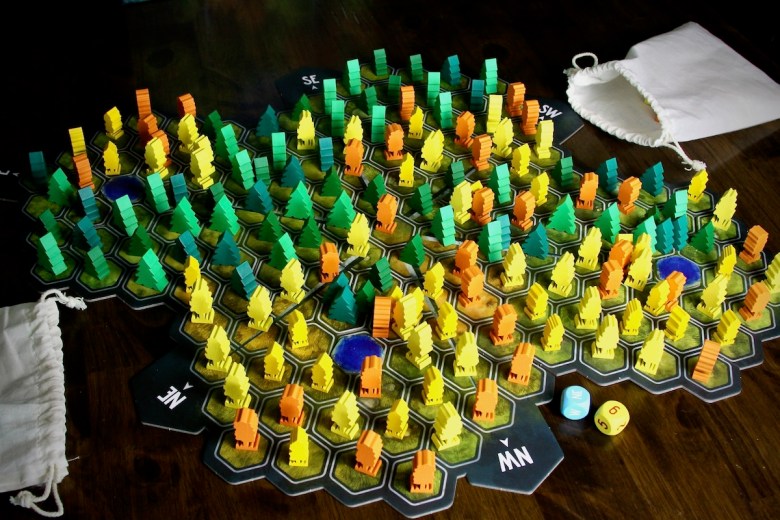
Gameplay
Aspens is a tactical battle where players decide how best to utilize what the dice offer each turn. The heart of the game lies in determining when to stack trees together (engine-building) versus when to branch out (area control). Players must balance their upward and outward growth if they want to be successful. It’s tempting to start claiming territory immediately, but growing outwards comes at the expense of building up a growth engine. On the other hand, adding too many trees to established hexes could give your opponent opportunities to cut you out of large areas – and without space to grow, there is little hope for victory. Properly timing your forest’s growth is the key to success in this game.
You might not always like what the dice give, but there are ways to increase your odds of success. Investing several trees in a few hexes increases your chances to obtain trees when the sun die rolls higher numbers, or to invest in more hexes with fewer trees and get a big windfall when the dice rolls two. The wind die has some wiggle room – not only can you grow in the direction rolled, but also the two adjacent directions, so you are never locked into a straight line. The expansion content offers ways to mitigate poor dice rolls, as well.
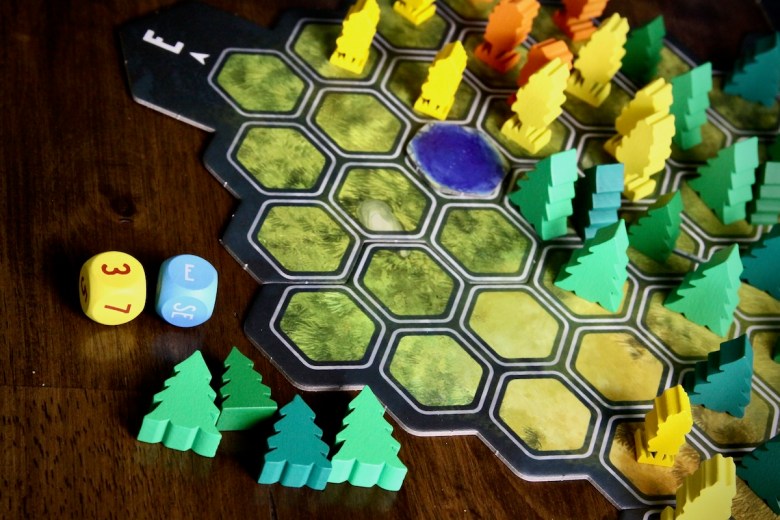
Luck is a factor in the game, but the dice rolls are a partially-shared experience. As real trees in a forest will share similar resources, both players will share similar fortunes as the sun die is rolled. Players will tend to accelerate and slow their growth at the same time – of course, this is dependent on each player’s growth strategy and will vary somewhat. Even when the die rolls are “terrible” the active player will always have at least one tree to grow, meaning the gameplay never lurches to a complete halt.
In Aspens, tactical choices will be heavily influenced by the dice rolls, the board state, and the player’s risk tolerance. The rules are straightforward, suiting it for young and inexperienced gamers. The game has plenty to offer experienced gamers as well – small placement decisions may have a huge impact on how the forest emerges, making it an interesting puzzle to explore. The design and concept are simple and the playtime is snappy – which lends itself to back-to-back battles or as a filler between other games.
Expansion Content – at the time I was previewing the prototype, two mini-expansions were available – Ancient Artifacts and Majestic Marvels.
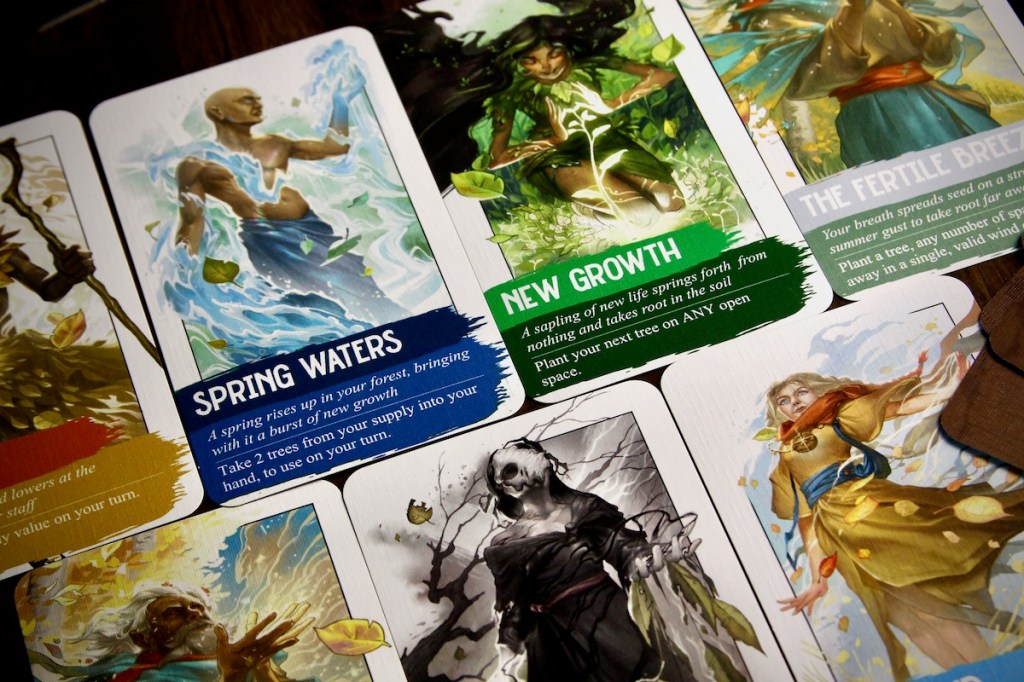
Ancient Artifacts adds 12 God Cards to the game, half of which are randomly selected and revealed (the rest go back to the box). These cards have unique one-time use abilities related to an elemental power, such as the ability to wither away the opponent’s trees or to allow the player to choose their wind direction. Relic discs matching the elements on the cards are randomly placed on the board (per setup rules). A card is claimed when a player has placed at least four trees adjacent to a disc. This expansion offers ways to mitigate poor luck and gives players small goals to work towards without changing the heart of the game.
Majestic Marvels makes a more significant change to the game by adjusting how points are scored. Rather than controlling the most hexes, players will rush to control sections of the board for points. Each section is randomly assigned a point value via a card and has a minimum space value needed to control it. The first player to achieve this claims the card. The game ends when all point cards are claimed or when one person has claimed enough spaces that their victory is inevitable. This expansion may shorten the game length somewhat since every space does not necessarily need to be filled to finish the game.
Impressions
Aspens is being marketed as a “cozy” nature game. I agree with that assessment in some ways. It’s not burdened with complicated rules, making it easy to learn and get to the table, and the components in the prototype were enjoyable to play with. However, the comfy feeling may get dampened when an opponent’s trees march across the board and cut you off from a sizeable chunk of land. Don’t let the pretty tree tokens fool you – this is a battle game where the coziness is tempered with tension, especially when the dice don’t cooperate.
I prefer my games to have some tension and interaction, and Aspens delivers on that front. It evoked another quick 2-player strategy game: Battle Sheep. Although the game is cutthroat, its short playtime lowers the stakes. Players can have the game set up, played, and put away in under 30 minutes, and in my experience, a short playtime alleviates the sting of loss.
I appreciate the shared playing space and how that lends itself to players’ choices. Not only do they have to balance their engine with the area control, but watching how their opponent decides to grow upwards and outwards can and should factor into the decision-making, making it an interactive experience. Sharing the sun die results also takes a lot of the pure luck out of the game – giving it more strategic depth and helping to ensure the player with the best growth strategy has the edge.
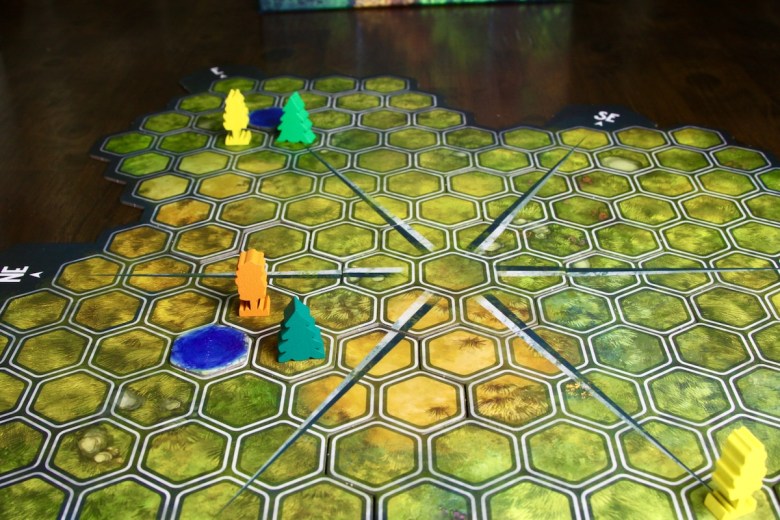
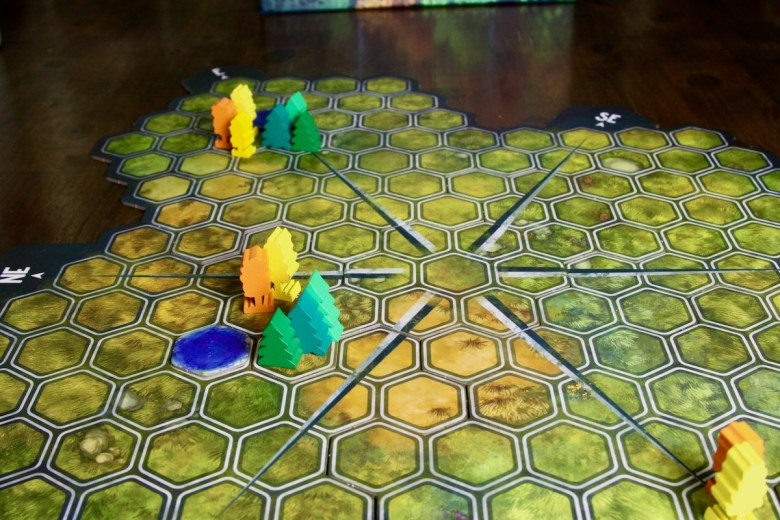
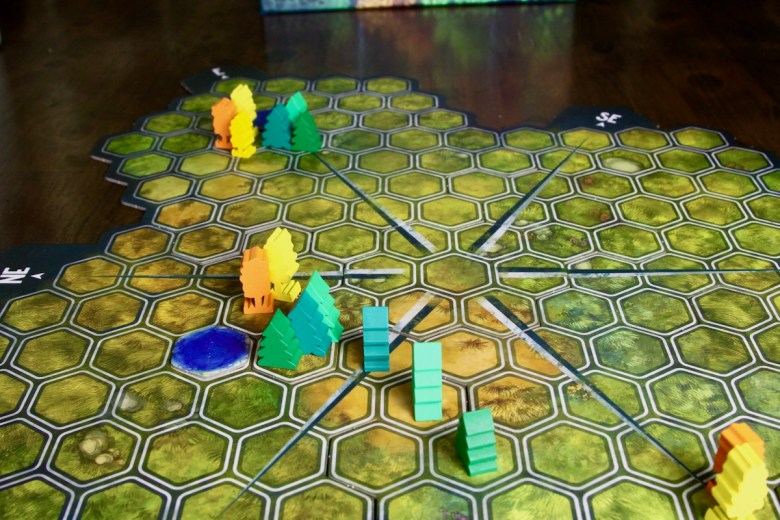
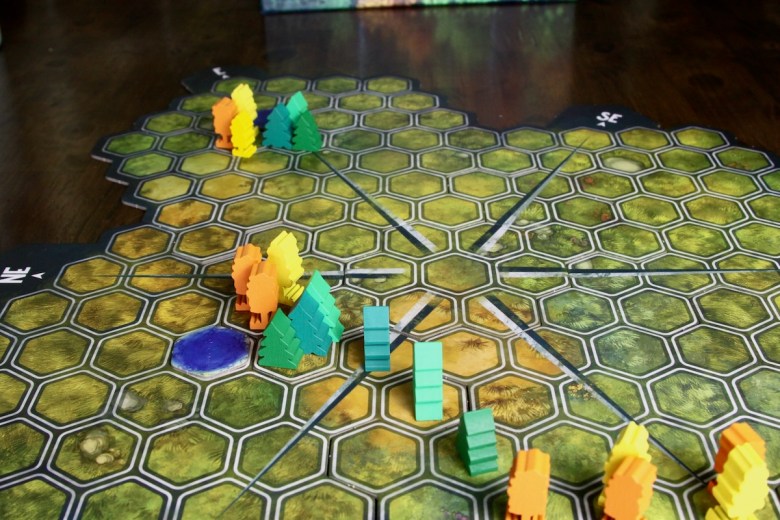
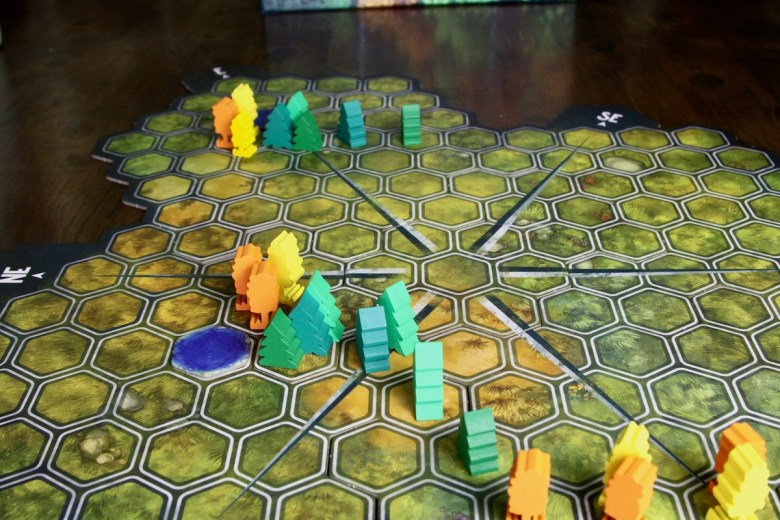
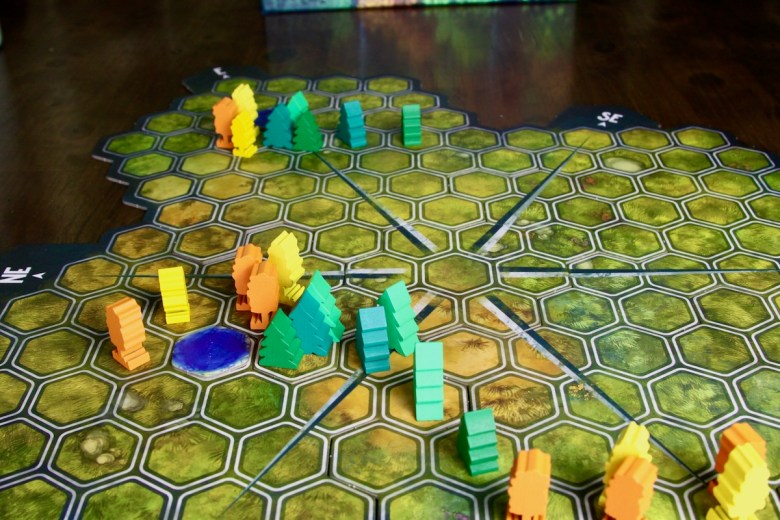
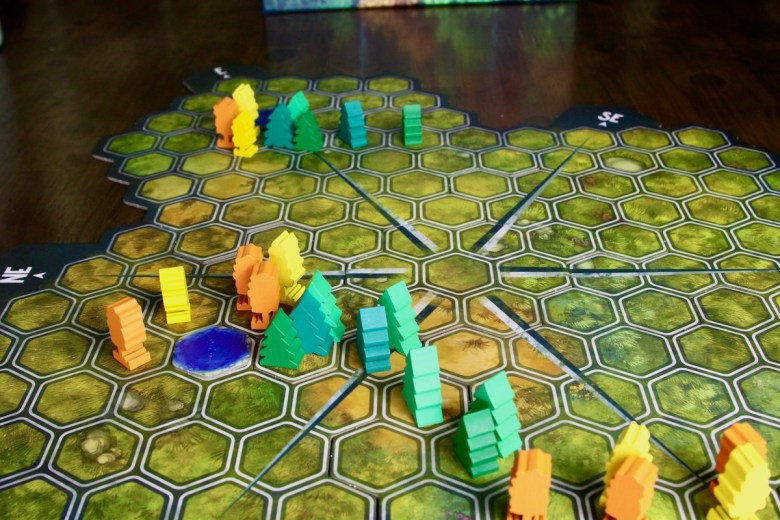
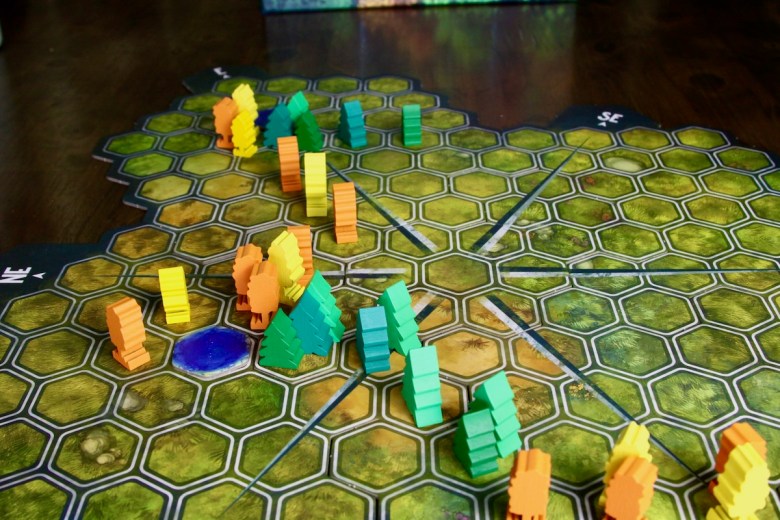
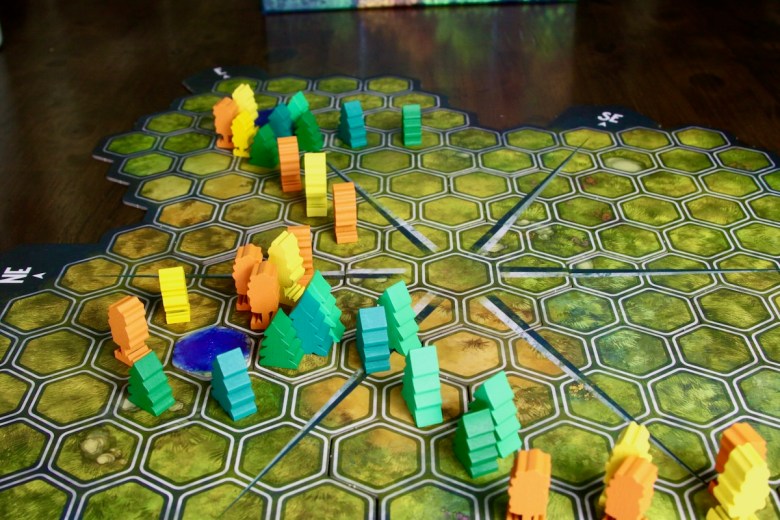
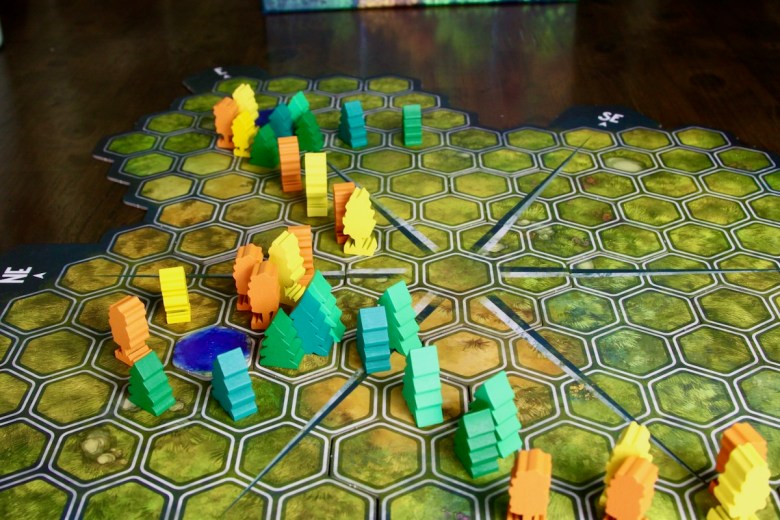
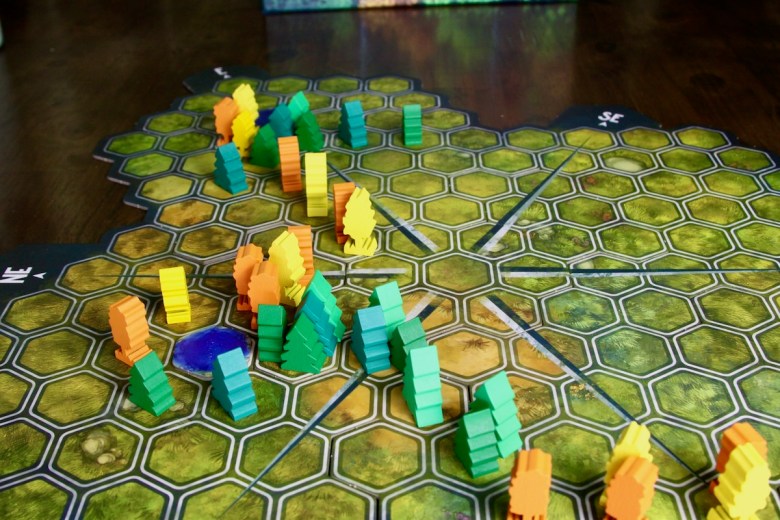
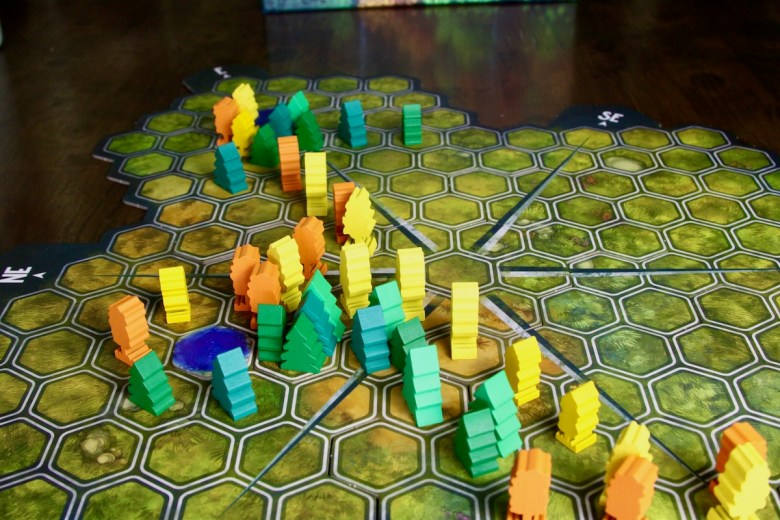
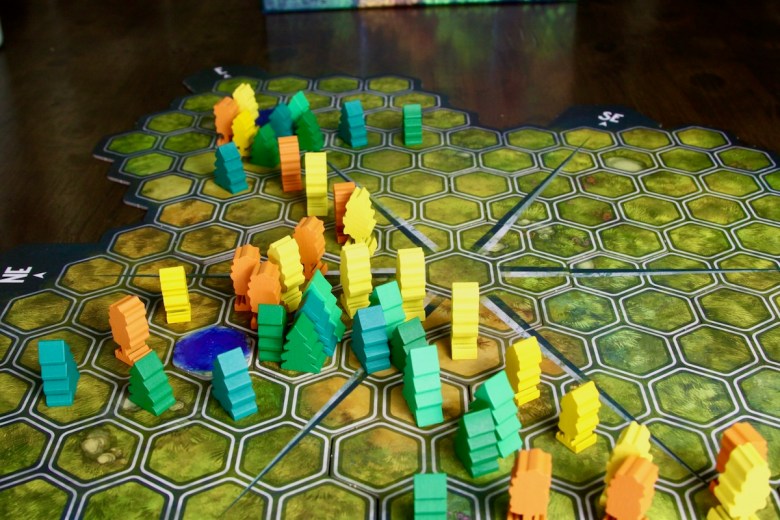
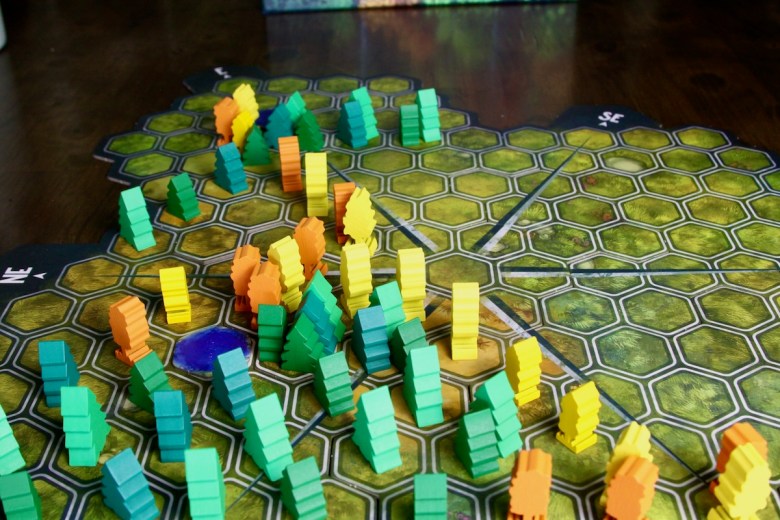
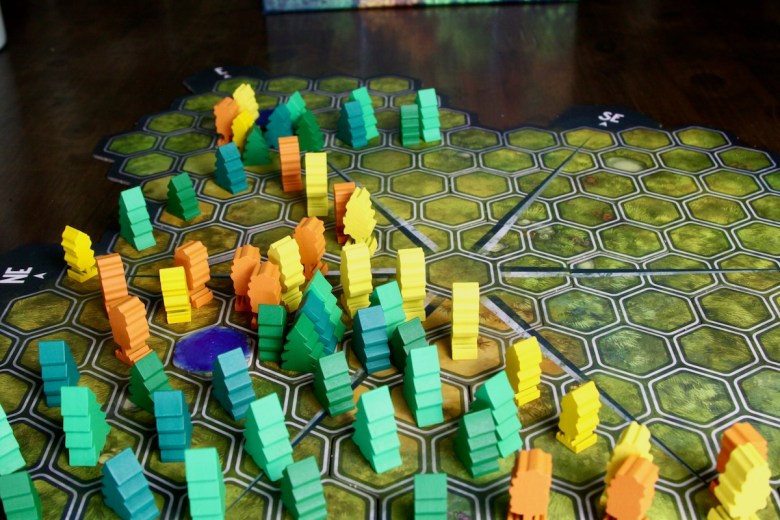
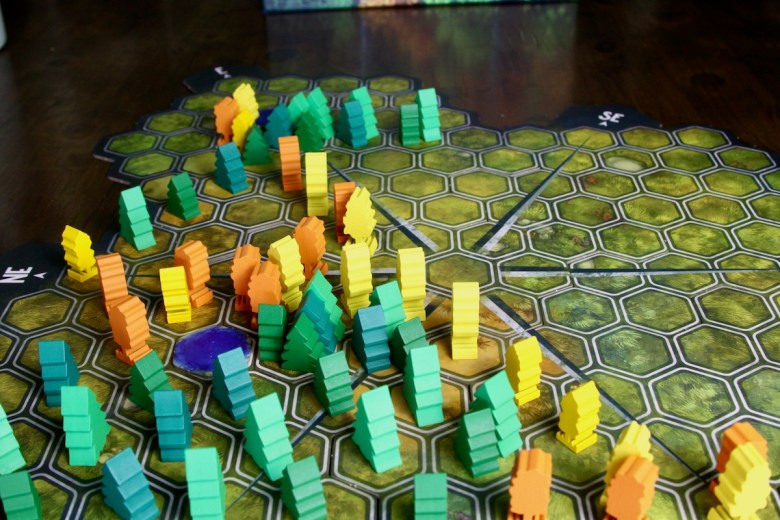
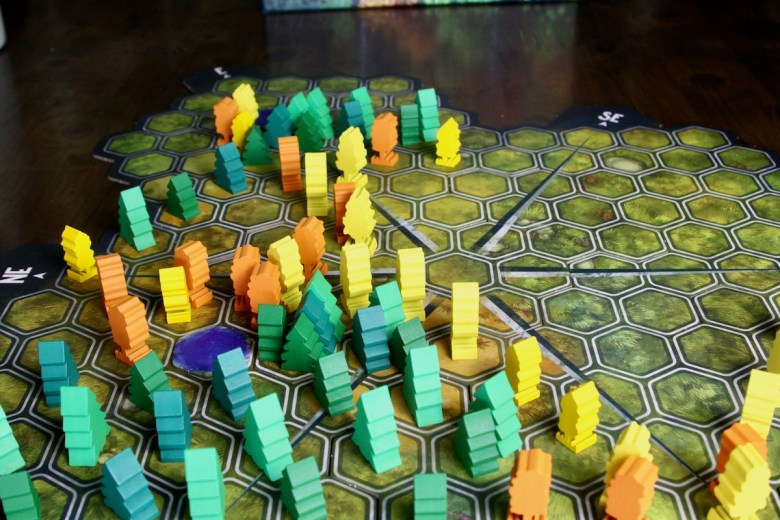
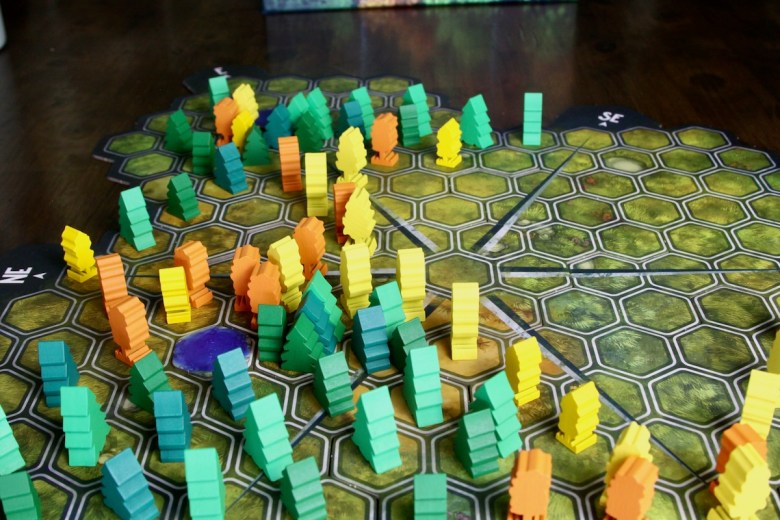
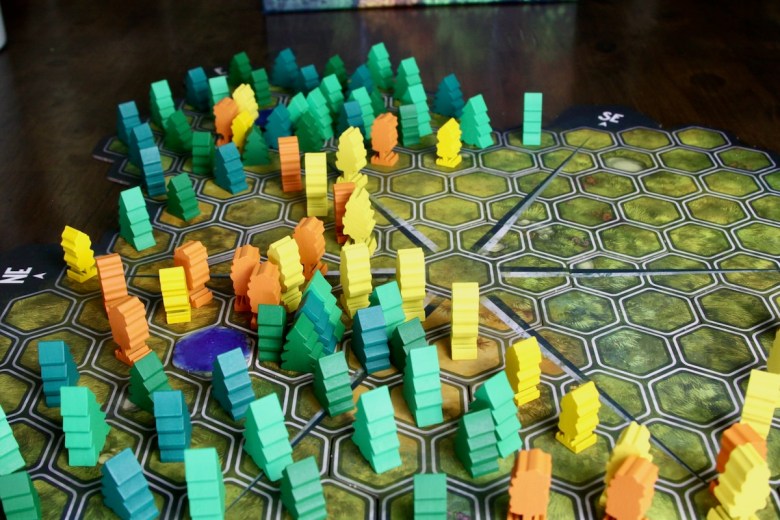
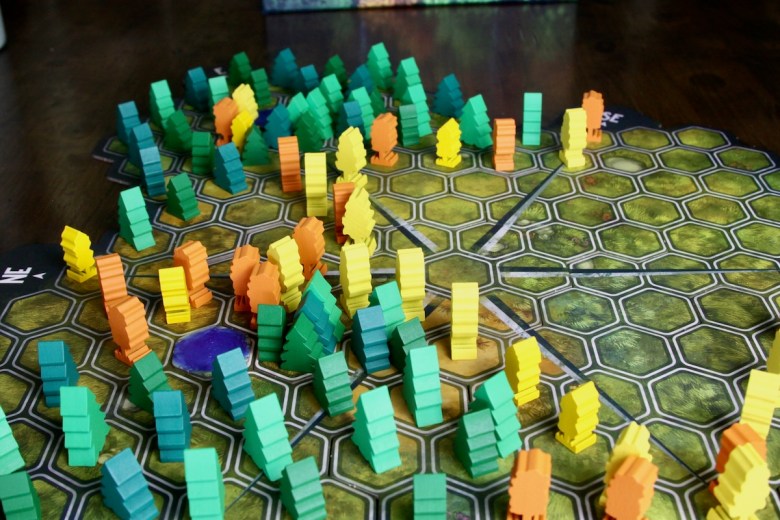
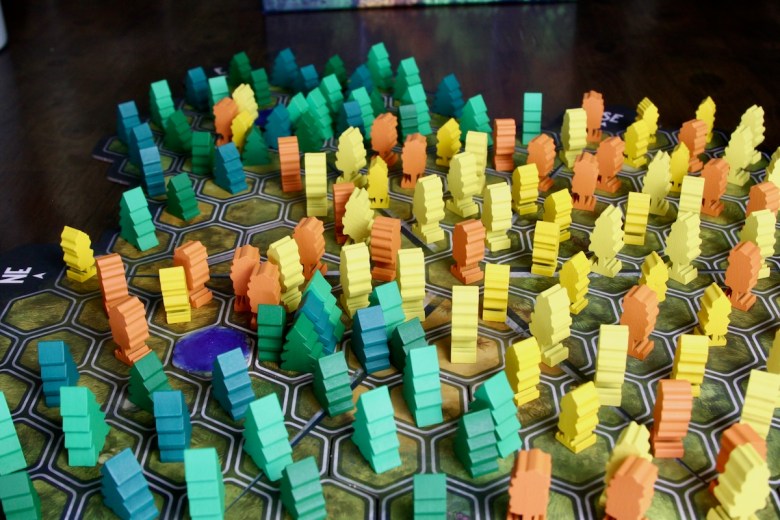
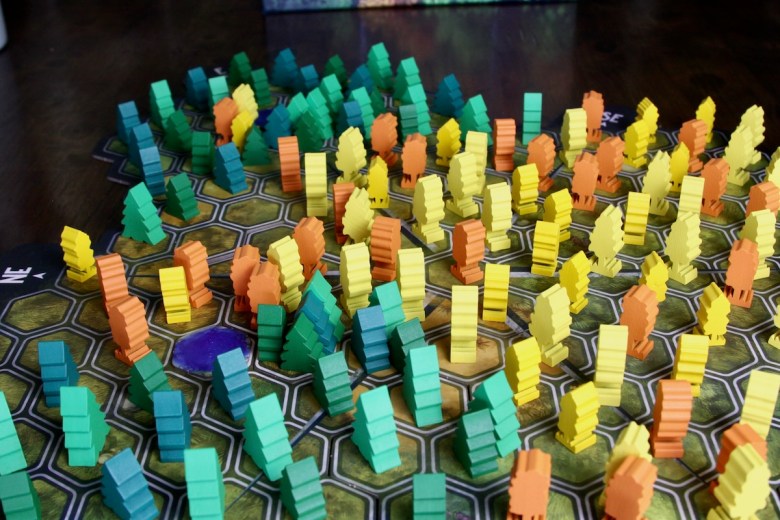
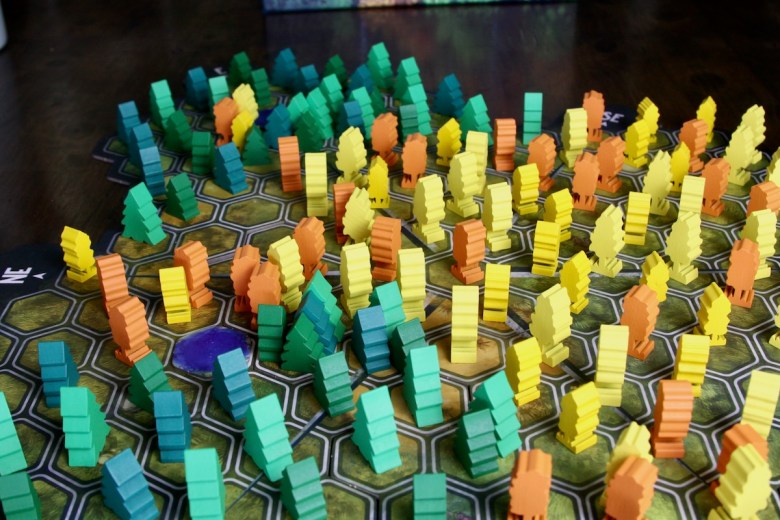
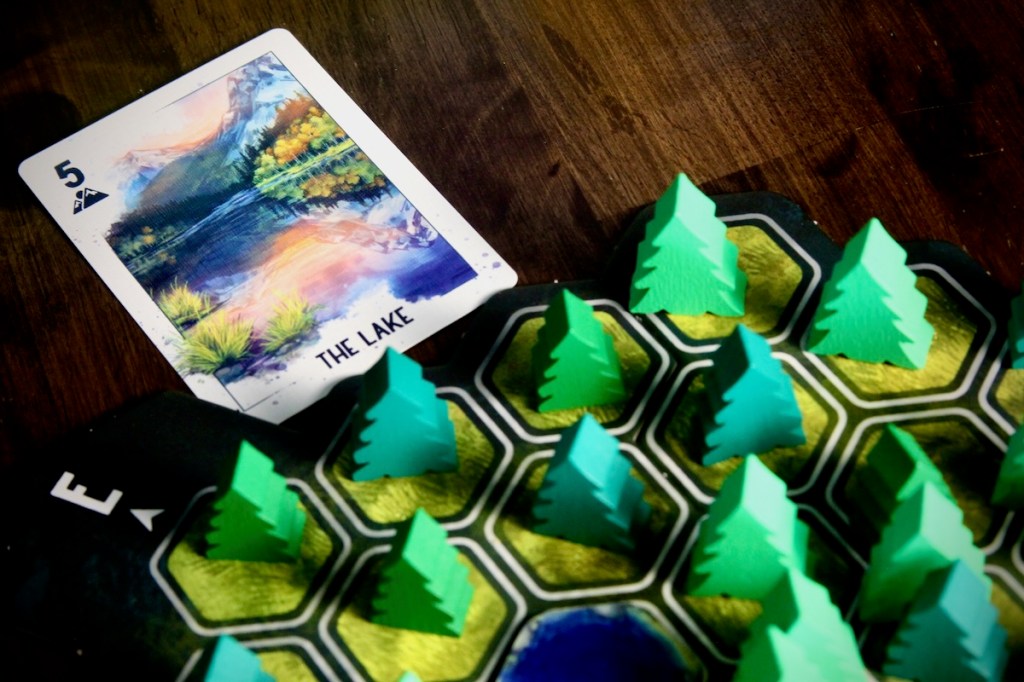
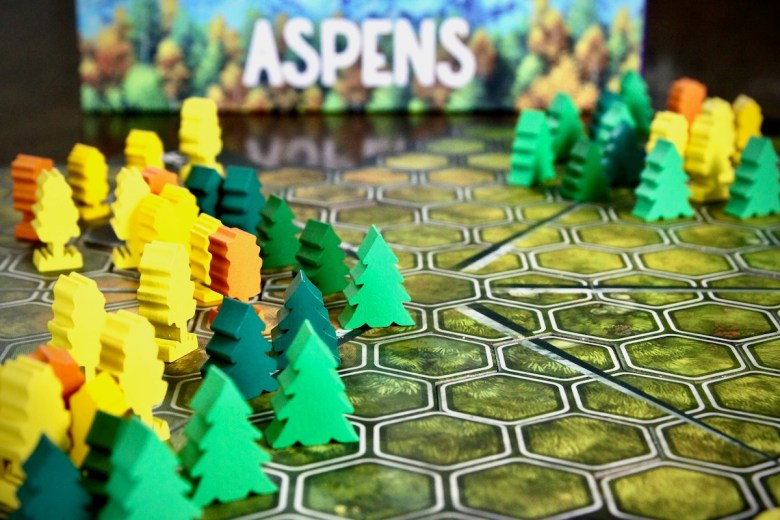
Aspens has a striking table presence that is bold and clean and does not rely on flashy excess. Each faction has a bag full of trees with a few variations in the size, shape, and color of the tokens. This simple choice gives the game more visual interest and is a clever way to boost the table presence without adding complication. The game I tried was a prototype the designer indicated there would be some changes to the components to facilitate easier setup and visualization, especially concerning one of the expansions. It was difficult to squeeze several trees onto the same hex but I rarely pushed the hex spaces to their limits so it was not a major issue. Once the board starts filling up, counting how many spaces had 2, 3, etc. trees on them can become bothersome. It wasn’t tedious to me, but being able to assess the board a bit more quickly would be helpful. Again, the designer plans to make minor adjustments to the final product, and some, if not all, of these issues may be addressed. Overall the presentation and components on the prototype were quite nice. I appreciate games that leave me feeling that I created something. Win or lose, watching our forest emerge and fill the board was satisfying.
I only played this game with my husband, but it was easy to learn and the rules were simple enough that I would have no problems introducing this to my youngest child. This is one of those games that almost anybody can pick up quickly and play confidently.
Who it’s for – Aspens would be great for couples looking for a quick weeknight game, although those with zero tolerance for luck or randomness might be better off sticking with something along the lines of Patchwork. I believe gamers of a wide range of ages and backgrounds will enjoy the light strategy, quick gameplay, and clean design.
As with all my reviews and previews, I was not paid to cover this game. Any opinions expressed are my own.
Aspens will be on Kickstarter beginning September 2024.
You can find more information here:
https://www.kickstarter.com/projects/ludivore/aspens-a-cozy-strategy-game-about-growing-a-tiny-forest
 Tabletop Mom