
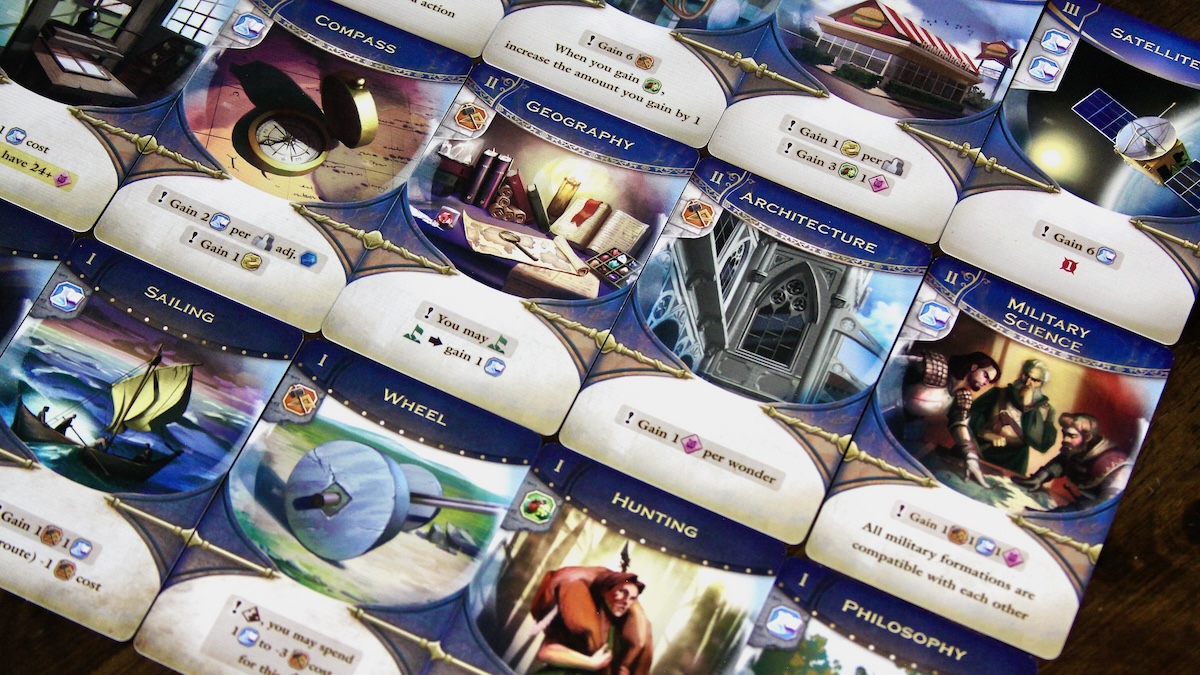

Lead a civilization to greatness through three ages in Epochs: Course of Cultures. In this 4x civilization game players guide a nation through ancient, medieval, and modern times. Discover world-changing inventions, develop your governing style, perform scientific research, build wonders of the world, and more to mold your nation over several ages. Will you choose to be a cultural powerhouse, gifting the world with great works of art? Or will you focus on military might, marching across the map for honor and glory? Each epoch builds upon the last to shape a re-imagined history for your civilization, and the world!
Epochs: Course of Cultures is from the team at ICE Makes and is being crowdfunded on Kickstarter through 6/2/2024.
Game at a Glance
- ICE Makes
- Players: 2-4
- Time: 2-3 hours
- Ages: 12+
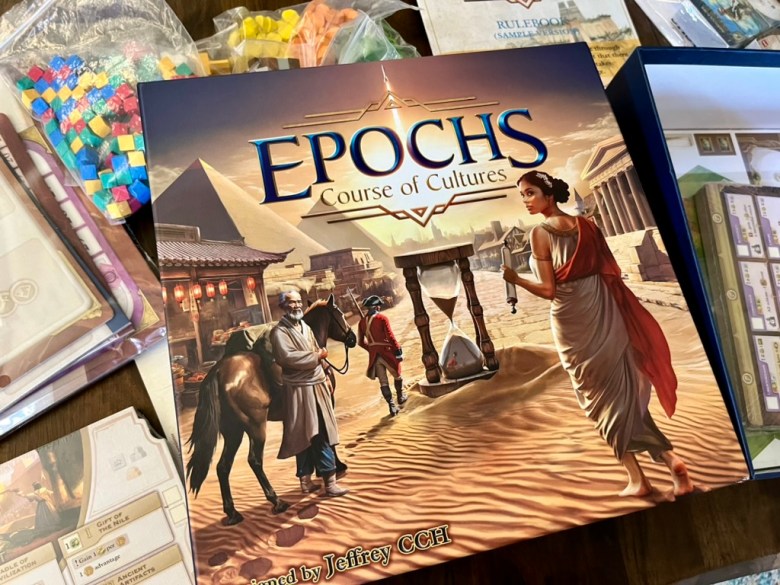
The game shown in this preview is a prototype; components and gameplay in the final version are subject to change
Skip to Gameplay, Skip to Impressions
Rules Overview
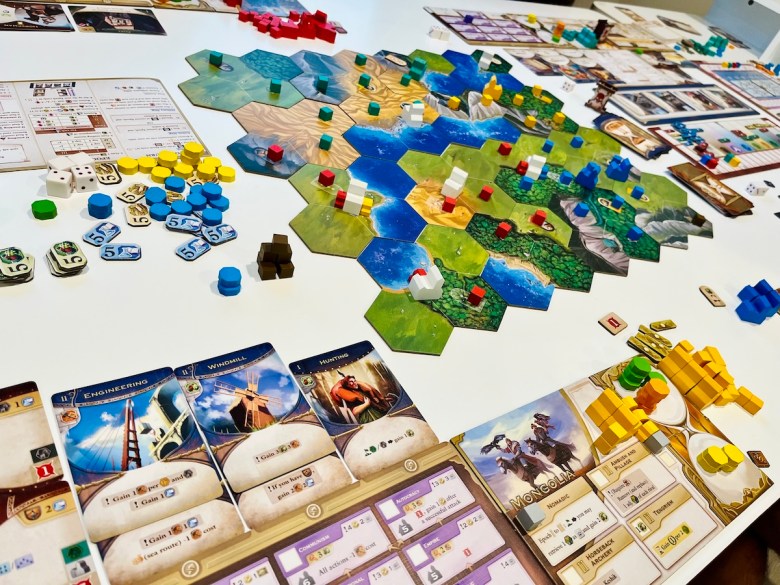
The table is set with a shared map, consisting of facedown (unexplored) modular tiles with some pre-explored space in the center. Other common areas include boards that track culture, host various card markets, track military might, etc. Players start with six Epoch I invention cards and several personal player boards.
The game spans three epochs with six turns within each, giving players 18 turns to develop their society as they see fit. The turn structure is as follows: the upkeep phase, which involves drawing an invention card of the next epoch, exploring the map, etc.; the action phase where players may choose to invent, expand, upgrade their military, and more; and the attack phase in which players must decide if they want to clear out barbarian camps, or declare themselves a warmonger and fight neutral and/or peaceful settlements.
At the end of each epoch, great works of art are commissioned by societies with the most culture, trade income is determined, cities demand to be fed, and all remaining resources are converted to gold. Any barbarian camps on the map pillage their neighbors for gold, and warmongering nations lose some momentum on the culture track. Finally, a new epoch is set up with cards for the next era, and play continues. At the end of the third era, the points will be calculated based on culture, honor, land, cities, gold, card abilities, and great works of art.
Skip to Impressions, Back to Rules Overview
Gameplay
True to its name, this game spans three epochs. Each player guides their society through ancient, medieval, and modern eras, deciding which elements of society to focus on: culture, wonders of the world, government, economy and trade, scientific research, military might… All interact intricately, and finding the right balance to score well is a puzzle.
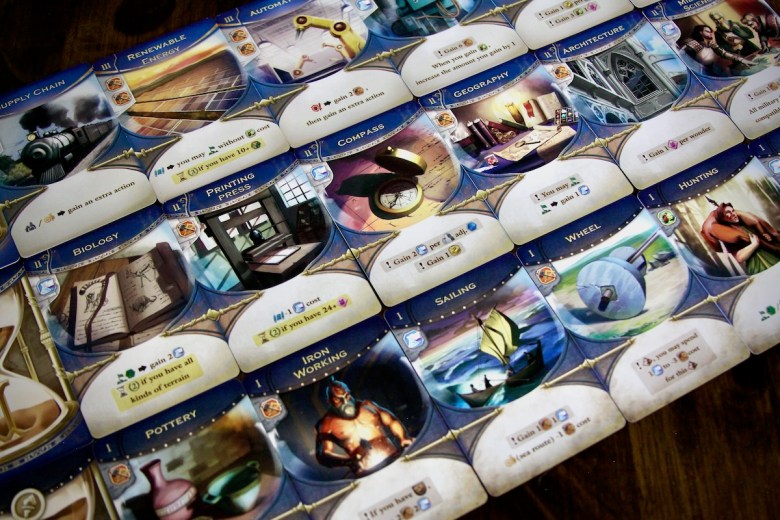
The key to civilization is technology, and what inventions are chosen will form the basis of your society. Players get a sneak peek at their next hand of invention cards as the game progresses, which can help to materialize a strategy for them to work towards. As new epochs are entered, players will access better technologies with more powerful benefits. Each era lasts six turns, three of which involve inventing new technologies that provide immediate and often recurring rewards.
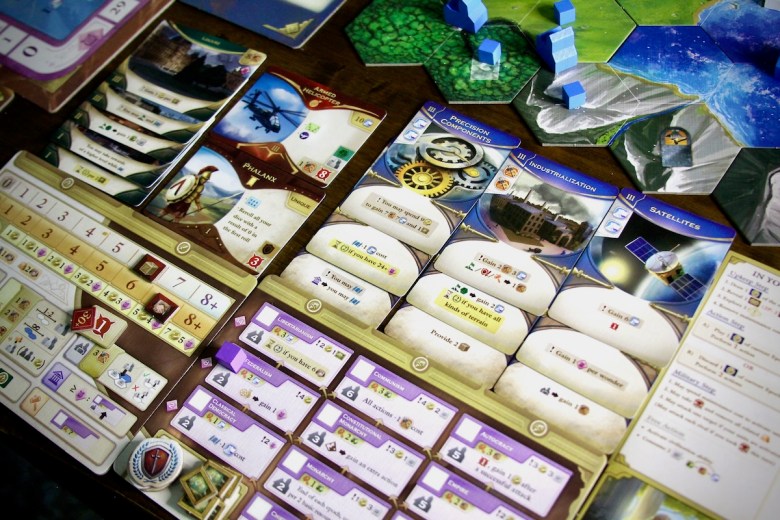
Much of the game is procedural, but the action phase is where the bulk of decision-making will occur. There are eight actions to choose from, most of which have a resource cost. Nearly every action relies on other elements of society to progress past thresholds. For example, a government cannot advance without the culture provided through wonders, economic factors, or scientific research; and building a network of cities requires governmental upgrades. Everything is interconnected.
After the action phase players will have the chance to engage in conflict. If you want to take over territory from a competitor or a neutral city, you will have to declare yourself a warmonger. Going to war with other nations can be lucrative, but it is not a decision to be taken lightly. Going warmonger is a decision that will last through the entire epoch. If a player is not set up for the hits to their supply and demand income (due to an immediate loss of trading posts on the board), a loss in culture, and the defense needed after hanging a giant target on their back, it could mean a painful period for that nation. Once your realm is labeled as a foe worldwide, other non-warring nations can attack the warmonger on their turn without being labeled warmongers themselves – they didn’t start the fight but they can try to finish it.
At some point, one or several players will likely feel the risks of conflict are worth the rewards. Winning battles may bring gold, honor, and territorial increases. The map scales for player count to ensure that at some point there is a temptation to shed blood in a bid to eke out more space on the map.
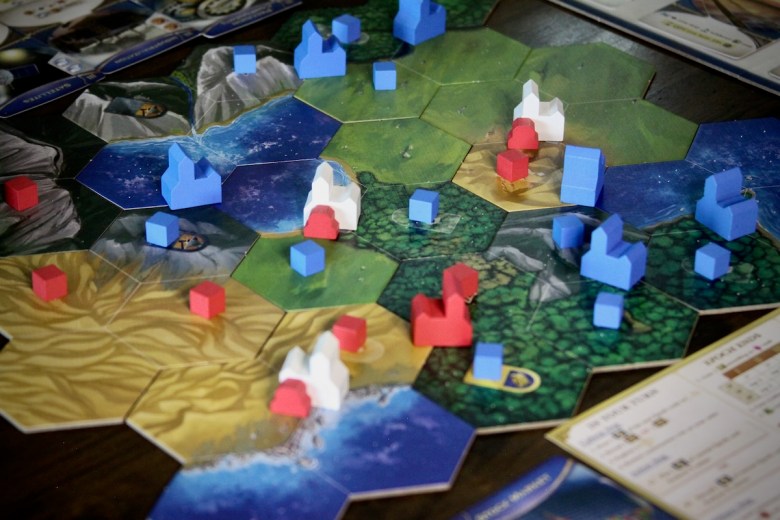
Epochs: Course of Cultures is a 4x civilization game. For those unfamiliar with the term, the four Xs are explore, expand, exploit, and exterminate. This game conceptualizes each “eX” differently, with some taking more prominent roles.
eXplore – Exploration in this game consists of flipping tiles to reveal the terrain, resources, and inhabitants. Before the end of the first era the entire map should be explored since revealing a tile is part of the required turn upkeep. The whole map will be displayed before the end of the first era. The land types are aligned with previously revealed tiles based on a hierarchy. Oceans must be touching other oceans before plains, then deserts… This system ensures that each map will develop in new ways depending on where the tiles are located and the order in which they are revealed.
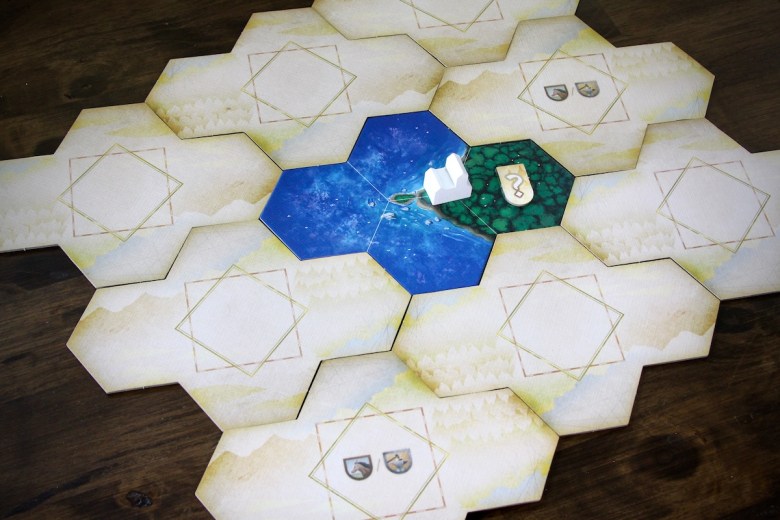
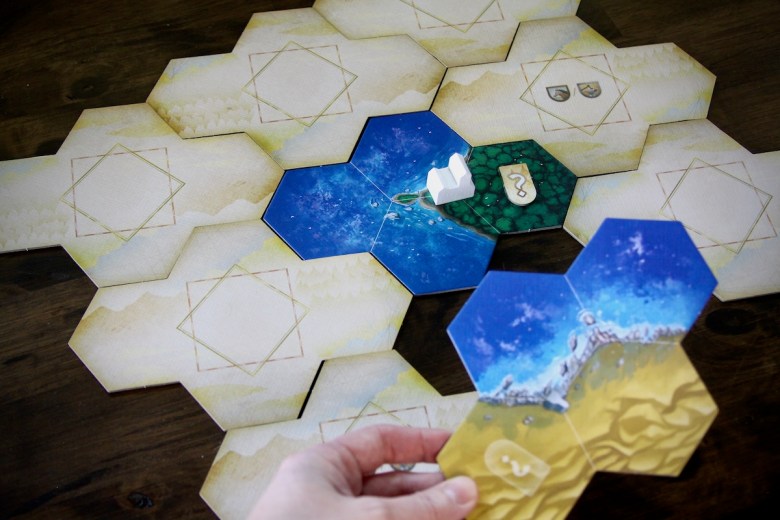
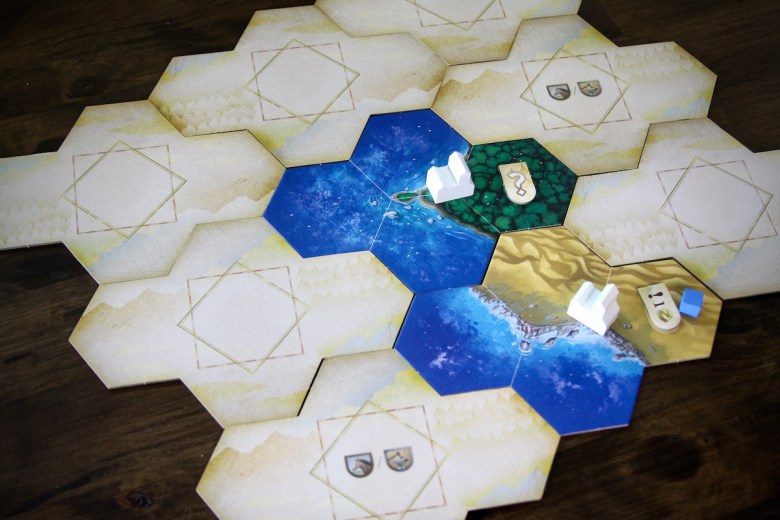
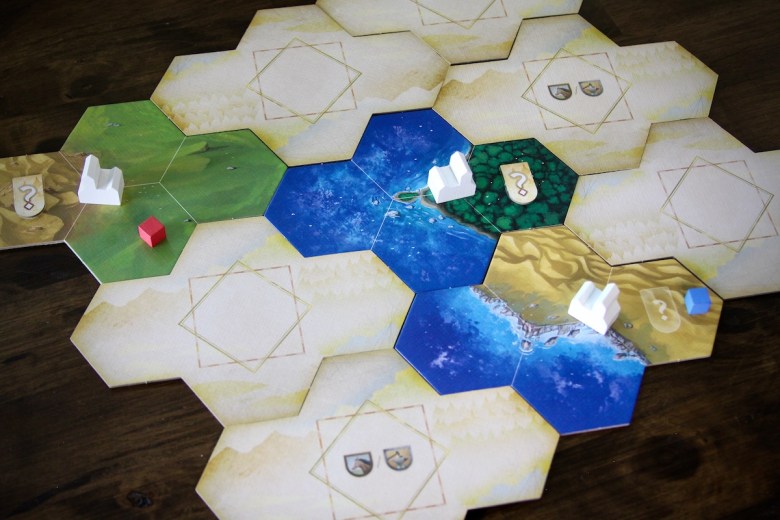
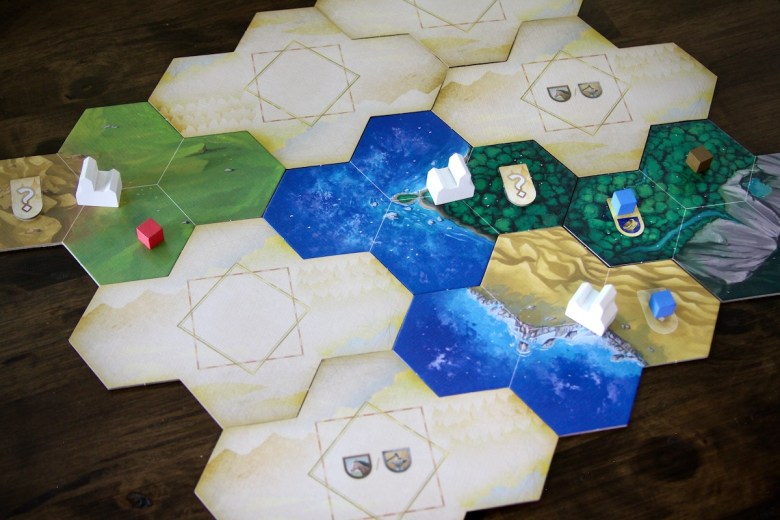
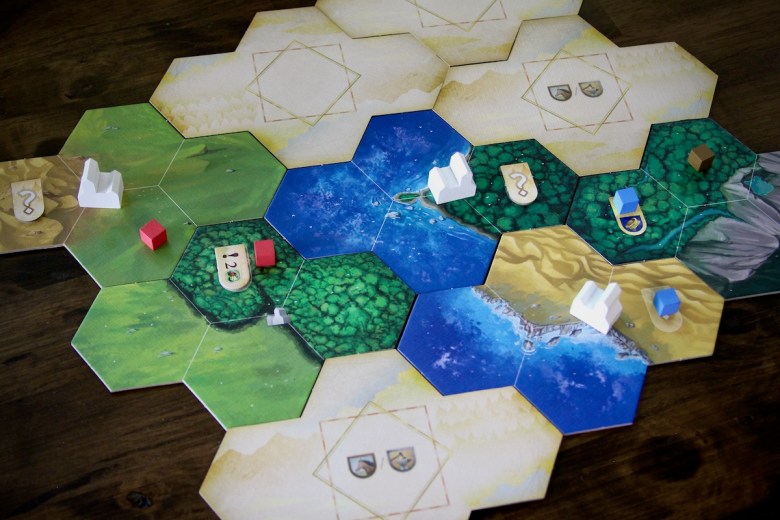
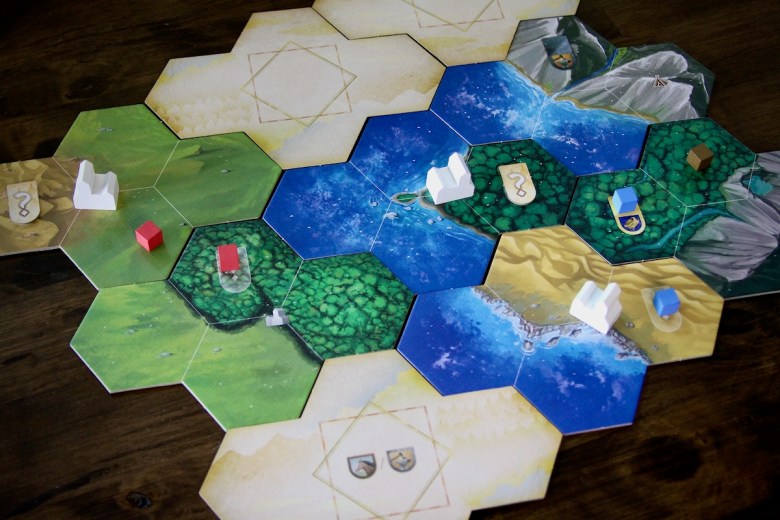
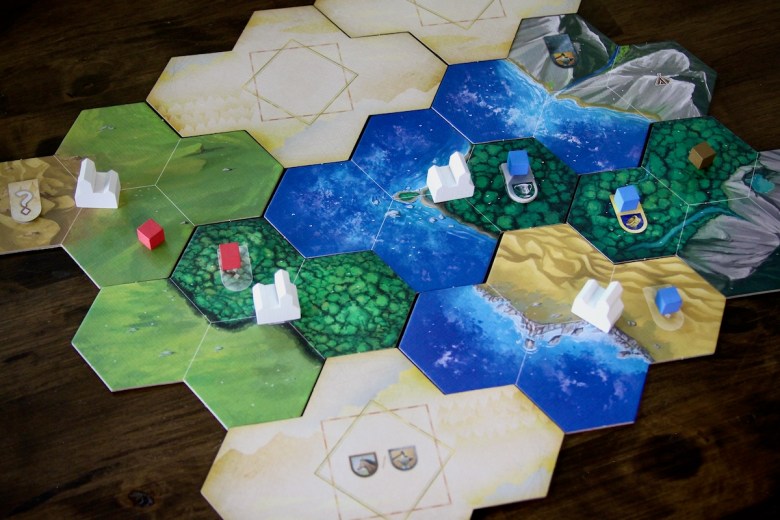
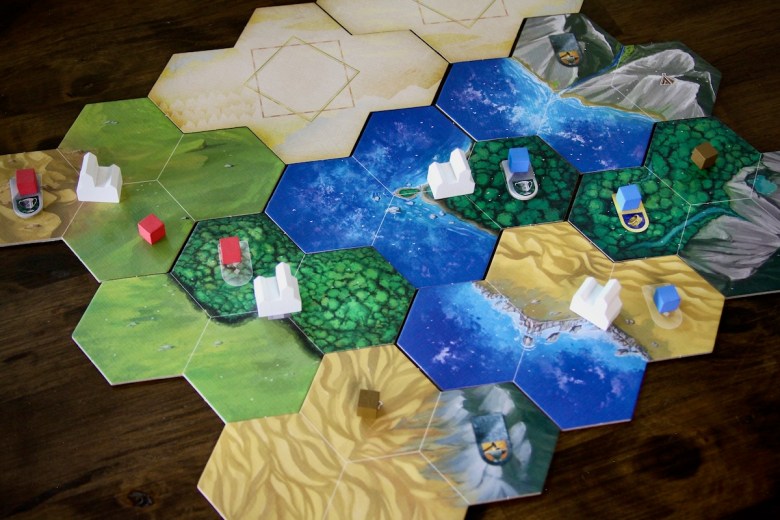
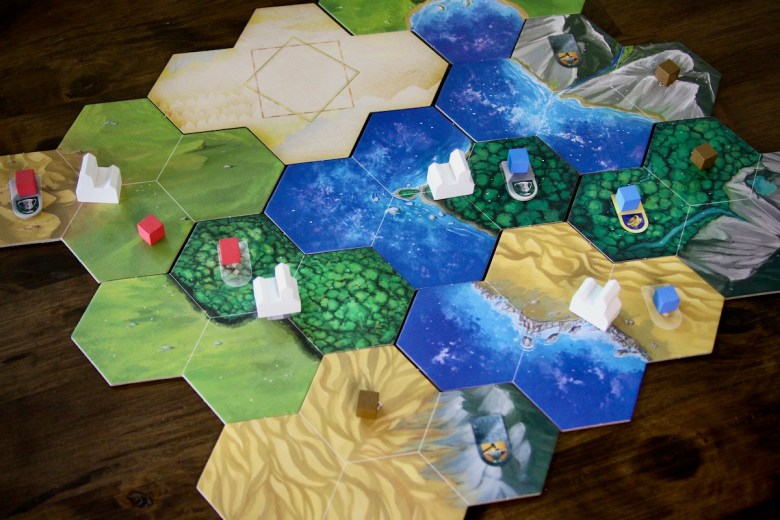
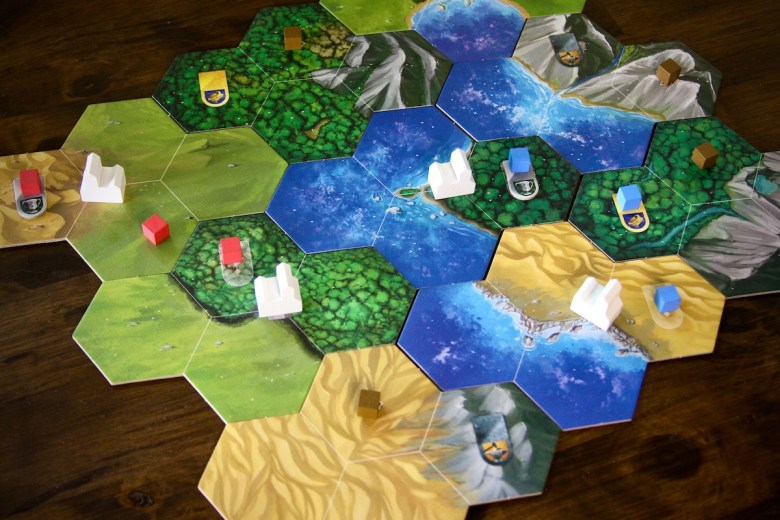
eXpand – Growth and control of territory is crucial in most games in the 4x category, and Epochs is no exception. Expanding to new areas requires resources and access to player cubes. Expansion must occur on neighboring hexes, but nations can create new starting points for branching out by establishing trade with cities.
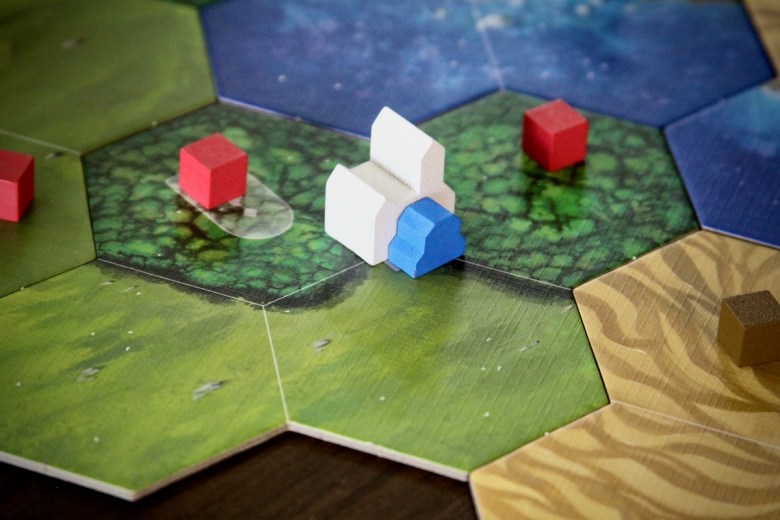
eXploit – The map is sparsely populated with natural resources. Natural resource spots tend to be highly contested because controlling those locations will boost your access to supplies and can help to upgrade your units and/or strengthen inventions. Some inventions boost the exploitation of natural resources and terrain types, too.
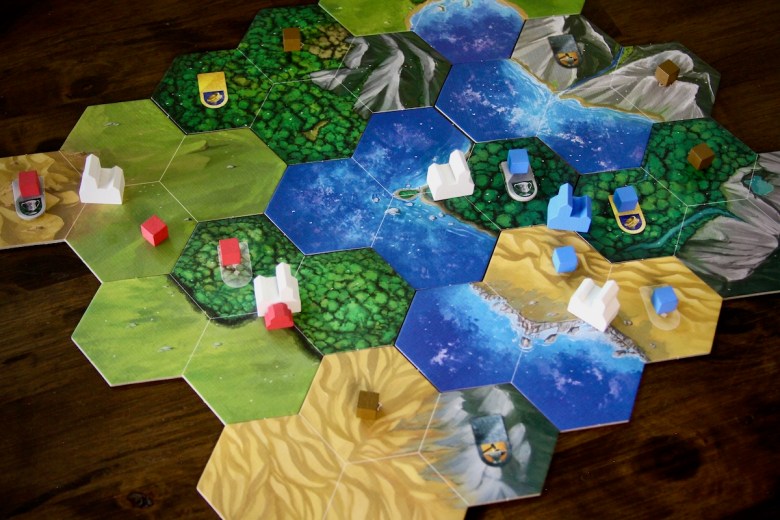
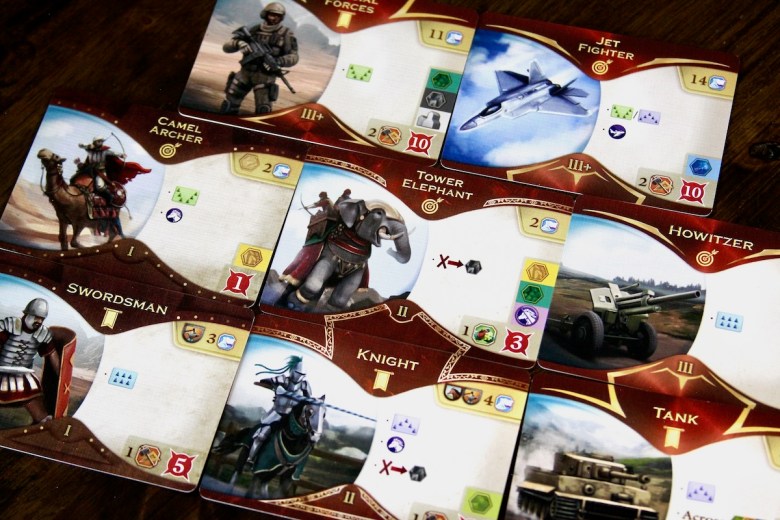
eXterminate – As in, eliminate your competition from the game board. In Epochs the military is abstract. The presence of cities and player cubes indicates military occupation rather than actual troops on the game board. Players may have two active unit cards at once – a primary unit and a support unit. These cards can be upgraded to increase strength and military advantages, which provide additional dice rolls in certain combat conditions. The combined strength of the troops is calculated and added to the military board, along with any strategic advantage(s) they provide. After a battle, the victorious aggressor receives benefits based on the difference in strength, which may allow them to replace cubes/cities with their own.
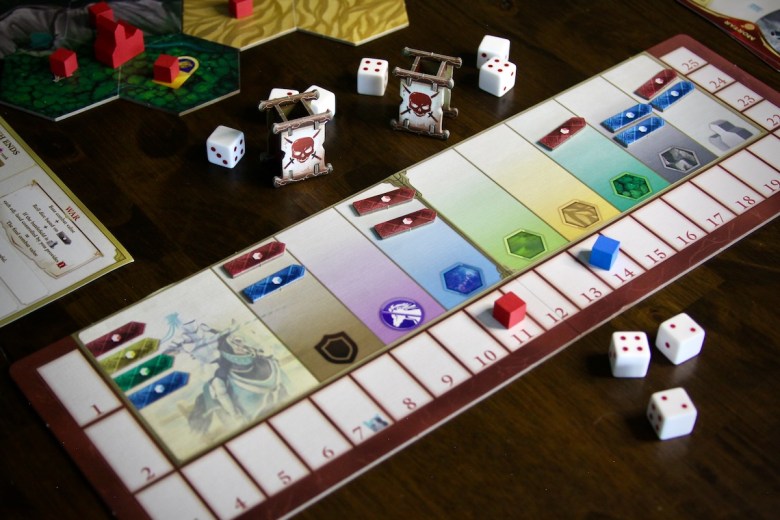
Impressions
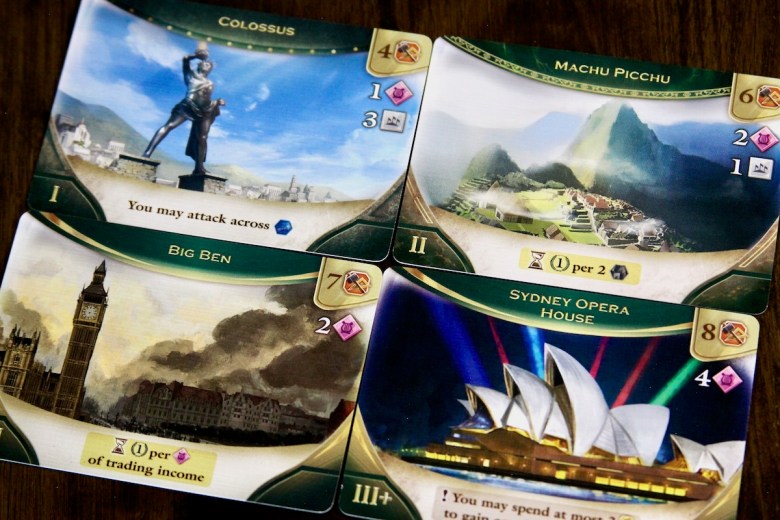
Epochs: Course of Cultures lives up to its name, ensuring that each era, ancient, medieval, and modern, feels distinctive. The story of each society is told through the cards. The Epochs have their own inventions, military units, and wonders that work thematically with their era. In the first epoch, you might construct the Great Pyramid of Giza and add chariot archers to your military – by the end of the game you might have built the Louvre and added tanks to your war arsenal. A society that invents the wheel may grow to eventually create the internet, the stock market, or fast food chains.
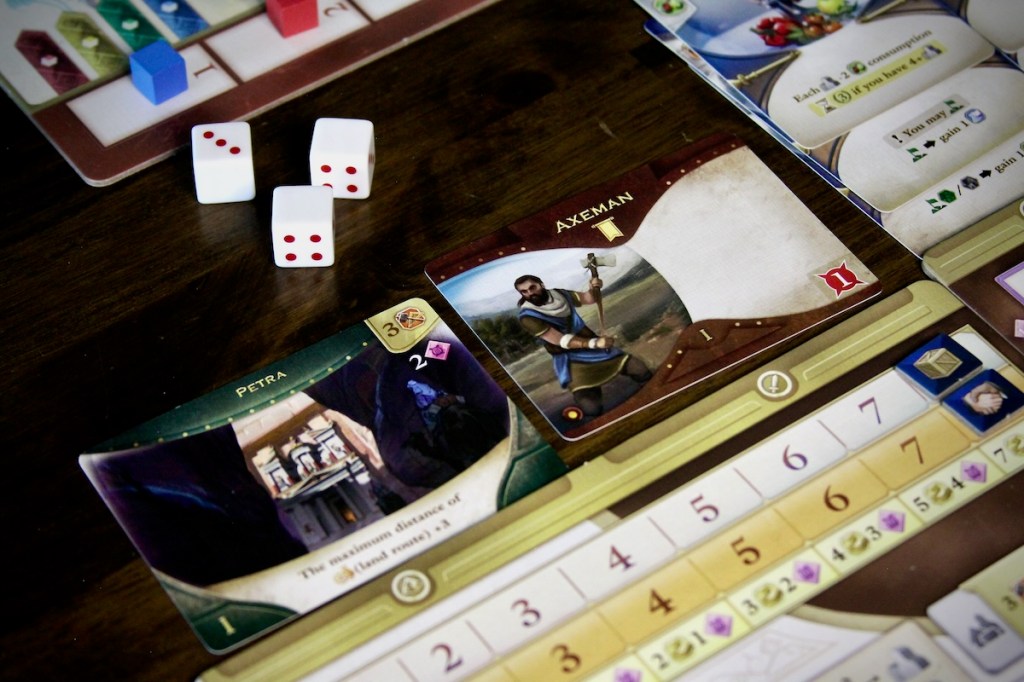
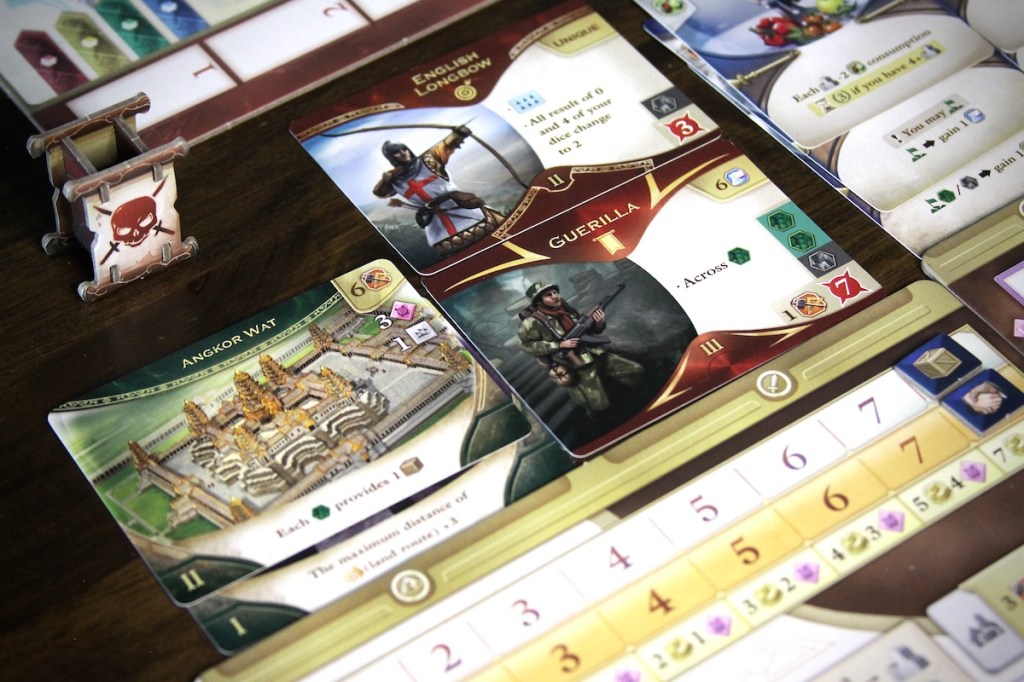
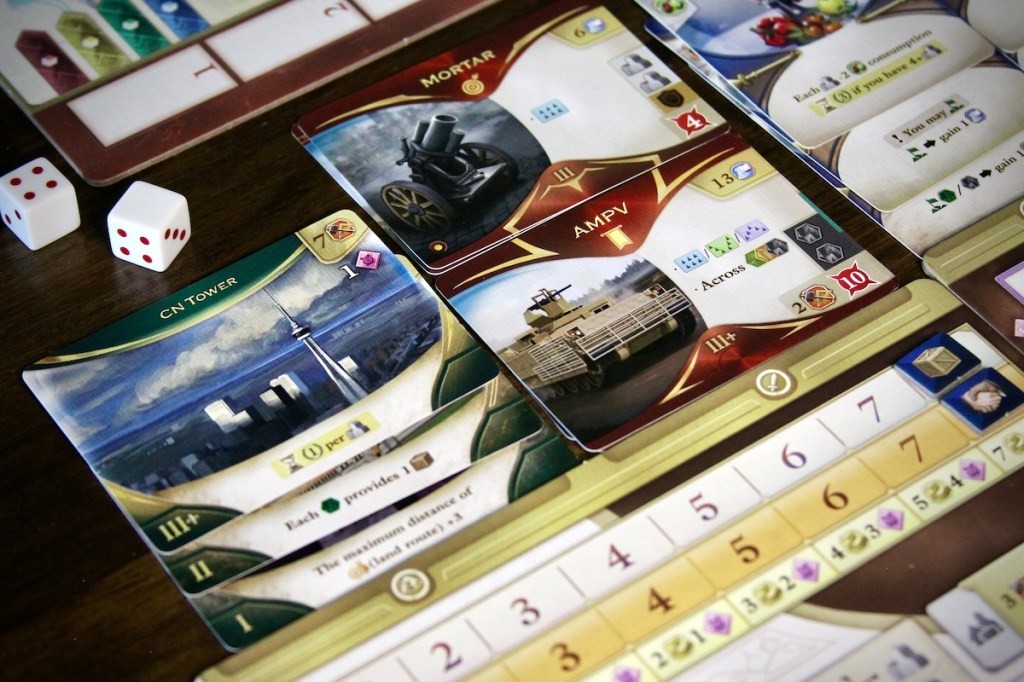
It provides a macro look at a culture. That is most apparent in the abstracted battles. There is no troop-deployment strategy – the military is present wherever the player resides. I find the abstraction cuts out some minutia that may be burdensome, which I appreciate. Those wanting a “dudes on a map” experience might not find these battles exciting, but I get the impression this game is not about combat so much as weighing the risks and rewards of war.
Epochs: Course of Cultures encourages players to pause before jumping into the role of aggressor. A warmonger player loses out on valuable trade income, abilities, and culture. Additionally, it puts the player in a vulnerable position since the rest of the board can volley attacks their way with little consequence. Preparation for this step is vital if one chooses to take it. And one does not have to go that route to be victorious in this game. I have played a game where war broke out in the second epoch, which led to bittersweet results, and a tense “cold war” period in the third act where everyone had learned their lessons and refused to engage. In a different game, we remained peaceful till the finale where modern warfare was engaged for strategic benefit. In all games, players who avoided warmongering did not seem to be at a strategic disadvantage, especially if their defense was solid.
The Kickstarter campaign has announced additional content, but even without it, there’s a lot here to keep the game fresh and engaging. The version I have comes with six asymmetric civilization boards. Each nation has four unique abilities, two of which can be unlocked with free actions creating variability within the factions. On top of unique abilities setting them on a course, these societies are shaped by the inventions they discover, the government they choose, the military they train, how the map reveals itself, how their neighbors behave, and more.
There is interaction on a global scale, too. Inventions bring in resources that benefit neighbors and trading and conquests can shift borders on the map. Each nation will shape the world in different ways, and the world will, in turn, affect its development. There are opportunities for direct conflict through war thanks to the area control element, and there is fierce competition to create a culture that can produce great works of art. Every game writes a unique history – both for the individual societies and the globe. Watching that story emerge through play is a big highlight for me.
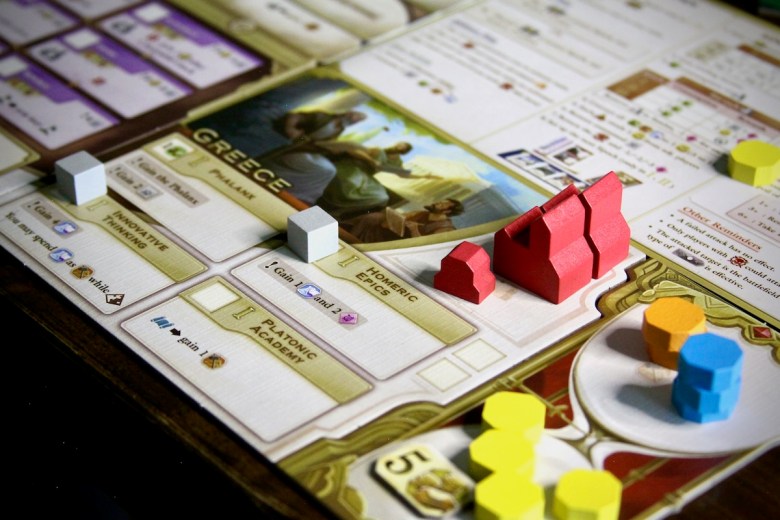
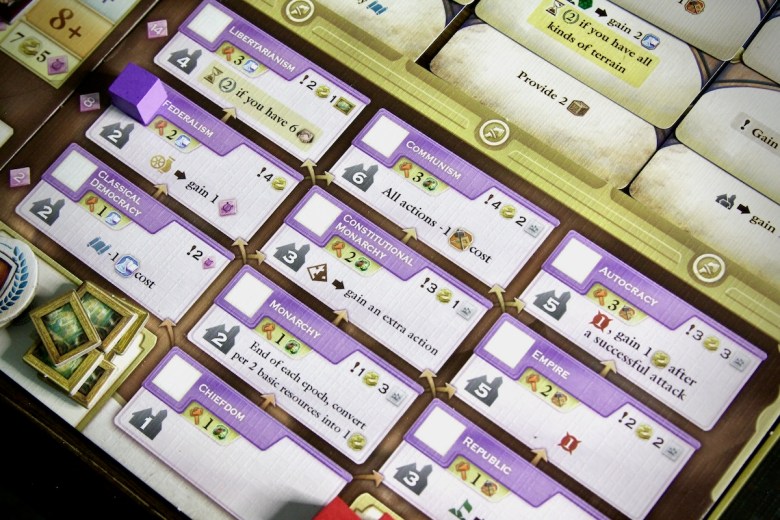
Who it’s for – Fans of 4x and civilization games will likely appreciate this. Players will need a lot of table space and likely a solid 3-hour or more block of time to play it, but once it’s going it flows smoothly and the time seems to pass quickly. If you’re low on time and table space and are turned off by the abstraction of the battles, look elsewhere. Otherwise, this is a well-thought-out game with an emerging narrative and plenty of replayability – if that sounds interesting, check it out on Kickstarter right now.
Epochs: Course of Cultures is on Kickstarter till June 2024.
You can find more information here:
https://www.kickstarter.com/projects/icemakes/epochs-course-of-cultures-a-4x-civ-game-spans-the-ages?ref=discovery
 Tabletop Mom