
Game at a Glance
- Gap Closer Games
- Players: 1-5
- Time: 30 Minutes
- Ages: 7+
- Availability: Retail
A review copy of this game was provided by the publisher; however, my opinions are my own
An evil organization dubbed the Illiterati has emerged from the shadows to destroy books and spread illiteracy to the world. Fortunately, you are part of a team of librarians that have vowed to stop this plot and work to preserve these damaged books for future generations. Will you be able to bind your books while withstanding the dastardly attacks from this evil organization, or will the Illiterati triumph in their crazy crusade against knowledge?
Illiterati is a cooperative, real-time word game taking place over several rounds. There are three minutes each round to create words using letter tiles drawn from a bag. The object is to construct words that fulfill the theme and narrative element of your unique book title while your teammates do the same with their own. In between rounds, the Illiterati agents attack, often removing letters and words from the player area and making it difficult for players to bind their books.
Skip to Review; Skip to Final Thoughts
Overview
The goal of Illiterati is for players to create words to bind books. Words must meet specific requirements indicated by the player’s book card for that book to be bound. The game is lost if the librarians get into the habit of leaving too many letters unassigned to words, or by allowing the Illiterati Villain Deck to empty.
The game is structured into rounds which are divided into three distinct phases: the Word Building Phase, the Book Binding Phase, and the Illiterati Attack phase. The majority of the game is played in the Word Building phase, where players use drawn letter tiles to construct words to achieve their goals. Fortunately, players can share letters and words with each other to help the team achieve its ultimate goal. This phase is timed, and once the time runs out all unused letters must be returned to the middle of the table as part of the shared library.
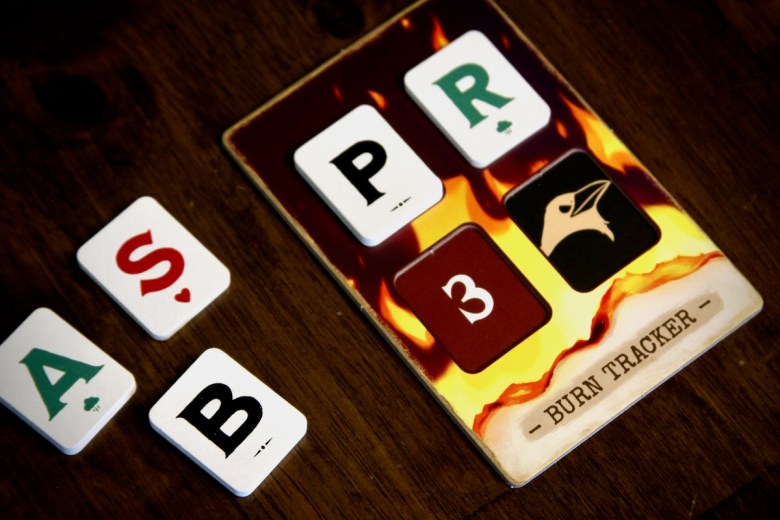
If the number of letter tiles exceeds the library limit (usually 3), a letter is added to the burn tracker which acts as a countdown toward the end of the game. Players then determine if book-binding goals have been met, and finally, an Illiterati Villain card is drawn and their effect resolved. These villains can decimate your letter supply, and if the same villain shows up more than once in a game, their effects stack together to make a powerful combo attack. After the attack, the team of librarians continues with another round of word-building and bookbinding to bring literacy to the world!
Review
Gameplay
Illiterati is a cooperative word game with a real-time element. Rather than trying to outwit your table mates, you will be scrambling to create as much as you can from the random letters drawn in a mad dash to beat the timer. The timer adds enough tension to make even the most basic words difficult to remember, and the addition of the cartoonish Illiterati villains help to ramp up the difficulty as the game progresses.
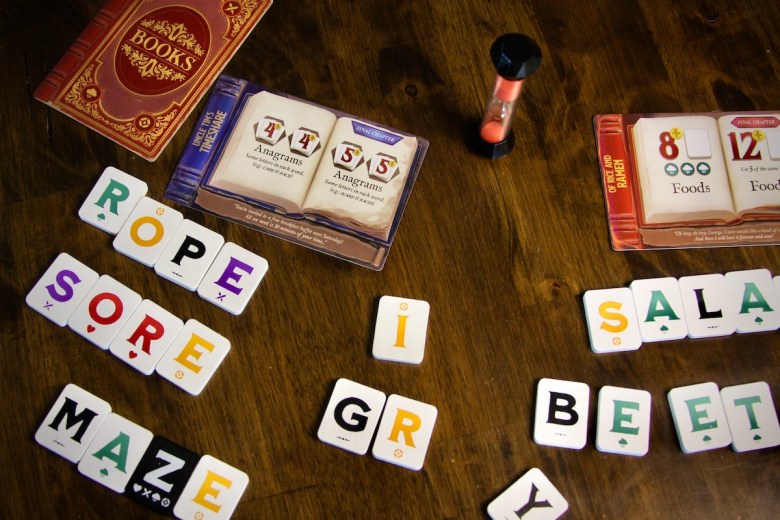
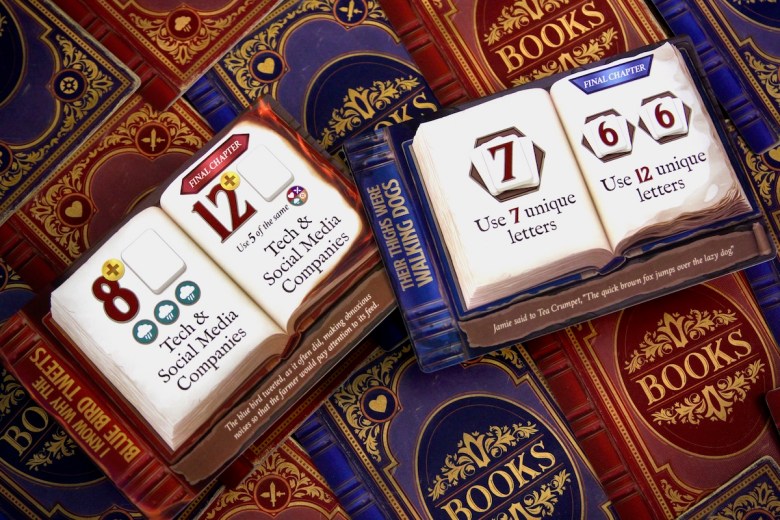
Most all books will have a letter minimum requirement to be bound. That requirement can be met by creating one large word, or a few smaller words. The red books have categorical and story element requirements. For example, The Accountant of Monte Cristo will need 8+ letters in words about Money & Finance having at least three Conflict (sword) symbols. Blue books, on the other hand, have requirements having to do with the words’ construction. You might be dealing with alliteration, vowels, or rhymes.
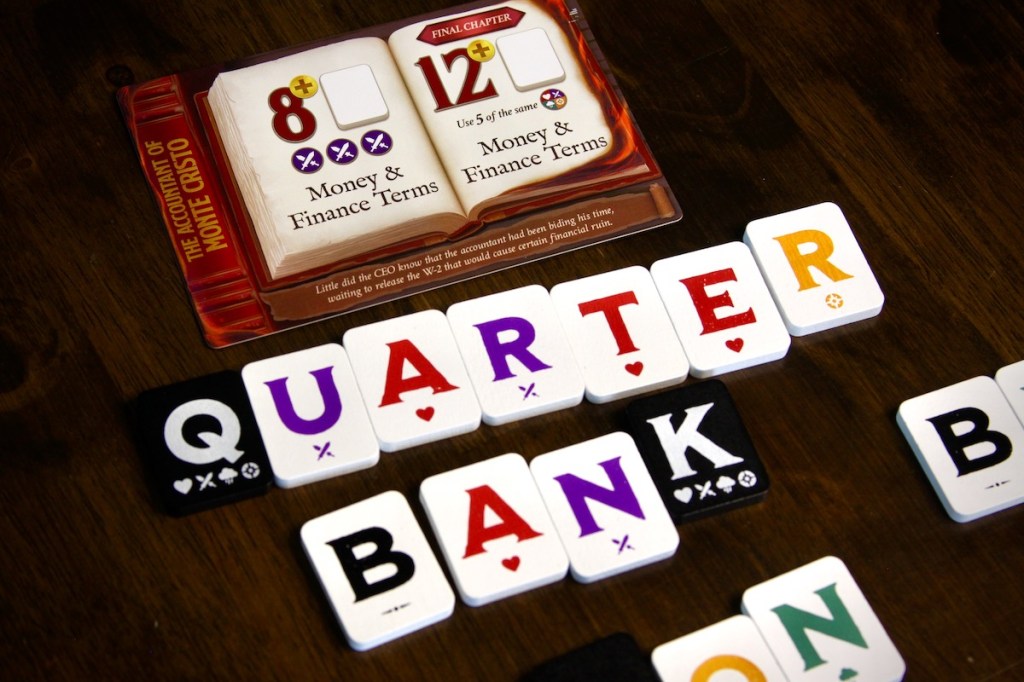
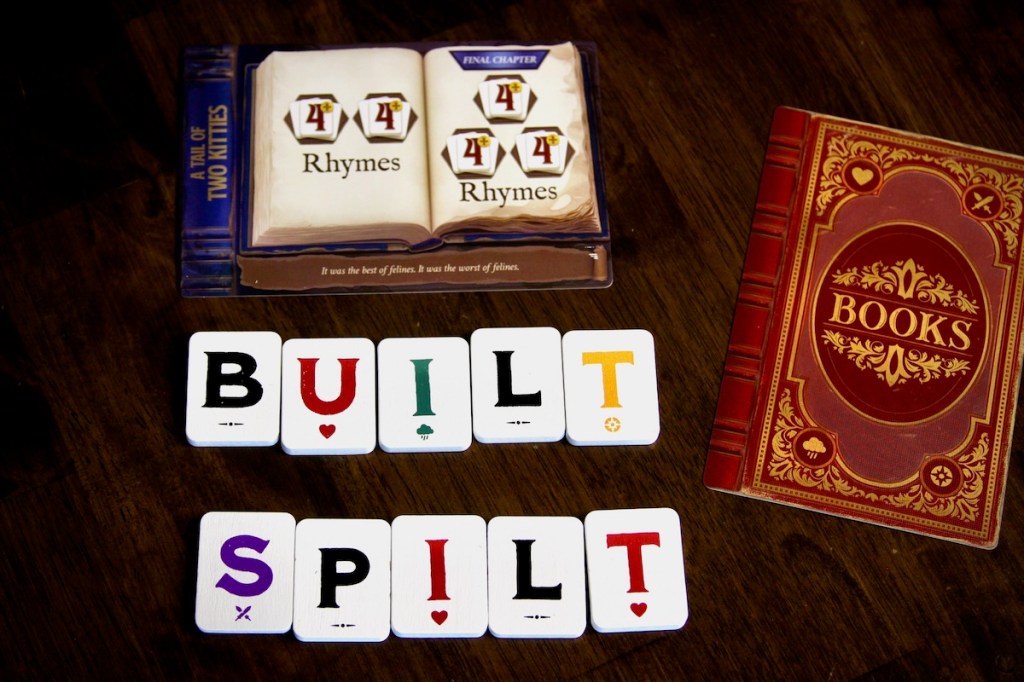
A huge portion of the game is about survival. Yes, the ultimate goal is to meet your books’ requirements, but the team will want to work together to ensure that most of the letters are used in any word to preserve those letters for the next round and to prevent a letter from being added to the burn tracker. If the time runs out and the library is over its limit, the unassigned letters are discarded. It will take most players several rounds to save up enough letters to bind a single book, so creating these banked words is a huge part of the strategy to build up to bookbinding.
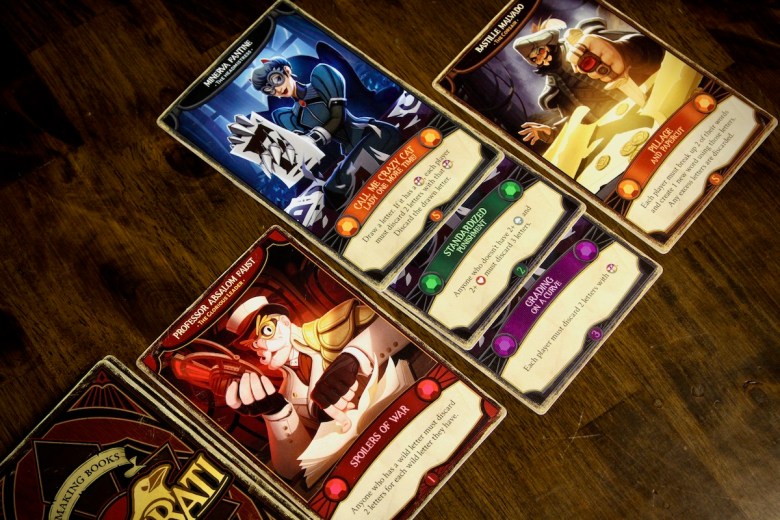
Although there is time to build up to bookbinding, there is still pressure to do it efficiently. The game progression becomes more difficult as the rounds stack up. As the villains emerge, eventually you will start to see villains repeat. When a villain pops up more than once, its attack chains on top of an old attack(s), increasing the penalty and making the game much more difficult for the librarians. Chain attacks can significantly speed up the end of the game.
The bulk of the game relies on individual book bindings, but an element of cooperation is still present thanks to the ability to share words and letters throughout the game. Keeping your head down and ignoring your partners will likely lead to your team’s defeat. Still, The Final Chapter makes sure to tie all players together into a devilish denouement. This tough team challenge is sure to make the strongest spellers stumble as they not only have to work together to complete a more difficult challenge – each player must also bind their book individually during the same round.
Weight
The game is simple and not difficult to teach. There are a few rules that are important to note, such as the word limit, the redraw rules, etc. But a lot of what players need to know is listed on reference cards. The rule book is laid out well and has helpful illustrations, but unfortunately lacks clarity in some instances. For example, a first-time player may not understand that the Illuminati deck needs to be shuffled, and that is not explicitly spelled out in the setup. Minor issues like that aside, I have noticed we tend to run into questions not covered in the rule book – usually during the Illuminati Attack phase when powers are stacking. A FAQ section would be appreciated in these situations. So far, none of these issues have been game-breaking, but a little more attention in this area would have been appreciated.
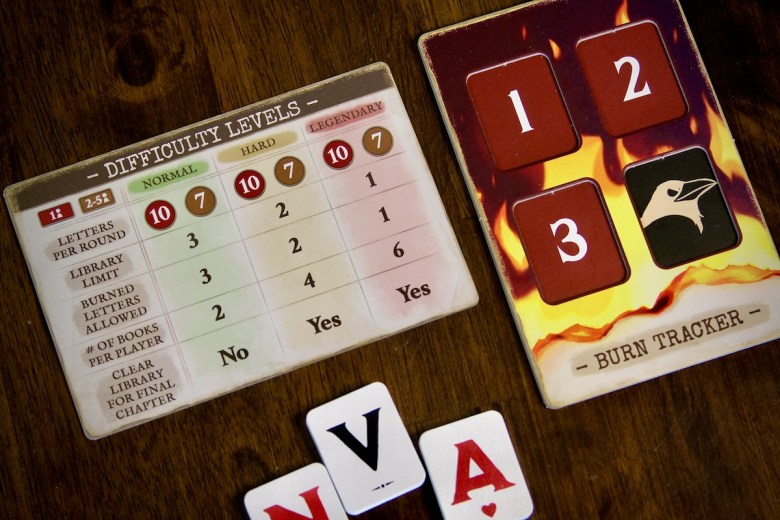
The game’s difficulty level is adjustable and is as simple as making changes to the library limit or allowed burned letters. Suggested adjustments are listed in the rulebook and on a reference card. Still, players could easily adjust the game however they see fit, even lengthening or shortening the Word Building Phase by using a different timer.
Replayability
There are 20 book cards in each color, which gives players a decent amount of variety to start, but I would have liked to have seen more. The Villains and how they can stack and interact add different challenges from game to game, and there are optional play modes listed in the rule book for those interested in changing things up. There is not a lot to discover from a content standpoint – which shouldn’t be a huge surprise since this is a simple word game. However, the creative and collaborative experience that Illiterati facilitates will be different every time you draw a new set of letters and sit down with a different group of people. Those who enjoy word games will likely find themselves coming back to this one quite a bit.
Theme / Aesthetics
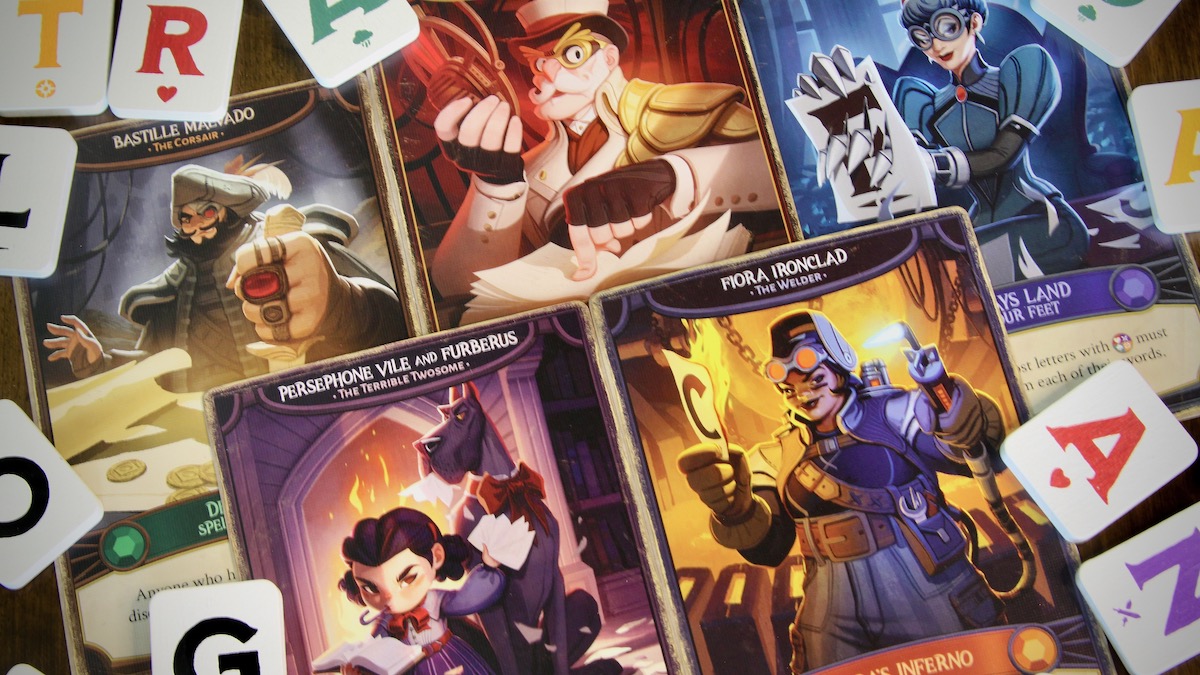
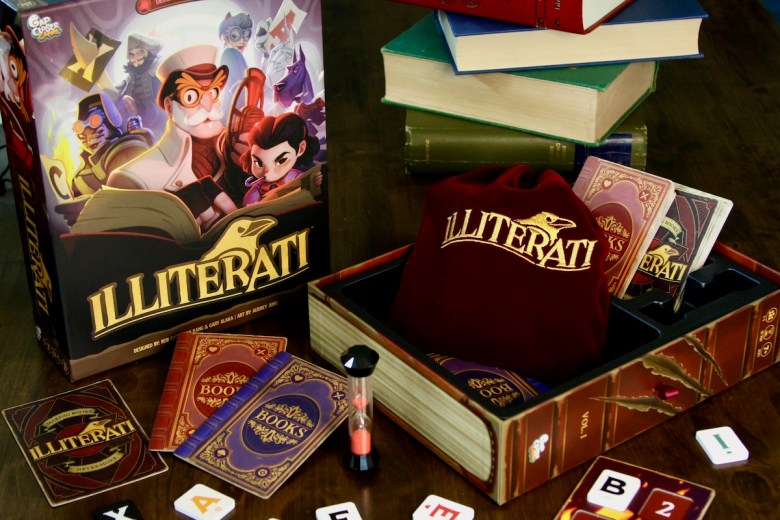
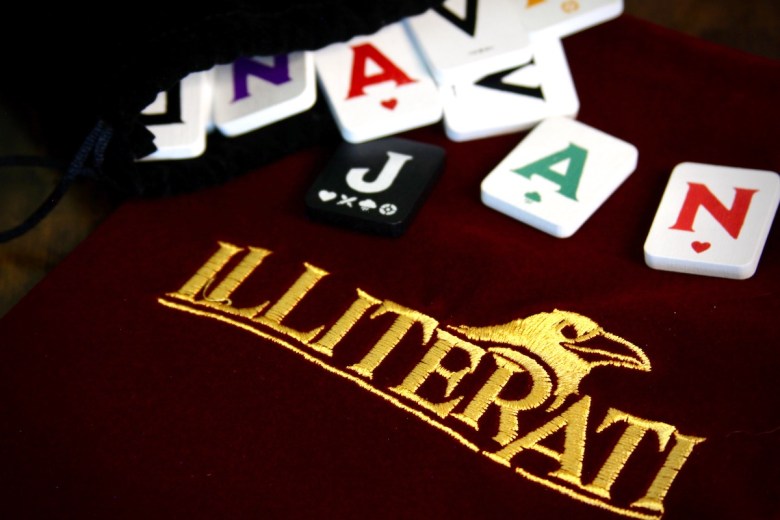
The theming on this is done so well. First of all, bravo to the box-sleeve idea for leaning into the book theme. The components on the deluxe edition are wonderful, from the chunky wooden tiles to the bags. Even the cards look lovely. The puns on the book cards are a nice touch and the cartoonish villains remain family-friendly (even though their attacks often sting). My only issue with the components involved the sand timer – occasionally it gets stuck. I’m unsure how prevalent this issue is with the Deluxe and Retail versions of the game but it’s an issue in my particular copy.
Interaction / Fun
A common complaint many cooperative games receive concerns the issue of “quarterbacking” – or when a dominant player takes over the strategy and tells the other players what to do. The real-time aspect of Illiterati helps to solve this issue almost entirely – there is simply not enough time for it. The timer forces players to prioritize the most important things – using spare letters to make up words and then trying to solve the book requirements – which leaves little room for an alpha gamer to move in and tell everybody the correct move. And in a word game such as this, there really is no such thing as the “correct move” – it all depends on the player’s creativity.
Cooperation is still vital to success in Illiterati. Players will have to figure out how to communicate their needs (“I really need a B” “Does anybody have a sword symbol?” “I have a bunch of extra letters that I can’t use!”) while still getting their work done. Players will need to focus on their goals while keeping their teammates’ goals in mind, too. Successful collaboration in this game can feel really special after a particularly tense standoff with the sand timer.
With younger children, there will likely be more of a focus on helping than with older players, but the game is very adjustable and there are many ways to accommodate the players’ needs. There is a solo mode and a competitive mode for those who prefer to play that way, but I cannot speak to either play style.
Final Thoughts
Full disclosure: I love word games. Scrabble holds a dear place in my heart, and many games that have followed suit with wooden, plastic, and digital letter tiles have easily won me over. I had high hopes for Illiterati going in, but to be honest I was a bit apprehensive about the sand timer. Real-time games tend to stress me out, so when I found out this game had that mechanism in place I was worried it might not be a good fit for me.
I am delighted to report that was not the case here! The timed element does add tension and drama but just enough to make the game exciting and challenging for me. There was enough pressure to make my brain temporarily forget simple things, like foods and colors of all things, but not enough to cause me to freeze up or feel left behind – a common issue I have in competitive real-time games. In the moments I struggled all I had to do was speak up, and a teammate was ready to help with a letter donation or to take on some letters I could not use. It does not always work out, but every time I have played this game I felt the teamwork come through strongly in a way I don’t often experience around the table. I think cooperative games are very tricky to get right, and this formula works very well for me.
Family game night is tough in my house lately. As my children have grown their tastes in games have diverged. It’s becoming increasingly difficult to find a game that both my kids are equally enthusiastic about. Illiterati might be one of the rare exceptions. I believe they are charmed by the cooperative chaos and the nearly universal appeal of the word game puzzle. The fact that we can work together as a family without any one person telling another exactly what to do is very attractive to my kids, as well. The fact that I can pull this game off the shelf and both of my children will happily agree to play means that this one will stay in the collection for a long time.
Even though my kids enjoy it, I prefer to play Illiterati with adults (don’t tell my kids). As much as I enjoy family time, the cooperative element is a bit different when working together with people who need a bit less hand-holding. It allows us to work on more difficult modes and focus a bit more on our own books. This is a game I would like to take to game nights, camping trips, and board game cafes to share with my friends for a more social, cooperative experience.
With a fantastic blend of cooperation and chaos, I would highly recommend Illiterati to a wide range of people. If you like word games, this is likely going to be a good choice. I also think this is a good fit for families with older children who are confident readers and spellers. Although I did run into some minor frustrations with the rule book and the sand timer, the production as a whole was gorgeous and the gameplay was clever and fun. Illiterati facilitates a lot of feel-good teamwork, the timer helps to eliminate the “alpha gamer” issue that so many cooperative games seem to suffer from, and I genuinely have fun every time I play. I think Illiterati is a gem, overall, and will continue to share it with my family and friends when I’m in the mood for a word game.
 Tabletop Mom